<?xml version="1.0" encoding="utf-8"?><feed xmlns="http://www.w3.org/2005/Atom" ><generator uri="https://jekyllrb.com/" version="3.10.0">Jekyll</generator><link href="https://fitwithamna.me/feed.xml" rel="self" type="application/atom+xml" /><link href="https://fitwithamna.me/" rel="alternate" type="text/html" /><updated>2026-05-11T10:44:15+00:00</updated><id>https://fitwithamna.me/feed.xml</id><title type="html">Fitwithamna</title><subtitle>Fitness tips, workouts, weightloss, and healthy lifestyle guides by Amna Shahid</subtitle><author><name>Amna Shahid</name></author><entry><title type="html">How To Get Rid Of Pcos Belly</title><link href="https://fitwithamna.me/how-to-get-rid-of-pcos-belly/" rel="alternate" type="text/html" title="How To Get Rid Of Pcos Belly" /><published>2026-05-11T00:00:00+00:00</published><updated>2026-05-11T00:00:00+00:00</updated><id>https://fitwithamna.me/how-to-get-rid-of-pcos-belly</id><content type="html" xml:base="https://fitwithamna.me/how-to-get-rid-of-pcos-belly/"><![CDATA[<h1 id="how-to-get-rid-of-pcos-belly-what-actually-works-from-someone-who-gets-it">How to Get Rid of PCOS Belly (What Actually Works, From Someone Who Gets It)</h1>

<h2 id="key-takeaways">KEY TAKEAWAYS</h2>

<ul>
  <li>PCOS belly is driven by <strong>insulin resistance and high cortisol</strong> — not just calories. Treating the root cause is what actually moves the needle.</li>
  <li><strong>Strength training</strong> beats cardio for PCOS fat loss. Building muscle is the single most effective way to improve insulin sensitivity and shrink abdominal fat.</li>
  <li><strong>Diet timing</strong> and <strong>food quality matter</strong> more than restriction. A low-glycemic, anti-inflammatory approach — paired with real sleep and stress management — is the combination that works.</li>
</ul>

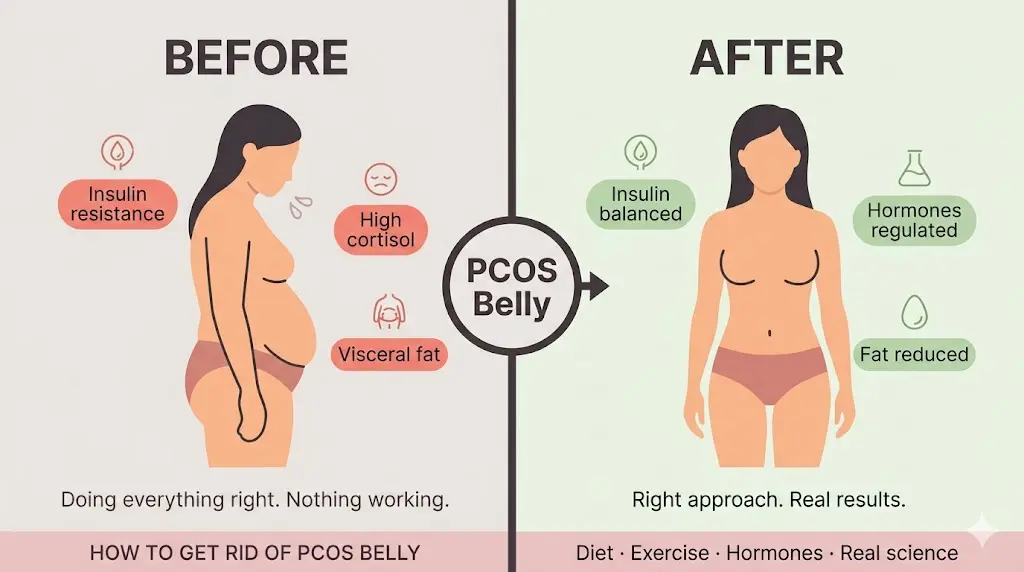
<h2><img src="/assets/images/before-vs-after-PCOS-belly-transformation.webp" alt="before-vs-after-PCOS-belly-transformation" /></h2>

<p>There’s a specific kind of exhausting that comes with PCOS belly. You eat well. You work out. You do everything “right.” And yet there it is — that stubborn, rounded belly that refuses to budge no matter what you try.</p>

<p>You’ve probably Googled every variation of this topic at 11pm more than once. So have I.</p>

<p>One Reddit user put it so perfectly it broke my heart a little: <em>“I’m at a point where I’m considered skinny, and everyone thinks so because I’m always wearing baggy clothing. But I have a huge, bloated belly, and everyone who sees it is always shocked or thinks I’m pregnant. I’ve been seeing a gym trainer for over a year, and she herself is frustrated.”</em></p>

<p>If that hit close to home — you’re not alone, and you’re not broken. Let’s actually talk about what’s happening in your body, and more importantly, what you can do about it.</p>

<hr />

<h2 id="first-lets-talk-numbers">First, Let’s Talk Numbers</h2>

<p>PCOS (Polycystic Ovary Syndrome) affects <a href="https://www.who.int/news-room/fact-sheets/detail/polycystic-ovary-syndrome">8–13% of women of reproductive age worldwide</a>, according to the World Health Organization. But here’s the part that really gets me: up to <strong>70% of affected women go undiagnosed.</strong> That means millions of us are out here fighting symptoms we can’t even name.</p>

<p>If you know you have PCOS, you’re already one step ahead. And the fact that you’re reading this means you’re not willing to just live with it — good. Because the research shows that with the right approach, symptoms — including that stubborn belly — are very much manageable.</p>

<hr />

<h2 id="what-is-pcos-belly-exactly">What Is PCOS Belly, Exactly?</h2>

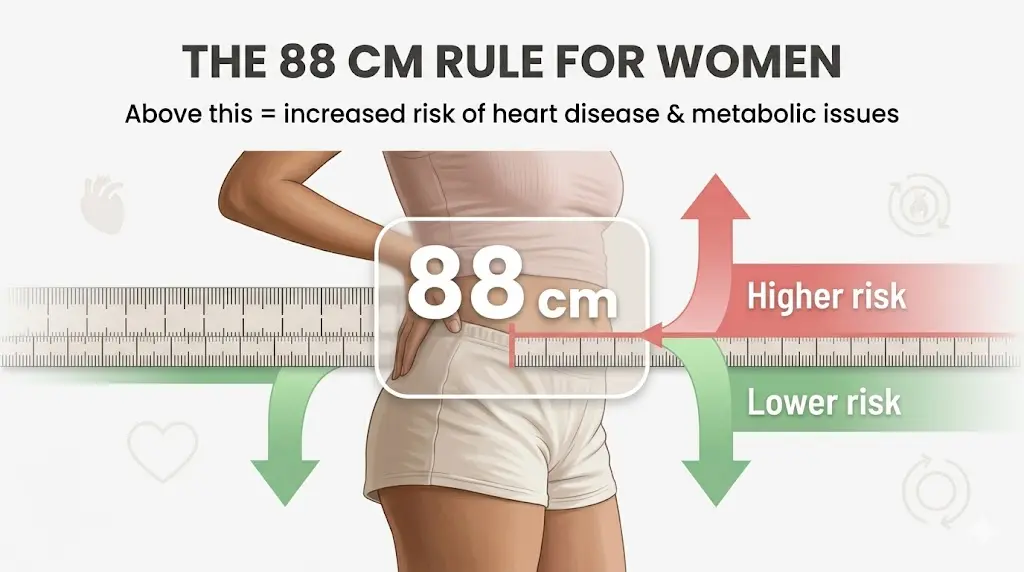
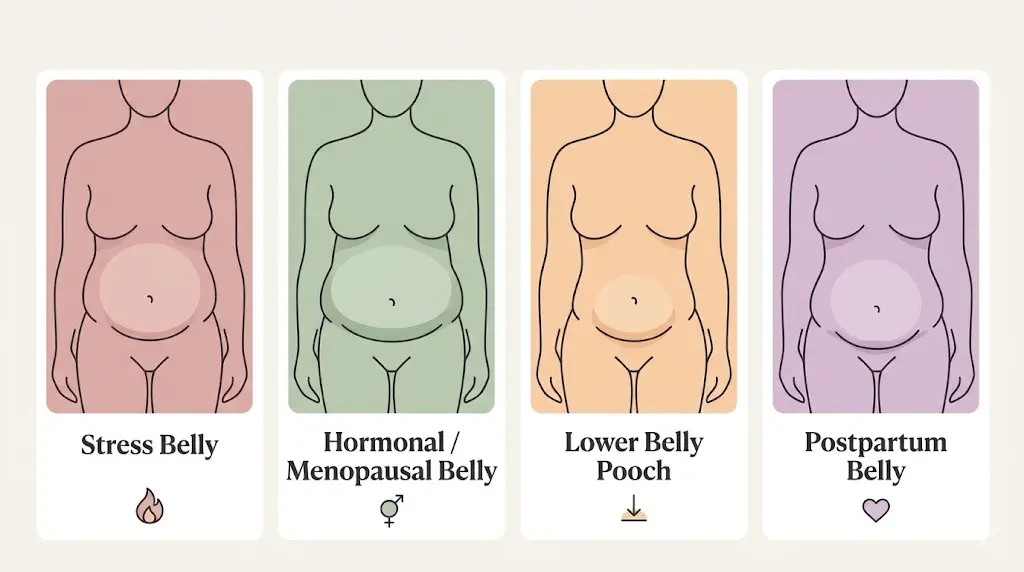
<p>PCOS belly, a <a href="https://fitwithamna.me/types-of-belly-fat-female/">type of belly fat</a>, isn’t just regular bloating or garden-variety weight gain. It’s a very specific pattern of abdominal fat accumulation driven primarily by <strong>insulin resistance.</strong></p>

<p>Here’s what’s actually happening: when your cells don’t respond properly to insulin, your pancreas pumps out more of it to compensate. High insulin levels signal your body to store fat — and they’re especially good at directing that fat to your midsection.</p>

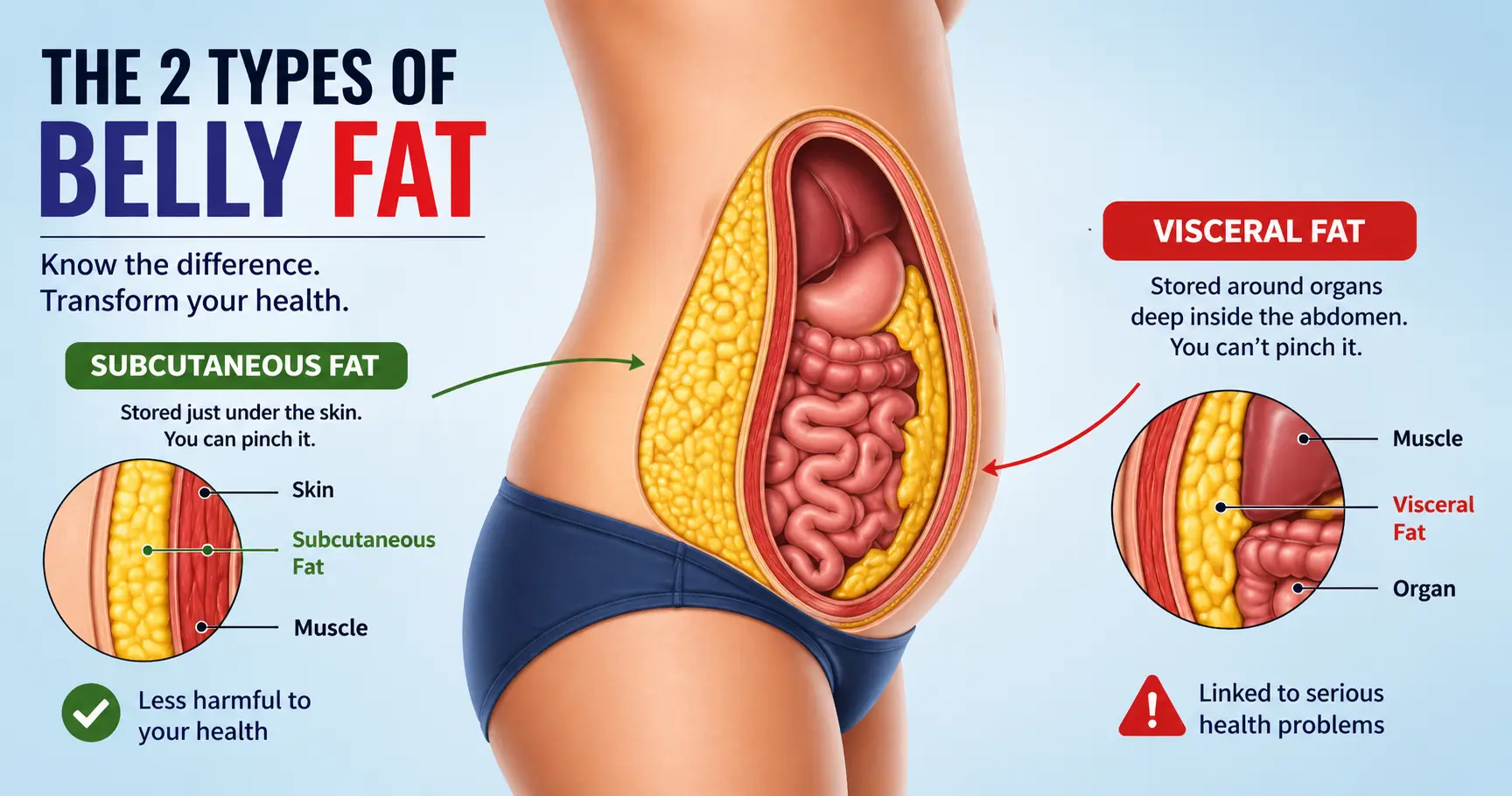
<p>Add elevated androgens (male hormones like testosterone that are elevated in many women with PCOS) and chronic low-grade inflammation to the mix, and you’ve got a recipe for stubborn <a href="https://fitwithamna.me/how-to-get-rid-of-female-visceral-fat/">visceral fat</a> that doesn’t respond to typical diet-and-exercise advice.</p>

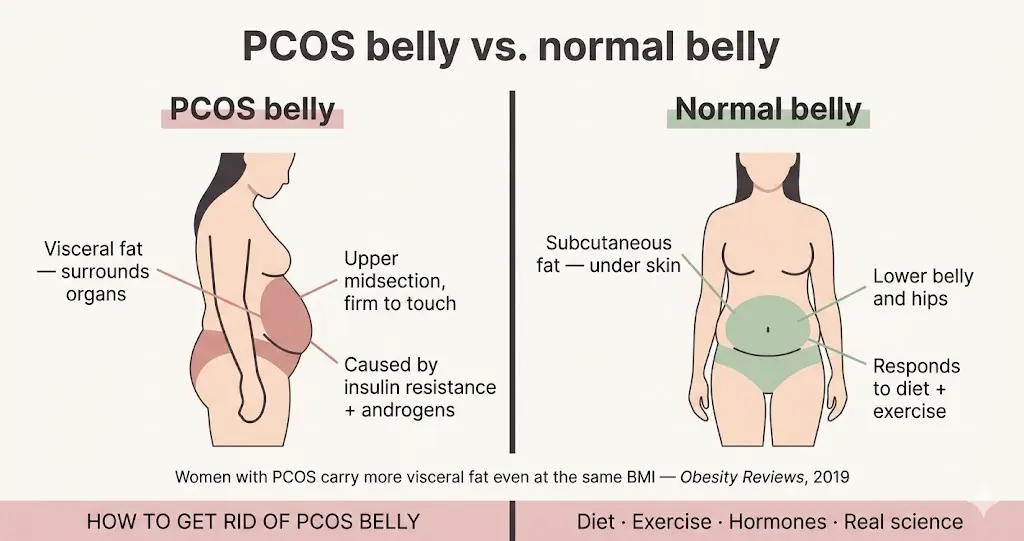
<p>A 2019 study published in <a href="https://pmc.ncbi.nlm.nih.gov/articles/PMC10843116/"><em>Obesity Reviews</em></a> confirmed that women with PCOS carry significantly more visceral adipose tissue (the deep belly fat surrounding organs) compared to women without PCOS, even at the same BMI.</p>

<hr />

<h2 id="pcos-belly-shape-vs-normal-belly--whats-the-difference">PCOS Belly Shape vs. Normal Belly — What’s the Difference?</h2>

<p>Visually, PCOS belly tends to sit differently than typical weight gain. Most people store fat in a more even, diffuse pattern. PCOS belly tends to be:</p>

<ul>
  <li><strong>Round and protruding,</strong> often described as looking pregnant or like a “pot belly”</li>
  <li><strong>Firm to the touch,</strong> not just soft and squishy — because it’s visceral fat deeper in the abdominal cavity, not <a href="https://fitwithamna.me/how-to-get-rid-of-female-subcutaneous-fat/">subcutaneous fat</a> just under the skin</li>
  <li><strong>Concentrated in the upper-to-mid abdomen,</strong> rather than lower belly or hips</li>
  <li><strong>Disproportionate</strong> to the rest of the body — this is the tell-tale sign</li>
</ul>

<p><img src="/assets/images/pcos-belly-vs-normal-belly.webp" alt="pcos-belly-vs-normal-belly" /></p>

<p>The key distinction is location. Normal belly fat accumulates subcutaneously. PCOS belly is largely visceral — it’s inside, wrapping around your organs, which is why it’s both more visible as a protrusion and more metabolically active.</p>

<h3 id="pcos-belly-on-a-skinny-person">PCOS Belly on a Skinny Person</h3>

<p>This is the part people don’t talk about enough, and it needs to change. PCOS belly absolutely shows up on women who are otherwise thin or at a “healthy” weight. It’s called <strong>lean PCOS,</strong> and it’s more common than most people realize.</p>

<p>Research from the <em>Journal of Clinical Endocrinology &amp; Metabolism</em> shows that <a href="https://pubmed.ncbi.nlm.nih.gov/18957499/">lean women with PCOS still present with metabolic abnormalities</a> including insulin resistance, elevated androgens, and the same pattern of centralized fat distribution — even when their total body weight appears normal. If your waist-to-hip ratio is high despite a low BMI, PCOS is a very plausible explanation.</p>

<p>So if a gym trainer is frustrated that your belly won’t shift despite clean eating and consistent training — it’s not your discipline that’s the problem. It’s the underlying hormonal environment.</p>

<hr />

<h2 id="pcos-belly-symptoms">PCOS Belly Symptoms</h2>

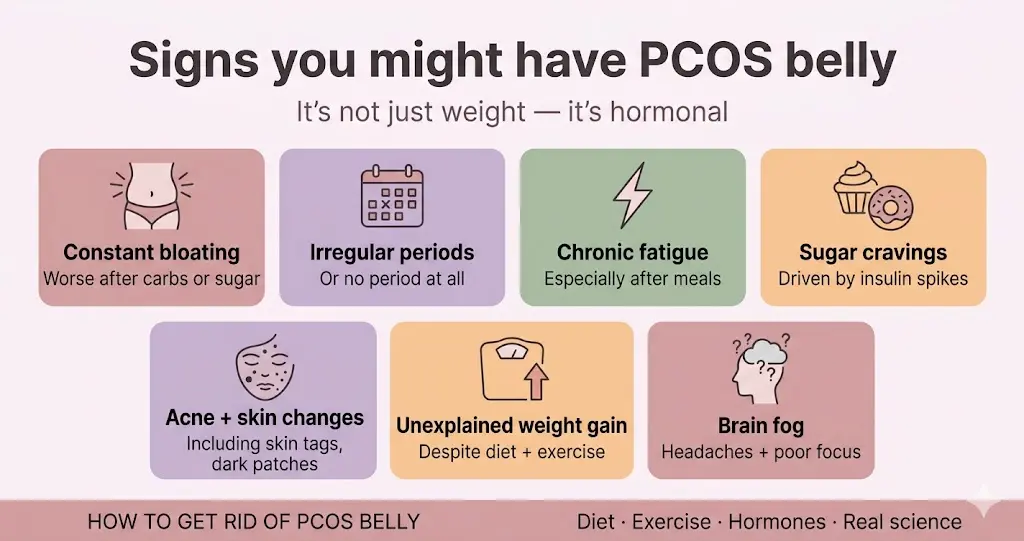
<p>Beyond just the visible belly, PCOS belly often comes with a cluster of symptoms that confirm what’s happening hormonally.</p>

<p><img src="/assets/images/symptoms-of-pcos-belly.webp" alt="symptoms-of-pcos-belly" /></p>

<p>The Cleveland Clinic notes that abdominal obesity in PCOS is strongly correlated with <a href="https://health.clevelandclinic.org/pcos-belly">increased risk of metabolic syndrome, type 2 diabetes, and cardiovascular disease</a> — which is why addressing it matters far beyond aesthetics.</p>

<hr />

<h2 id="pcos-belly-diet--what-to-eat-what-to-skip-and-when">PCOS Belly Diet — What to Eat, What to Skip, and When</h2>

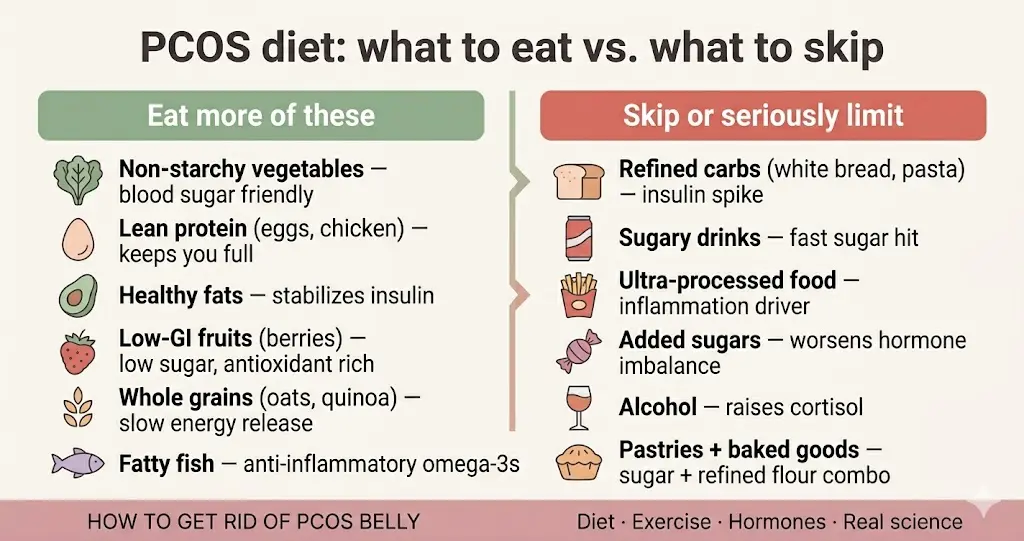
<p>Let me be direct with you: no single “magic” food fixes PCOS belly. But the pattern of eating absolutely matters, and the research is fairly clear on what helps.</p>

<h3 id="what-is-the-best-diet-for-pcos-and-thyroid">What Is the Best Diet for PCOS and Thyroid?</h3>

<p>Many women with PCOS also have thyroid dysfunction (hypothyroidism is more common in PCOS). The overlap means your diet needs to work for both — and fortunately, the approach is largely the same:</p>

<ul>
  <li><strong>Low-glycemic, high-fiber foods</strong> to manage insulin and support thyroid hormone conversion</li>
  <li><strong>Anti-inflammatory foods</strong> — think omega-3s, colorful vegetables, olive oil — which support both PCOS and thyroid health</li>
  <li><strong>Adequate iodine and selenium</strong> (from foods like eggs, seafood, Brazil nuts) for thyroid function</li>
  <li><strong>Limiting goitrogens in excess</strong> (raw cruciferous veg like raw kale in large amounts) if thyroid is already compromised — though cooked versions are fine</li>
</ul>

<p>A 2021 systematic review in <em>Nutrients</em> found that <a href="https://www.mdpi.com/2072-6643/17/2/310">low-GI diets significantly improved insulin sensitivity, hormonal profiles, and body composition</a> in women with PCOS.</p>

<p>##PCOS Diet: What to Eat Vs. What to Skip?
<img src="/assets/images/pcos-diet-what-to-eat-what-to-skip.webp" alt="pcos-diet-what-to-eat-what-to-skip" /></p>

<h3 id="how-many-times-should-you-eat-a-day">How Many Times Should You Eat a Day?</h3>

<p>For PCOS, the goal is blood sugar stability. Here’s what actually works:</p>

<ul>
  <li><strong>3 balanced meals a day</strong> with 1–2 optional snacks if genuinely hungry</li>
  <li><strong>Never skip breakfast —</strong> research shows eating a larger breakfast and smaller dinner improves insulin and testosterone levels in women with PCOS</li>
  <li><strong>Aim for a 12-hour eating window</strong> if possible — e.g., 8am to 8pm — to give your insulin time to reset</li>
  <li><strong>Don’t graze constantly</strong> — every time you eat, you spike insulin, even mildly</li>
</ul>

<h3 id="best-fruits-for-pcos">Best Fruits for PCOS</h3>

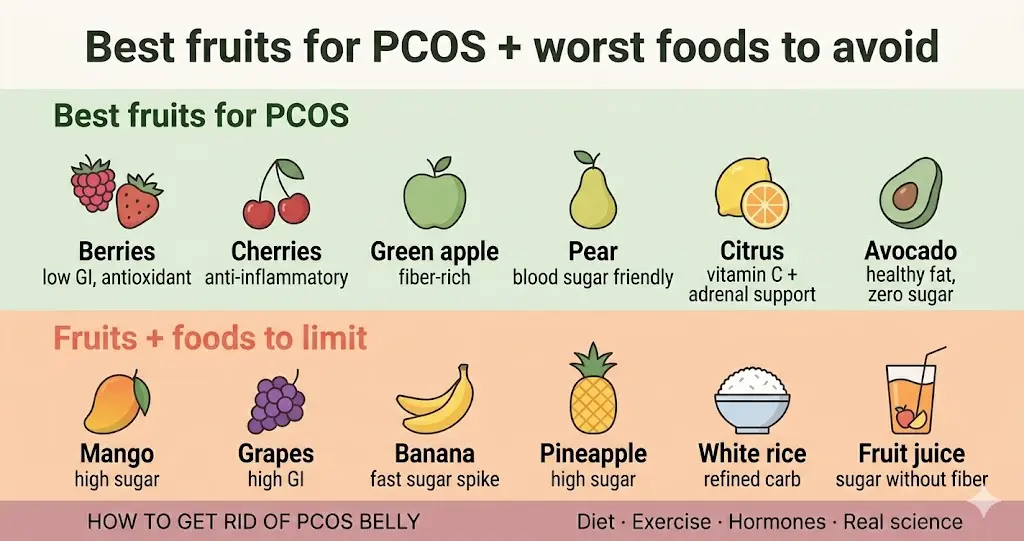
<p>Not all fruit is created equal for PCOS. Go for low-GI options like berries, cherries, apples, pears, and citrus — fruits that release sugar slowly and won’t spike your insulin.
<img src="/assets/images/best-fruits-for-pcos-and-worst-foods-for-pcos.webp" alt="best-fruits-for-pcos-and-worst-foods-for-pcos" /></p>

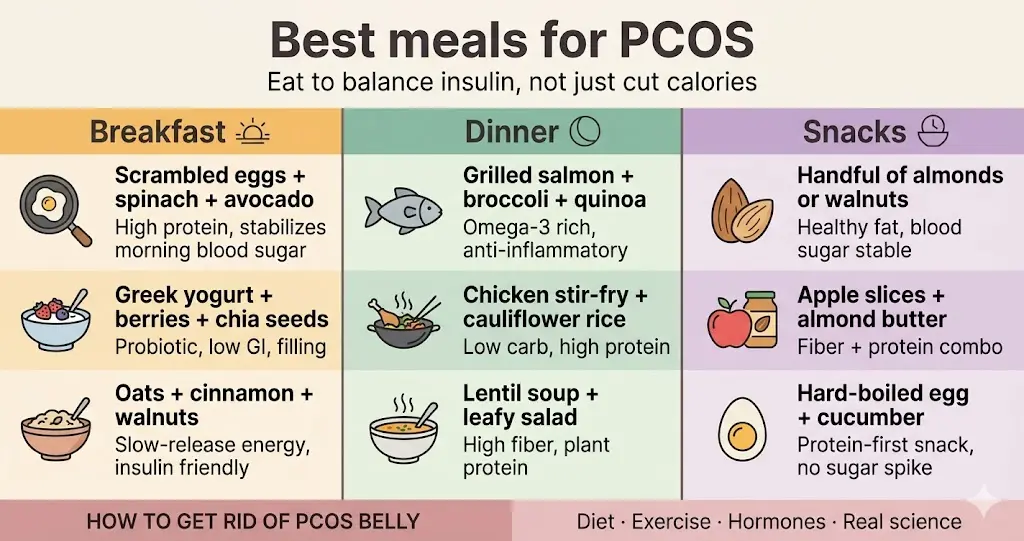
<h3 id="best-breakfast-dinner-and-snacks-for-pcos">Best Breakfast, Dinner, and Snacks for PCOS</h3>

<p>Focus on protein-forward breakfasts (eggs, Greek yogurt, nuts), balanced dinners with lean protein and non-starchy vegetables, and snacks like hummus with veggies, a small handful of nuts, or a boiled egg.</p>

<p><img src="/assets/images/best-diet-for-pcos.webp" alt="best-diet-for-pcos" /></p>

<hr />

<h2 id="pcos-belly-fat-reduction-exercises--what-actually-moves-the-needle">PCOS Belly Fat Reduction Exercises — What Actually Moves the Needle</h2>

<p>Here’s where most advice gets it backward. We’re told to do more cardio to lose fat. But for PCOS, endless cardio can actually backfire — it raises cortisol, which raises insulin, which tells your body to hold onto belly fat. Not the goal.</p>

<p>The research is pretty clear: <strong>strength training is the most effective exercise for PCOS-related fat loss.</strong> A 2020 meta-analysis in the <em>Journal of Functional Morphology and Kinesiology</em> found that resistance training improved insulin sensitivity, reduced testosterone levels, and improved body composition in women with PCOS — <a href="https://www.ncbi.nlm.nih.gov/pmc/articles/PMC7739243/">more effectively than cardio alone</a>.</p>

<h3 id="what-to-do">What to Do</h3>

<p><strong>Strength training 2–3 times per week:</strong> compound movements like squats, deadlifts, lunges, push-ups, and rows are your best friends. Building muscle increases glucose uptake independent of insulin. <a href="https://youtu.be/SFrZ-0A7Ps4?si=ALtbzhUJHN_C3zhJ">Growwithjo</a> is the one I rely on — she makes the workouts enjoyable and exciting.</p>

<p><strong>Walking — don’t underestimate it:</strong> a 20–30 minute walk after meals is one of the most effective ways to blunt post-meal blood sugar spikes. It’s low cortisol, sustainable, and surprisingly effective.</p>

<p><img src="/assets/images/6-7k-steps-daily-for-pcos.webp" alt="6-7k-steps-daily-for-pcos" /></p>

<p><strong>Yoga and Pilates:</strong> both reduce cortisol and support hormonal balance. A <a href="https://www.researchgate.net/publication/388484540_The_Role_of_Yoga_in_Balancing_Hormones_A_Comprehensive_Research_Review">2022 study in the Journal of Education and Health Promotion</a> found yoga specifically improved PCOS symptoms including hormonal markers and psychological wellbeing. <a href="https://youtu.be/KmB6Fdj_XJg?si=cBlZO4So4oT4FhuK">Move With Nicole</a> is my favourite yoga instructor.</p>

<p><strong>HIIT in moderation:</strong> short, intense intervals (like 20 minutes, twice a week max) can improve insulin sensitivity, but overdoing it raises cortisol. Keep it brief. <a href="https://youtu.be/KmB6Fdj_XJg?si=cBlZO4So4oT4FhuK">Growingannanas</a> is your buddy for this.</p>

<h3 id="what-to-avoid">What to Avoid</h3>

<ul>
  <li>Long daily cardio sessions (running for 60+ minutes daily raises cortisol significantly)</li>
  <li>Overtraining — rest days are metabolically necessary, not a luxury</li>
  <li>Exercising fasted if it stresses you out — some women do well with fasted workouts, others don’t. If you feel anxious or dizzy, eat something first.</li>
</ul>

<p>The general guideline from the <a href="https://acsm.org/physical-activity-guidelines-faqs/">American College of Sports Medicine</a> is 150 minutes of moderate activity per week — but for PCOS, the quality and type of exercise matters more than hitting a number.</p>

<hr />

<h2 id="conclusion">Conclusion</h2>

<p>PCOS belly is real, it’s specific, and it responds to a very specific set of interventions. This isn’t about eating less and moving more — that approach misses the entire hormonal picture. What actually works is:</p>

<ul>
  <li>A low-glycemic, anti-inflammatory diet that keeps insulin stable</li>
  <li>Strength training as your primary exercise mode</li>
  <li>Stress management — not optional, actually metabolic</li>
  <li>Sleep of 7–9 hours — poor sleep increases cortisol and insulin resistance within days</li>
  <li>Patience — this is a hormonal condition, and hormonal shifts take weeks to months, not days</li>
</ul>

<p>I want to be honest with you: some women also need medical support. Metformin, inositol supplementation, or hormonal therapy can all be part of the picture, and there’s no shame in that. If you’ve been doing everything “right” for months and nothing is shifting, please talk to an endocrinologist, not just a general practitioner. You deserve a doctor who takes this seriously.</p>

<p>You are not failing. You are fighting a hormonal condition with incomplete information. Now you have a little more. Go use it.</p>

<hr />

<h2 id="frequently-asked-questions">Frequently Asked Questions</h2>

<h3 id="what-happens-to-the-body-with-pcos">What happens to the body with PCOS?</h3>

<p>PCOS disrupts the normal hormonal cycle that governs ovulation. The ovaries produce excess androgens (male hormones), which interferes with egg development and release. This creates a cascading effect: irregular or absent periods, cyst formation on the ovaries, insulin resistance, inflammation, and a higher risk of metabolic conditions like type 2 diabetes, cardiovascular disease, and non-alcoholic fatty liver disease. Symptoms vary enormously between women — some have all of them, some have only a few. The condition is also closely linked to thyroid dysfunction and adrenal irregularities.</p>

<h3 id="what-is-the-30-30-30-rule-for-pcos">What is the 30 30 30 rule for PCOS?</h3>

<p>The 30-30-30 rule has gained traction on social media and was popularized by health educator Gary Brecka. It involves: 30 grams of protein within 30 minutes of waking up, followed by 30 minutes of low-intensity movement (like walking). The idea is to stabilize blood sugar and cortisol from the moment you start your day. While there’s no PCOS-specific clinical trial on this exact protocol, it aligns well with established research on the benefits of high-protein breakfasts for insulin management and morning exercise for blood sugar regulation. For PCOS, it’s worth trying — it’s low-risk and biologically sound.</p>

<h3 id="what-is-the-first-stage-of-pcos">What is the first stage of PCOS?</h3>

<p>PCOS doesn’t have formally staged progressions the way some conditions do, but early signs often include irregular periods (or periods that were regular and become irregular), mild hormonal symptoms like acne or excess hair growth, and subtle metabolic changes detectable on bloodwork (elevated androgens, slightly elevated insulin). Many women first notice something is off in their teens or early twenties. Early intervention — especially lifestyle-based — is genuinely impactful and can prevent the condition from worsening.</p>

<h3 id="are-you-100-infertile-with-pcos">Are you 100% infertile with PCOS?</h3>

<p>No — absolutely not. PCOS is one of the most common causes of infertility, but <strong>“common cause” does not mean “guaranteed infertility.”</strong> Many women with PCOS conceive naturally, and many more conceive with relatively minimal intervention such as lifestyle changes, ovulation induction medications (like letrozole or clomiphene), or IVF. A <a href="https://www.frontiersin.org/articles/10.3389/fendo.2019.00943/full">2020 review in Frontiers in Endocrinology</a> notes that with appropriate management, the majority of women with PCOS who want to conceive are able to do so. Please don’t let fear about fertility stop you from getting a diagnosis — knowing is always better than not knowing.</p>]]></content><author><name>Amna Shahid</name></author><category term="Weight Loss" /><summary type="html"><![CDATA[How to Get Rid of PCOS Belly (What Actually Works, From Someone Who Gets It)]]></summary></entry><entry><title type="html">Is Your Lower Belly Pooch Normal? Absolutely Yes</title><link href="https://fitwithamna.me/is-your-lower-belly-pooch-normal-absolutely-yes/" rel="alternate" type="text/html" title="Is Your Lower Belly Pooch Normal? Absolutely Yes" /><published>2026-05-08T00:00:00+00:00</published><updated>2026-05-08T00:00:00+00:00</updated><id>https://fitwithamna.me/is-your-lower-belly-pooch-normal?-absolutely-yes</id><content type="html" xml:base="https://fitwithamna.me/is-your-lower-belly-pooch-normal-absolutely-yes/"><![CDATA[<h1 id="is-your-lower-belly-pooch-normal-spoiler-absolutely-yes">Is Your Lower Belly Pooch Normal? (Spoiler: Absolutely Yes)</h1>

<h2 id="key-takeaways">Key Takeaways</h2>

<ul>
  <li>The <a href="https://fitwithamna.me/how-to-get-rid-of-stomach-pooch-women/">lower belly pooch in women</a> is biologically normal — hormones, fat distribution, and anatomy all play a role, and it is not a health problem.</li>
  <li>No, it is not your uterus — a persistent internet myth debunked by <a href="https://www.instagram.com/reels/DQEUH8cDHh3/">Dr. Karen Tang</a>. It’s subcutaneous fat, and that’s completely fine.</li>
  <li>Men notice it far less than women think — research consistently shows women are their own harshest critics — <a href="https://www.forbes.com/sites/margiewarrell/2025/03/08/hard-on-yourself-why-a-little-self-compassion-goes-a-long-way-for-women/">Forbes</a>.</li>
</ul>

<hr />

<p><img src="/assets/images/same-woman-different-mindset-lower-pooch-article.webp" alt="same-woman-different-mindset-lower-pooch-article" /></p>

<p>Welcome, gorgeous. If you’ve landed here because you looked down, noticed a soft little curve at the bottom of your belly, and immediately catastrophised — first of all, you are in very good company. And second: <em>we need to talk.</em></p>

<p>Amna Shahid here. Yeah, I am a fitness content writer, but I am a woman first. I understand women and want to talk to you in the best way possible, in every article I share. I was overweight since I was a child and today I am a 23 year old woman with my dream body and mindset.</p>

<p>My journey wasn’t straight and easy. I want to tribute my parents for all the support, financially and mentally. Thanks!</p>

<p>The lower belly pooch is one of the most Googled body concerns among women, one of the least understood, and simultaneously one of the most normal things a female body can do. Yet somehow, the internet is full of “how to get rid of it” listicles and crash-diet promises. We’re not doing that today.</p>

<p>Today, we’re asking the real questions: <strong>Why do you even have it? Is it actually a problem? Does anyone else even notice?</strong> And — most importantly — why are we so convinced our completely normal body is broken?</p>

<hr />

<h2 id="first-things-first-what-even-is-the-lower-belly-pooch">First things first: what even is the lower belly pooch?</h2>

<p>Let’s get anatomical for a second (don’t worry, we’ll keep it fun). The lower belly pooch is primarily <a href="https://fitwithamna.me/how-to-get-rid-of-female-subcutaneous-fat/"><strong>subcutaneous fat</strong></a> — the soft, pinchable layer that sits just beneath your skin. Unlike <a href="https://fitwithamna.me/how-to-get-rid-of-female-visceral-fat/">visceral fat</a> (the deeper fat that wraps around organs, which <em>can</em> carry health risks), subcutaneous fat is essentially just… padding.</p>

<p>Women tend to store more subcutaneous fat than men, especially in the lower abdomen, hips, and thighs. This is not a design flaw. This is <strong>estrogen doing its job.</strong></p>

<table>
  <thead>
    <tr>
      <th>✗ THE MYTH</th>
      <th>✓ THE FACT</th>
    </tr>
  </thead>
  <tbody>
    <tr>
      <td>“That bump is your uterus — it’s not fat at all.” — viral on Instagram since at least 2020.</td>
      <td>The uterus sits in the <em>pelvis</em>, between the bladder and rectum — not in the stomach. It does not cause a visible belly bulge unless you are pregnant, postpartum, or have a medical condition like fibroids.</td>
    </tr>
  </tbody>
</table>

<p><a href="https://www.drlisaerlanger.com/about">Dr. Lisa Erlanger</a>, clinical professor of family medicine at the University of Washington School of Medicine, put it plainly: <em>“People without uteruses have tummy pooches, too, and the back of my arm has fat, and there’s no uterus there.”</em></p>

<hr />

<h2 id="why-do-women-have-a-lower-belly-pooch-the-actual-science">Why do women have a lower belly pooch? The actual science</h2>

<p>There are several legitimate, well-researched reasons why the lower abdomen tends to be softer and rounder in women. None of them are emergencies.</p>

<h3 id="estrogen-and-female-fat-distribution">Estrogen and female fat distribution</h3>

<p>Estrogen actively directs fat storage toward the hips, thighs, and lower abdomen. This is the body’s way of maintaining energy reserves for reproduction. A 2012 study in the <em><a href="http://pmc.ncbi.nlm.nih.gov/articles/PMC3411490/">Journal of Clinical Endocrinology &amp; Metabolism</a></em> confirmed that subcutaneous adipose tissue in women is significantly higher than in men even at comparable BMIs.</p>

<blockquote>
  <p>💡 <strong>WORTH KNOWING:</strong> After <a href="https://www.henryford.com/blog/2025/05/weight-gain-during-menopause">menopause</a>, some belly fat continues to produce small amounts of estrogen — which researchers believe actively protects bone density, mood, sexual function, and even cardiovascular health.</p>
</blockquote>

<h3 id="pelvic-tilt-and-skeletal-anatomy">Pelvic tilt and skeletal anatomy</h3>

<p>Women’s hips are wider and the pelvis tilts differently than men’s — which naturally creates the appearance of a lower abdominal curve even with zero fat. Dr. Erlanger notes that “the hips are wider and tilted differently for women, which naturally gives a different look.” Your bone structure, not your lifestyle, is partly responsible.</p>

<h3 id="your-menstrual-cycle">Your menstrual cycle</h3>

<p><a href="https://pubmed.ncbi.nlm.nih.gov/7227774/">Progesterone in the luteal phase</a> (roughly days 15–28 of your cycle) slows digestion and promotes water retention. This can cause visible bloating and a temporarily fuller-looking belly that has absolutely nothing to do with fat gain.</p>

<p>During my luteal phase, I face bloating and feel gassy. My belly appears larger and that’s completely normal. I try to drink milk with a pinch of turmeric during this phase.</p>

<h3 id="diastasis-recti-and-post-pregnancy-changes">Diastasis recti and post-pregnancy changes</h3>

<p>Approximately <a href="https://my.clevelandclinic.org/health/diseases/22346-diastasis-recti"><strong>60% of women</strong></a> experience diastasis recti — a separation of the abdominal muscles — during or after pregnancy, which can result in a persistent pooch regardless of weight.</p>

<h3 id="c-section-scars">C-section scars</h3>

<p>Around <a href="https://mutusystem.com/en-us/c-section/how-to-flatten-and-heal-a-c-section-shelf-advice-for-mums/">30% of babies</a> in the US are born via C-section. The resulting scar can pull at the skin and create a shelf or pooch shape at the lower abdomen — a structural, not a fat, issue.</p>

<p>| 60% of women experience diastasis recti post-pregnancy | 30% of US births are C-sections, which can change abdominal shape | ~25% higher subcutaneous fat in women vs men at same BMI |
|—|—|—|</p>

<hr />

<h2 id="does-the-lower-belly-pooch-make-a-woman-less-attractive-honestly-no">Does the lower belly pooch make a woman less attractive? Honestly, no.</h2>

<p>This is the question you typed but maybe felt embarrassed about. So let’s go there, fully and without judgement.</p>

<p>The short answer is: attractiveness is not a one-variable equation, and the belly pooch is rarely the variable men are focused on — if they notice it at all.</p>

<blockquote>
  <p><em>“Women consistently overestimate how much men scrutinise their bodies, and underestimate how much men value warmth, personality, and confidence.”</em></p>
</blockquote>

<p>A <a href="https://journals.plos.org/plosone/article?id=10.1371/journal.pone.0105468">2013 study in <em>PLOS ONE</em></a> analysed what heterosexual men found most attractive in women’s bodies and found that waist-to-hip ratio was a more significant factor than flat stomachs or low body fat specifically — and notably, a <em>soft lower belly does not change waist-to-hip ratio.</em></p>

<p>More importantly: a 2019 study published in <a href="https://pmc.ncbi.nlm.nih.gov/articles/PMC6428027/"><em>Body Image</em></a> found that women’s own perception of their attractiveness was significantly lower than observers’ actual ratings — meaning we are systematically, reliably, and measurably too hard on ourselves.</p>

<blockquote>
  <p>⭐ <strong>REAL TALK:</strong> When a man on Facebook went viral in early 2024 claiming “all men hate the belly pooch,” he was immediately dismantled by — you guessed it — other men. “We never authorized this clown to speak on our behalf,” one replied. The post became a masterclass in how male preferences are far more diverse, and far less critical, than the internet would have you believe.</p>
</blockquote>

<hr />

<h2 id="do-men-actually-notice-or-care-about-lower-pooch-in-women-the-research-might-surprise-you">Do men actually notice or care about lower pooch in women? (The research might surprise you)</h2>

<p>Research on male gaze and female self-perception consistently points to the same uncomfortable truth: <strong>women notice women’s bodies far more critically than men do.</strong></p>

<p>A <a href="https://pmc.ncbi.nlm.nih.gov/articles/PMC3134786/">landmark 2005 study in the <em>International Journal of Eating Disorders</em></a> found that women dramatically overestimated how much importance men placed on thinness and body fat. Men in the study rated personality, humour, and confidence as significantly more important than the specific shape of someone’s abdomen.</p>

<p>The phenomenon even has a name: <strong>self-objectification</strong> — a pattern where women internalise an external observer’s perspective of their own body, leading to constant self-monitoring. <a href="https://www.researchgate.net/publication/258181826_Objectification_Theory_Toward_Understanding_Women's_Lived_Experiences_and_Mental_Health_Risks">Fredrickson &amp; Roberts’ Objectification Theory (1997)</a>, still widely cited today, describes how this results in body shame, anxiety, and diminished wellbeing.</p>

<p>In other words: the harshest critic of your belly pooch is almost certainly you.</p>

<hr />

<h2 id="conclusion-pun-absolutely-intended">Conclusion (pun absolutely intended)</h2>

<p>There is no world in which your belly pooch is a problem that needs solving. It is fat — the kind that protects your organs, stores energy, produces hormones, and has literally kept the human species alive. It exists because you are a woman, not despite it.</p>

<p>Dr. Erlanger says it best: <em>“Weight fluctuations across our lifespans are very common, and in general it’s healthier to live in the body size and shape you have than to try to make it smaller or shaped differently.”</em></p>

<p>The real question isn’t how to get rid of your lower belly pooch. It’s why we were convinced it needed to go in the first place.</p>

<hr />

<h2 id="frequently-asked-questions">Frequently Asked Questions</h2>

<h3 id="is-a-lower-belly-pooch-normal-for-women">Is a lower belly pooch normal for women?</h3>

<p>Yes, completely. The lower belly pooch is normal for the majority of women due to estrogen-driven fat distribution, pelvic anatomy, and the natural shape of the female torso. It is not a sign of poor health, poor diet, or poor fitness. Even very lean, athletic women often have a soft lower belly because of skeletal structure and hormonal fat patterning.</p>

<h3 id="why-do-i-have-a-pooch-on-my-lower-stomach-even-though-im-not-overweight">Why do I have a pooch on my lower stomach even though I’m not overweight?</h3>

<p>Several factors cause a lower belly pooch independent of weight: your pelvic tilt (anatomical), estrogen directing subcutaneous fat to the lower abdomen, bloating from your menstrual cycle, diastasis recti from pregnancy, or a C-section scar. None of these are problems that need fixing.</p>

<h3 id="is-the-lower-belly-pooch-actually-the-uterus">Is the lower belly pooch actually the uterus?</h3>

<p>No. This is a viral myth. The uterus is located in the pelvis, between the bladder and rectum, not in the stomach. It does not cause a visible belly bulge unless you are pregnant, postpartum, or have a medical condition such as fibroids. The belly pooch is subcutaneous fat and connective tissue.</p>

<h3 id="does-everyone-have-a-lower-belly-pooch">Does everyone have a lower belly pooch?</h3>

<p>Most women have some degree of lower belly softness due to biology. Even people with very low body fat percentages often have a small lower abdominal curve due to skeletal structure. It is not something to eliminate — it is a feature of female anatomy.</p>

<hr />

<blockquote>
  <p><strong>You’re normal. The pooch is normal. The soft belly is normal. The fact that you’ve spent any time worrying about it? Also, painfully, extremely normal. But it ends here.</strong></p>
</blockquote>]]></content><author><name>Amna Shahid</name></author><category term="Weight Loss" /><summary type="html"><![CDATA[Is Your Lower Belly Pooch Normal? (Spoiler: Absolutely Yes)]]></summary></entry><entry><title type="html">How To Lose Postpartum Belly After C Section At Home</title><link href="https://fitwithamna.me/how-to-lose-postpartum-belly-after-c-section-at-home/" rel="alternate" type="text/html" title="How To Lose Postpartum Belly After C Section At Home" /><published>2026-05-06T00:00:00+00:00</published><updated>2026-05-06T00:00:00+00:00</updated><id>https://fitwithamna.me/how-to-lose-postpartum-belly-after-c-section-at-home</id><content type="html" xml:base="https://fitwithamna.me/how-to-lose-postpartum-belly-after-c-section-at-home/"><![CDATA[<h1 id="how-to-lose-postpartum-belly-after-c-section-at-home-what-actually-works">How to Lose Postpartum Belly After C-Section at Home (What Actually Works)</h1>

<h2 id="key-takeaways">Key Takeaways</h2>

<ul>
  <li>Your C-section pooch is not just fat — it’s a combination of swelling, scar tissue adhesion, and weakened abdominal muscles, which is why regular “<a href="https://fitwithamna.me/how-to-get-rid-of-stomach-pooch-women/">lose belly fat</a>” advice rarely works post-surgery.</li>
  <li>You must wait for your OB/GYN’s clearance (typically 6–8 weeks) before any structured core exercise; starting too early can reopen your incision or worsen diastasis recti.</li>
  <li>Nutrition, hydration, targeted breathing-based rehab exercises, and scar tissue massage are the four pillars that actually move the needle — not crash diets or intense ab workouts.</li>
</ul>

<hr />

<p><img src="/assets/images/how-to-lose-postpartum-belly-after-c-section-at-home.webp" alt="how-to-lose-postpartum-belly-after-c-section-at-home" /></p>

<p>You did something extraordinary. You grew a human being, and when the moment came, your baby was brought into the world through one of the most significant surgical procedures a woman can undergo.</p>

<p>And now, weeks or months later, you’re standing in front of the mirror, pulling at the skin above your scar, wondering if this belly — this stubborn, soft, shelf-like pouch — is just… yours to keep now.</p>

<p>I want you to hear this clearly: <em>it is not permanent, and you are not broken.</em></p>

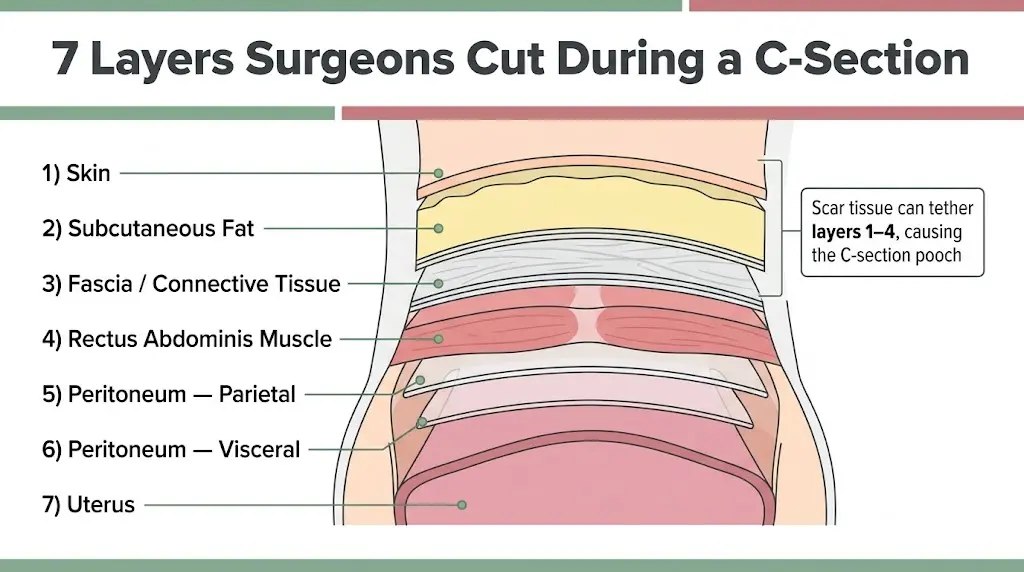
<p>The C-section belly, <a href="https://fitwithamna.me/types-of-belly-fat-female/">a type of belly fat</a>, is not a failure of willpower. It’s a physiological reality that comes from major abdominal surgery — cut through seven layers of tissue, to be precise.</p>

<p>The good news? There is a real, evidence-based path back. It’s slower than you’d like, and it requires a different approach than what influencers are selling you, but it works. Let’s go through it together, step by step.</p>

<hr />

<h2 id="what-is-a-c-section--postpartum-belly">What Is a C-Section / Postpartum Belly?</h2>

<p>A postpartum belly after a C-section is not the same as ordinary belly fat. When surgeons perform a cesarean, they cut through the skin, fat layer, fascia (the connective tissue sheet), and the uterus itself.</p>

<p>During healing, scar tissue forms — and that scar tissue can bind to the fascia and muscles underneath, creating a physical tethering effect that pulls the skin inward and causes the characteristic “shelf” or “pouch” above the scar line.</p>

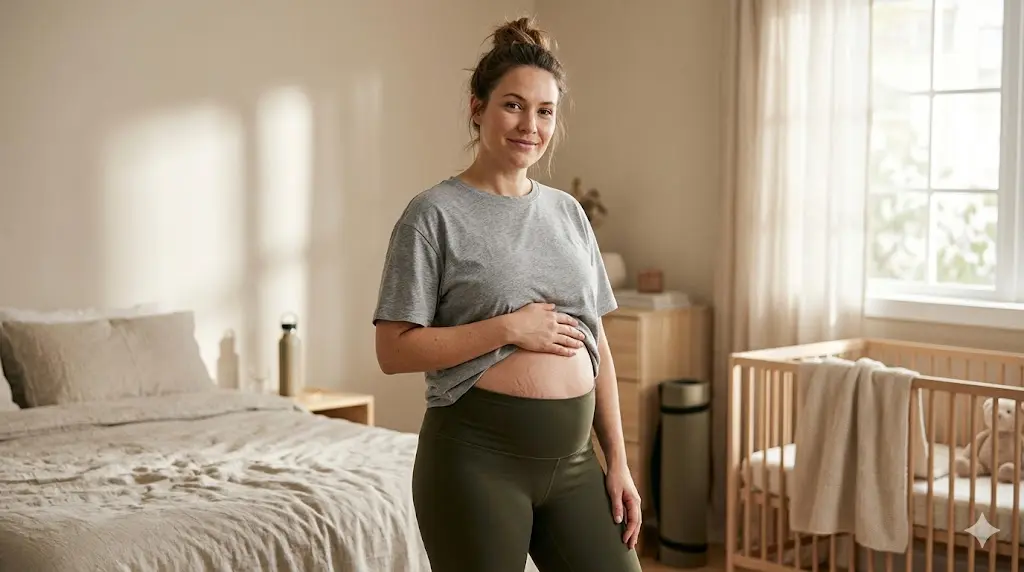
<p><img src="/assets/images/what-is-a-c-section-postpartum-belly.webp" alt="what-is-a-c-section-postpartum-belly" /></p>

<p>On top of that, the transverse abdominis and other deep core muscles are cut or stretched during the procedure, leaving the abdominal wall temporarily unable to function the way it used to. The uterus also takes 6–8 weeks just to shrink back to its pre-pregnancy size — a process called involution — which contributes to that still-pregnant appearance in the early weeks. <a href="https://www.nhs.uk/conditions/caesarean-section/recovery/">(NHS, Caesarean Section Recovery)</a></p>

<p>You did a great job, the process itself sounds scary. I am not a married woman, but I can feel your pain, as I helped my mother to heal through the C-Section belly after my youngest sister.</p>

<hr />

<h2 id="what-does-a-normal-postpartum-c-section-belly-look-like">What Does a Normal Postpartum C-Section Belly Look Like?</h2>

<p>“Normal” has a wide range here, and that’s important to acknowledge.</p>

<p>In the <strong>first 1–2 weeks</strong>, expect significant swelling, bloating, and a soft, doughy abdomen that still looks several months pregnant. This is entirely normal. The uterus alone weighs about 2.5 lbs after delivery and needs weeks to shrink.</p>

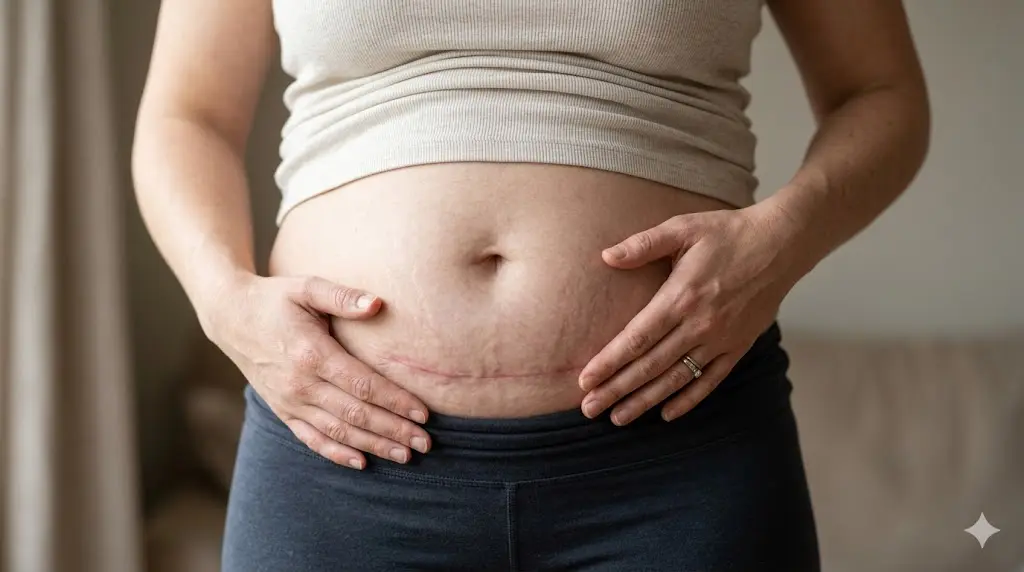
<p>By <strong>6–8 weeks</strong>, visible swelling usually subsides, but a soft pouch above the scar often remains. Many women describe it as a “B-shaped belly” — where the scar creates a horizontal indent that separates a lower pouch from the rest of the abdomen.</p>

<p><strong>Beyond 3–6 months</strong>, the belly continues to change, especially with consistent, appropriate rehabilitation. The pouch may persist — not because of laziness — but because scar tissue adhesions can physically prevent the skin from lying flat.</p>

<p>We need to really admire our bodies for this.</p>

<p><img src="/assets/images/what-does-a-postpartum-belly-after-c-section-look-like.webp" alt="what-does-a-postpartum-belly-after-c-section-look-like" /></p>

<blockquote>
  <p><em>“I’m 6 months pp, back to prepregnancy weight, workout as much as possible, every other body part looks similar to before, but my belly is still like 2–3 months pregnant.”</em></p>

  <p><em>“I’m 7 months and still 35 lbs heavier than pre-pregnancy… it’s all belly.”</em></p>
</blockquote>

<p>This is common. This is valid. And this is addressable.</p>

<hr />

<h2 id="how-to-lose-postpartum-belly-after-c-section-at-home">How to Lose Postpartum Belly After C-Section at Home</h2>

<h3 id="wait-for-clearance--seriously">Wait for Clearance — Seriously</h3>

<p>I know this is the last thing you want to hear, but jumping into exercise before your body is ready can cause more damage than the C-section itself. Your incision involves seven layers of tissue. Internally, you are healing from a uterine incision that carries real risks of dehiscence (reopening) if stressed too early.</p>

<p>The <a href="https://www.acog.org/womens-health/videos/postpartum-recovery">American College of Obstetricians and Gynecologists (ACOG)</a> recommends waiting for your 6-week postpartum visit before resuming structured exercise. Your OB may extend this window based on how your incision is healing.</p>

<p>What you <em>can</em> do from day one: walk. Short, gentle walks — even just around the house — improve circulation, reduce the risk of blood clots, and support mental health. Start with 5–10 minutes and build slowly.</p>

<hr />

<h3 id="targeted-home-exercises-that-are-actually-safe">Targeted Home Exercises That Are Actually Safe</h3>

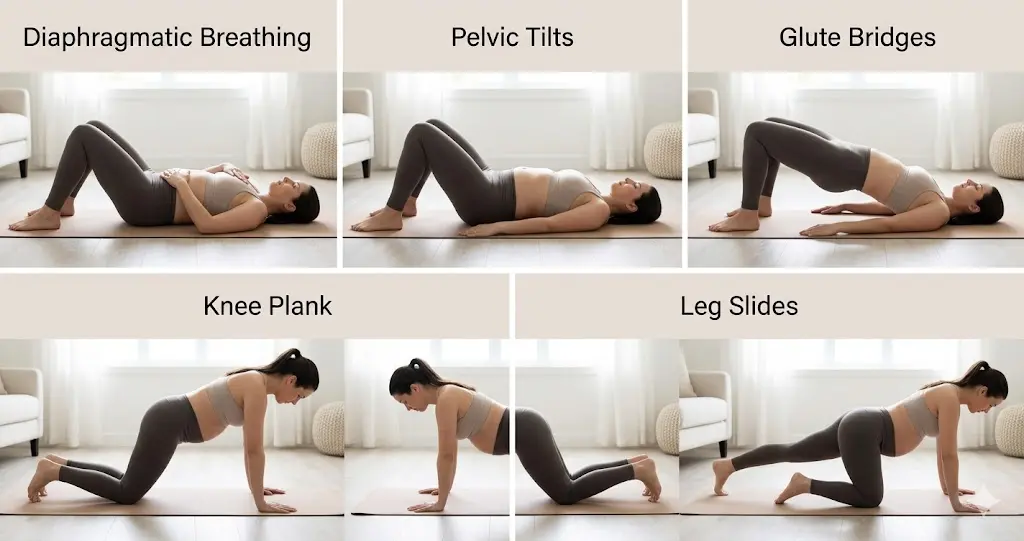
<p>Once you’re cleared, the goal is not “abs.” It’s <em>functional core rehab</em> — rebuilding the deep stabilizer muscles that were disrupted during surgery. Here’s what actually works:</p>

<p><img src="/assets/images/targeted-exercises-to-lose-post-partum-belly.webp" alt="targeted-exercises-to-lose-post-partum-belly" /></p>

<h4 id="360-diaphragmatic-breathing-start-week-12">360 Diaphragmatic Breathing <em>(Start Week 1–2)</em></h4>

<p>Lie on your back with knees bent. Inhale deeply through your nose, letting your ribcage expand in all directions. As you exhale slowly through your mouth, gently draw your navel inward. Follow <a href="https://youtu.be/9jpchJcKivk?si=RcmcNuxX_-KJjoZy">Michelle Kenway</a> and thank me later.</p>

<p>This activates the transverse abdominis — the deepest abdominal muscle — without any pressure on your scar. Research published in the <a href="https://www.ncbi.nlm.nih.gov/pmc/articles/PMC4395677/"><em>Journal of Physical Therapy Science</em></a> shows diaphragmatic breathing exercises significantly improve core muscle activation postpartum.</p>

<h4 id="pelvic-tilts-week-24">Pelvic Tilts <em>(Week 2–4)</em></h4>

<p>Lying on your back, knees bent, feet flat. Gently flatten your lower back against the floor by tilting your pelvis upward. Hold 5 seconds, release. This recruits the core without any incision strain. Follow <a href="https://youtu.be/44D6Xc2Fkek?si=7wjj4mCbC_Za8EMz">Rehab My Patient</a> for exact movements. I always add one or two reps in my workout as they are wonderful for lower back pain.</p>

<h4 id="glute-bridges-after-6-week-clearance">Glute Bridges <em>(After 6-Week Clearance)</em></h4>

<p>Lie on your back, knees bent. Push through your heels to lift your hips toward the ceiling. This targets glutes and core simultaneously, building the posterior chain that supports abdominal function. <a href="https://youtu.be/PhTDzR0TpZs?si=rQ_jrBm_6V6NGPO-">Hinge Health</a> is so underrated for this one. I do these when working on my lower core and lower back.</p>

<h4 id="modified-planks-on-knees-68-weeks-when-cleared">Modified Planks on Knees <em>(6–8 Weeks, When Cleared)</em></h4>

<p>Progress to a standard knee plank only when you can do so without doming (coning) in the abdomen — which is a sign of intra-abdominal pressure exceeding your current capacity. Follow <a href="https://youtu.be/ic40NXcsQ2M?si=DmROEbb6qiFzd1QT">Wellen</a> for exact movements.</p>

<h4 id="leg-slides-week-34">Leg Slides <em>(Week 3–4)</em></h4>

<p>Lying flat, slide one heel along the floor away from your body, keeping your core lightly engaged. Alternate legs. Low-impact, scar-safe, and highly effective for engaging the lower abdominals. Watch <a href="https://youtu.be/zQawqIdOI48?si=dFSsU6un_DDwbNYK">Pilates Encyclopedia</a> for exact movements.</p>

<blockquote>
  <p>⚠️ <strong>Skip these until fully healed:</strong> crunches, sit-ups, leg raises, any exercise that causes “coning” or doming at the midline. These increase intra-abdominal pressure and can worsen diastasis recti.</p>
</blockquote>

<hr />

<h3 id="nutrition-for-recovery--hydration">Nutrition for Recovery + Hydration</h3>

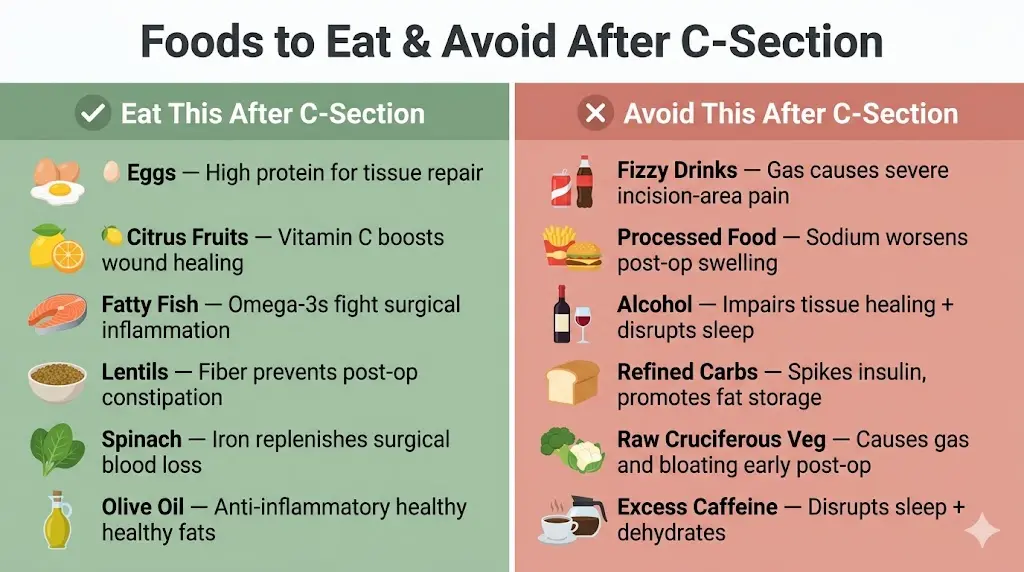
<p>This is where I see women go wrong most often — either doing nothing or swinging to crash dieting. Both backfire, especially postpartum.</p>

<p><img src="/assets/images/foods-to-eat-and-avoid-after-c-section.webp" alt="foods-to-eat-and-avoid-after-c-section" /></p>

<h4 id="which-fruit-is-good-after-a-c-section">Which fruit is good after a C-section?</h4>

<p>Papaya (ripe), kiwi, berries, and citrus fruits are particularly beneficial. Ripe papaya contains papain, an enzyme with anti-inflammatory properties. Kiwi and citrus are vitamin C powerhouses. Berries are loaded with antioxidants that combat surgical oxidative stress.</p>

<h4 id="why-drink-apple-juice-after-a-c-section">Why drink apple juice after a C-section?</h4>

<p>You’ve probably heard this in hospital — it’s not a myth. Apple juice is sometimes given in the immediate post-op period to stimulate bowel function and relieve gas. It’s easily digestible and provides quick energy without burdening a recently operated digestive system. However, this is a short-term hospital protocol, not a long-term strategy for belly reduction.</p>

<hr />

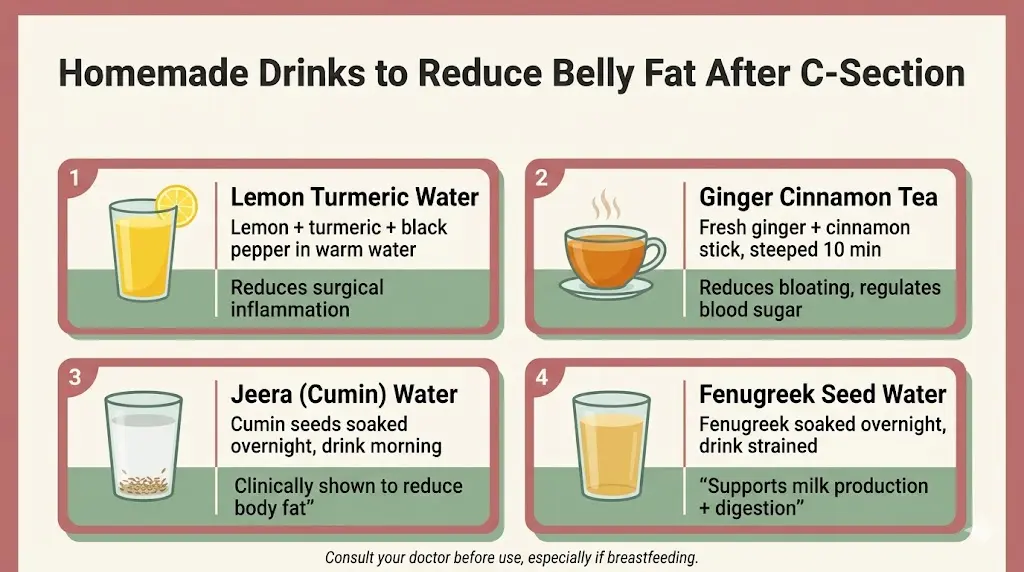
<h3 id="homemade-drinks-to-reduce-belly-fat-after-c-section">Homemade Drinks to Reduce Belly Fat After C-Section</h3>

<p>These aren’t magic potions, but they do support metabolism, reduce inflammation, and aid digestion — which matters for postpartum recovery.</p>

<p><img src="/assets/images/homemade-drinks-to-lose-belly-after-c-section.webp" alt="homemade-drinks-to-lose-belly-after-c-section" /></p>

<p><strong>1. Warm Lemon + Turmeric Water</strong>
Juice of half a lemon, ½ tsp turmeric, pinch of black pepper (enhances curcumin absorption) in warm water. Drink first thing in the morning. Curcumin — the active compound in turmeric — has documented anti-inflammatory effects. <a href="https://www.ncbi.nlm.nih.gov/pmc/articles/PMC5664031/">(NCBI: Curcumin Review)</a></p>

<p><strong>2. Ginger + Cinnamon Tea</strong>
Steep 1 inch fresh ginger and a cinnamon stick in hot water for 10 minutes. Ginger reduces bloating and promotes gastric motility. Cinnamon helps regulate blood sugar, which in turn reduces fat storage signals from insulin.</p>

<p><strong>3. Jeera (Cumin) Water</strong>
Soak 1 tsp of cumin seeds in water overnight. Strain and drink in the morning. Widely used in Ayurvedic postpartum care, cumin water has been shown to reduce body fat in clinical trials.</p>

<p><strong>4. Fenugreek Seed Water</strong>
Soak 1 tsp fenugreek seeds overnight, drink the water in the morning. Supports milk production <em>and</em> aids digestion. Avoid if you have a clotting disorder or are on blood thinners.</p>

<blockquote>
  <p><em>Note: Always check with your doctor before introducing new supplements or herbal drinks, especially while breastfeeding.</em></p>
</blockquote>

<hr />

<h2 id="is-it-possible-to-prevent-a-c-section-pouch">Is It Possible to Prevent a C-Section Pouch?</h2>

<p>Honestly? Not entirely — and that’s okay to admit. When a surgeon makes an incision through seven layers of abdominal tissue, some degree of scar formation and tissue tethering is almost inevitable.</p>

<p>But “not entirely preventable” is very different from “nothing you can do.” Several things, done early and consistently, can significantly minimize how pronounced the pouch becomes.</p>

<p><strong>Before surgery (if it’s planned):</strong> Building core strength and overall fitness before a scheduled C-section gives your abdominal muscles a stronger baseline to return to. Women who enter surgery with better core function tend to recover faster.</p>

<p><strong>Immediately post-op:</strong> Gentle walking within 24 hours (once cleared) reduces internal adhesion formation. Movement is one of the best natural anti-adhesion tools available — the body forms less scar tissue when it isn’t completely sedentary.</p>

<p><strong>Nutrition during recovery:</strong> An anti-inflammatory diet reduces the inflammatory cascade that drives excessive scar tissue formation. Vitamin C, zinc, and adequate protein all support organized, less-fibrotic wound healing. <a href="https://www.ncbi.nlm.nih.gov/pmc/articles/PMC5579659/">(NCBI: Micronutrients and Wound Healing)</a></p>

<p><strong>Belly Binding / Postpartum Wraps:</strong> A postpartum belly binder or compression wrap can reduce swelling, support your abdominal muscles, and improve posture as your core rebuilds. Studies suggest abdominal binders after cesarean delivery reduce pain and improve early mobility. Start with 4–6 hours per day and don’t wear while sleeping. Choose one specifically designed for post-C-section recovery, not generic shapewear. Try <a href="https://bellybandit.com/?srsltid=AfmBOopKUAlWlBTR7mVp4D5zsn9LQhesrRekeRVr8zSVTmsB-f59DeGO">Belly Bandit</a> for postpartum wraps.</p>

<p><strong>Scar Massage:</strong> At around 6–8 weeks post-op (once the scar is closed and non-tender), gentle scar massage can break down adhesions that cause the C-section shelf. Use two fingers to gently move the scar tissue horizontally, vertically, and in circles. This is one of the most underutilized tools for reducing the C-section pooch, and a pelvic floor physiotherapist can teach you exactly how. Follow <a href="https://youtu.be/Nc7PcwQeZro?si=IO4sFjY73tNp9JXo">NAYDAYA</a> for exact movements.</p>

<p><strong>Pelvic Floor Physical Therapy:</strong> A pelvic floor physio is not a luxury, it’s a tool. They assess diastasis recti, scar adhesion, and core dysfunction in ways no online article can. Many insurance plans cover this. If yours does, book an appointment before you start any home exercise program. Make sure to watch this <a href="https://youtube.com/shorts/QT5igbO-eFs?si=pevRoM27R6GCmjfE">interesting video</a> before going for a checkup.</p>

<p><strong>Breastfeeding (If Applicable):</strong> Breastfeeding burns an additional 300–500 calories per day and stimulates oxytocin release, which helps the uterus contract back to its pre-pregnancy size faster. It’s not a weight loss strategy on its own, but it’s a meaningful contributor.</p>

<hr />

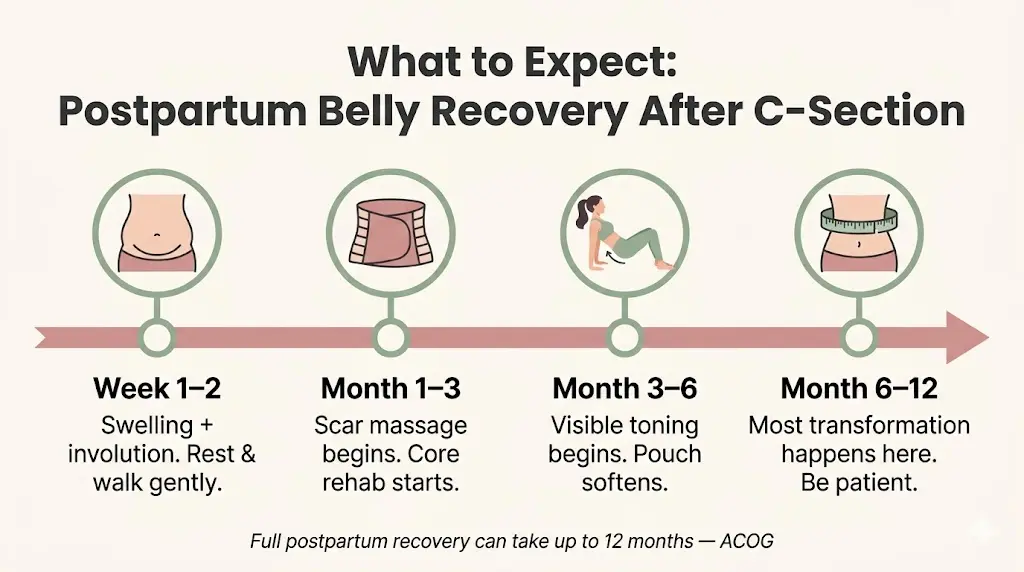
<h2 id="what-is-the-timeline-for-losing-a-postpartum-belly">What Is the Timeline for Losing a Postpartum Belly?</h2>

<p><img src="/assets/images/post-partum-belly-recovery-after-c-section.webp" alt="post-partum-belly-recovery-after-c-section" /></p>

<table>
  <thead>
    <tr>
      <th>Timeframe</th>
      <th>What’s Happening</th>
      <th>Focus</th>
    </tr>
  </thead>
  <tbody>
    <tr>
      <td><strong>Week 1–2</strong></td>
      <td>Uterus contracting; lose 8–12 lbs from baby, placenta, amniotic fluid. Belly still looks pregnant.</td>
      <td>Rest, hydration, gentle walks, incision care</td>
    </tr>
    <tr>
      <td><strong>Weeks 3–6</strong></td>
      <td>Swelling reduces. B-shaped belly becomes more apparent.</td>
      <td>Pelvic tilts, diaphragmatic breathing, nutrition</td>
    </tr>
    <tr>
      <td><strong>Weeks 6–12</strong></td>
      <td>OB clearance to exercise. Core rehab begins. Scar massage starts at Week 6–8.</td>
      <td>Progressive core rehab, scar massage, structured nutrition</td>
    </tr>
    <tr>
      <td><strong>Months 3–6</strong></td>
      <td>Consistent effort starts to show results. Many women near pre-pregnancy weight by Month 6.</td>
      <td>Increase exercise intensity, introduce resistance training</td>
    </tr>
    <tr>
      <td><strong>Months 6–12</strong></td>
      <td>Most visible transformation window. Full recovery can take up to 12 months (ACOG).</td>
      <td>Manage expectations — 6–12 months is a healthy, normal timeline</td>
    </tr>
    <tr>
      <td><strong>Beyond 1 Year</strong></td>
      <td>Lingering pouch is almost always untreated scar adhesions or uncorrected diastasis recti.</td>
      <td>Pelvic floor physiotherapist assessment is essential</td>
    </tr>
  </tbody>
</table>

<p><em>I love watching <a href="https://youtube.com/shorts/T6CpLTZ1g0M?si=38FPP2pSfuW-9bSV">GrowWithJo</a> — she is amazing!</em></p>

<hr />

<h2 id="what-causes-a-c-section-pooch">What Causes a C-Section Pooch?</h2>

<p>The C-section pooch — that shelf or overhang just above the scar — is caused by a specific combination of factors:</p>

<ul>
  <li><strong>Scar tissue adhesions:</strong> Internal scar tissue binds the skin to deeper structures, creating a “tethered” appearance that prevents the skin from lying flat</li>
  <li><strong>Weakened lower abdominal muscles:</strong> The muscles below the incision are cut and need rehabilitation to regain tone</li>
  <li><strong>Excess skin:</strong> Skin that was stretched over pregnancy may not fully retract, particularly after multiple pregnancies or significant weight gain</li>
  <li><strong>Residual fat:</strong> Subcutaneous fat accumulates in the lower abdomen and can sit differently after surgery</li>
</ul>

<p>The pooch is anatomically distinct from standard belly fat — which is why crunches, which target the rectus abdominis, do almost nothing for it. The work has to begin deeper and lower.</p>

<hr />

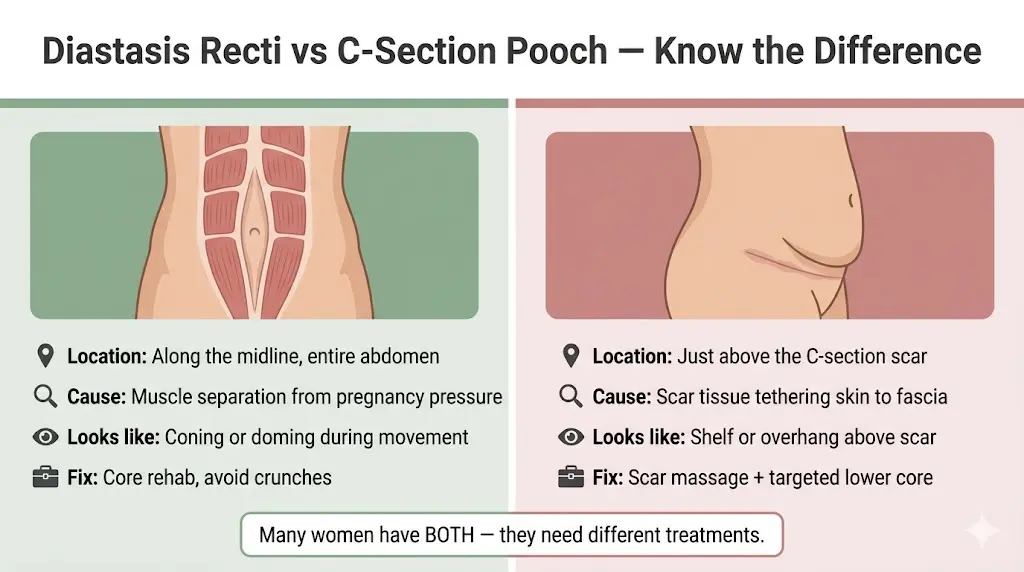
<h2 id="diastasis-recti-vs-c-section-pooch--whats-the-difference">Diastasis Recti vs. C-Section Pooch — What’s the Difference?</h2>

<p>These two conditions often coexist but are not the same thing, and confusing them leads to wrong treatment.</p>

<p><img src="/assets/images/diastasis-recti-vs-c-section-pooch.webp" alt="diastasis-recti-vs-c-section-pooch.webp" /></p>

<p><strong>Diastasis Recti</strong> is the separation of the two bands of the rectus abdominis (the “six-pack” muscles) along the midline. It occurs in up to 60% of women postpartum. You can check for it yourself: lie on your back, lift your head slightly, and feel along your midline — a gap wider than 2 fingers indicates diastasis recti. It causes a “coning” or “doming” of the belly during core movements. It can also happen after sudden and rapid weight loss.</p>

<p><strong>C-Section Pooch</strong> is the specific shelf or overhang <em>above the scar line</em>, caused by scar tissue adhesion and fat distribution changes. It is not a muscle separation issue — it’s a scar and skin issue.</p>

<p>Many women have both. If you do, healing requires addressing them as separate conditions — diastasis with specific core rehab, the pooch with scar massage and targeted lower core work.</p>

<hr />
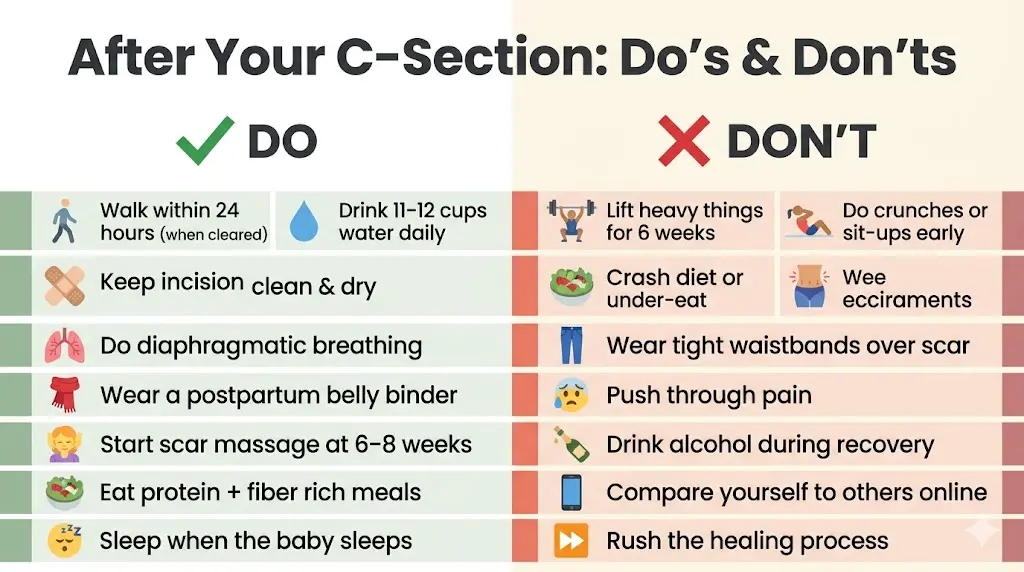
<h2 id="dos-and-donts-after-c-section-delivery">Do’s and Don’ts After C-Section Delivery</h2>

<p><img src="/assets/images/do's-and-don'ts-after-c-section-delivery.webp" alt="do's-and-don'ts-after-c-section-delivery" /></p>

<h2 id="conclusion">Conclusion</h2>

<p>Your C-section belly is not a life sentence. It is a very specific, very real physiological consequence of major surgery — and it responds to very specific, targeted action. Walking early. Breathing with intention. Massaging your scar. Eating to heal, not to punish. Being patient with a body that quite literally grew and delivered a human being through surgery.</p>

<p>The women who see the most progress are not the ones who push hardest the fastest. They’re the ones who understand <em>what</em> they’re dealing with, respect the healing process, and stay consistent with the right interventions over time.</p>

<p>You have everything you need to start. Begin where you are. Trust the process. And if something doesn’t feel right — physically or emotionally — talk to your doctor. That’s not weakness. That’s wisdom.</p>

<p><strong>If this article helped you, share it with a fellow mama who needs it.</strong> And if you’re ready to take the next step, book a consultation with a pelvic floor physiotherapist in your area — it may be the single best thing you do for your postpartum recovery.</p>

<hr />

<h2 id="frequently-asked-questions">Frequently Asked Questions</h2>

<h3 id="how-to-lose-20-pounds-after-a-c-section">How to lose 20 pounds after a C-section?</h3>

<p>Losing 20 lbs after a C-section is absolutely achievable, but it takes longer than you want it to. Here’s what works: start with a moderate caloric deficit of 300–500 calories below your TDEE (total daily energy expenditure) once breastfeeding is established and you’re past the 6-week mark. Combine this with low-impact cardio (walking, swimming), progressive core rehab, and resistance training once fully cleared. Most women safely lose 1–1.5 lbs per week at this rate. Rapid loss slows milk production and impairs healing.</p>

<h3 id="will-a-c-section-pooch-ever-go-away">Will a C-section pooch ever go away?</h3>

<p>For most women, yes — significantly. The timeline varies depending on how much scar tissue formed, whether adhesions are addressed (through massage and physio), your genetics, and whether diastasis recti is also present. Women who do scar tissue massage consistently from 8 weeks onward and who complete a proper core rehab program see the most dramatic improvement. For some women, particularly after multiple C-sections, a small pouch may persist — and at that point, cosmetic options like abdominoplasty exist if it causes significant distress.</p>

<h3 id="do-c-section-moms-have-a-harder-time-losing-weight">Do C-section moms have a harder time losing weight?</h3>

<p>In some ways, yes. The surgery affects the core muscles responsible for generating the metabolic “engine” of movement. A weakened core means less effective overall movement, lower baseline muscle tone, and potentially a reduced caloric burn. Add the fact that C-section recovery limits exercise for 6–8 weeks, disrupted sleep is universal, and cortisol from stress and sleep deprivation promotes fat storage — and yes, the deck is slightly stacked. But it’s not impossible. It just requires a smarter, more patient approach.</p>

<h3 id="how-to-reduce-belly-after-c-section-without-exercise">How to reduce belly after C-section without exercise?</h3>

<p>Nutrition is the primary lever. Focus on anti-inflammatory eating, eliminate processed food and sugar, prioritize protein (1g per pound of body weight), and stay aggressively hydrated. Scar massage alone can improve the appearance of the pouch significantly by releasing adhesions. Wearing a postpartum binder supports the abdomen and improves posture, which changes how the belly looks and sits. Sleep is genuinely metabolic — prioritize it.</p>

<h3 id="how-to-reduce-belly-after-c-section-after-2-years">How to reduce belly after C-section after 2 years?</h3>

<p>Two years post-C-section, you are not in the postpartum healing window anymore — but you’re also not without options. The approach shifts to: releasing any remaining scar adhesions (a pelvic physio can assess this), rebuilding deep core function with targeted exercise, and addressing any remaining diastasis recti. Standard fat loss strategies (caloric deficit + resistance training) become more applicable at this stage. Many women don’t begin serious C-section rehabilitation until 1–2 years postpartum and still see meaningful improvement.</p>

<h3 id="how-to-reduce-belly-after-c-section-after-10-years">How to reduce belly after C-section after 10 years?</h3>

<p>Ten years out, any remaining “pooch” is likely a combination of residual scar adhesion, lower abdominal fat distribution, and possible ongoing diastasis recti. The good news: scar tissue remains somewhat responsive to massage and manual therapy at any point. A pelvic floor physiotherapist can assess and treat adhesions even years later. Core rehabilitation works regardless of how long it’s been. For stubborn cases where scar tissue is the primary cause, a minor procedure called scar revision, or a consultation about abdominoplasty (tummy tuck), may be appropriate conversations to have with a plastic surgeon.</p>

<hr />

<p><em>This article is written for informational purposes only. Always consult your OB/GYN or healthcare provider before starting any exercise or nutrition protocol after a C-section.</em></p>]]></content><author><name>Amna Shahid</name></author><category term="Weight Loss" /><summary type="html"><![CDATA[Most post-C-section belly advice misses the real cause - scar adhesion. This guide covers the 7-layer anatomy, proven rehab exercises, nutrition, and a week-by-week recovery plan.]]></summary></entry><entry><title type="html">How To Get Rid Of Stress Belly Fat Female</title><link href="https://fitwithamna.me/how-to-get-rid-of-stress-belly-fat-female/" rel="alternate" type="text/html" title="How To Get Rid Of Stress Belly Fat Female" /><published>2026-05-05T00:00:00+00:00</published><updated>2026-05-05T00:00:00+00:00</updated><id>https://fitwithamna.me/how-to-get-rid-of-stress-belly-fat-female</id><content type="html" xml:base="https://fitwithamna.me/how-to-get-rid-of-stress-belly-fat-female/"><![CDATA[<h1 id="how-to-get-rid-of-stress-belly-fat-female-the-cortisol-belly-complete-guide">How to Get Rid of Stress Belly Fat (Female): The Cortisol Belly Complete Guide</h1>

<hr />

<h2 id="key-takeaways">Key Takeaways</h2>

<ul>
  <li><strong>Cortisol is the real culprit.</strong> Chronic stress floods your body with cortisol, which directly tells fat cells to settle around your midsection — not your thighs, not your arms. Your belly.</li>
  <li>You can’t out-exercise a stressed nervous system. Overtraining raises cortisol further. The fix is a combination of stress management, strategic movement, sleep, and targeted nutrition.</li>
  <li>Supplements can help, but they’re supporting players. Ashwagandha, magnesium, and Vitamin C have solid evidence behind them — but they work best once your lifestyle foundations are in place.</li>
</ul>

<hr />
<p><img src="/assets/images/how-to-get-rid-of-cortisol-belly-fat-for-women.webp" alt="how-to-get-rid-of-cortisol-belly-fat-for-women" /></p>

<p>I want to start by saying: <strong>I’ve been there.</strong> That stubborn pouch sitting low on your belly, the one that shows up precisely when life gets overwhelming — a brutal work season, a rocky relationship, months of broken sleep. You start eating salads and logging miles on the treadmill, and it does absolutely nothing. It just… sits there.</p>

<p>What most women don’t know is that stress belly fat is a hormonal problem, not a calorie problem. The moment you understand that, everything changes. So let me walk you through what’s actually happening inside your body — and exactly what you can do about it, backed by real research.</p>

<hr />

<h2 id="what-is-stress-cortisol-belly">What Is Stress (Cortisol) Belly?</h2>

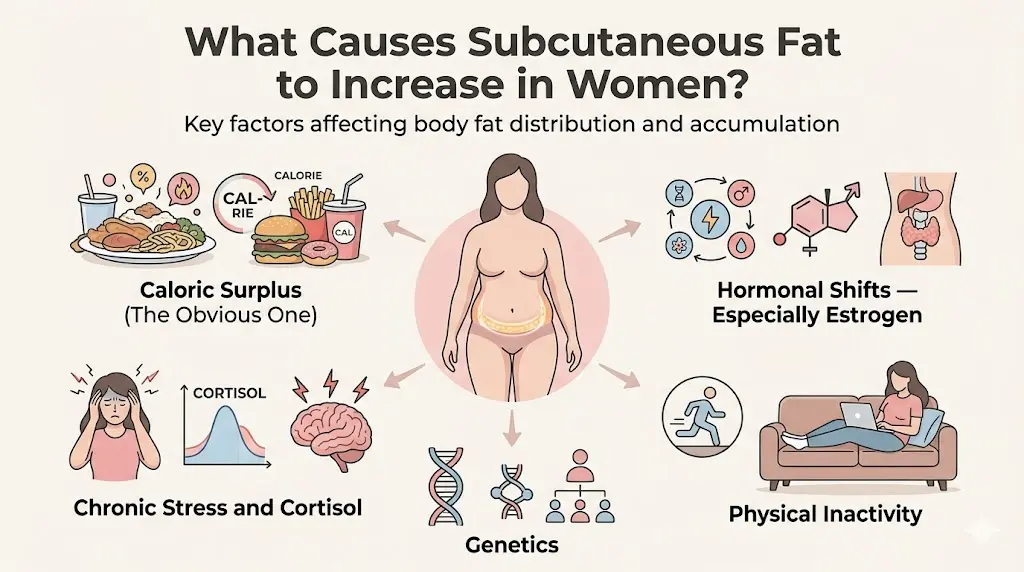
<p>When you’re chronically stressed, your adrenal glands release a hormone called <strong>cortisol.</strong> In short bursts, cortisol is useful — it’s your body’s alarm system. But when stress never switches off, cortisol stays elevated. And here’s the problem: <strong>cortisol directly stimulates fat storage in visceral adipose tissue</strong> — the deep belly fat that wraps around your organs.</p>

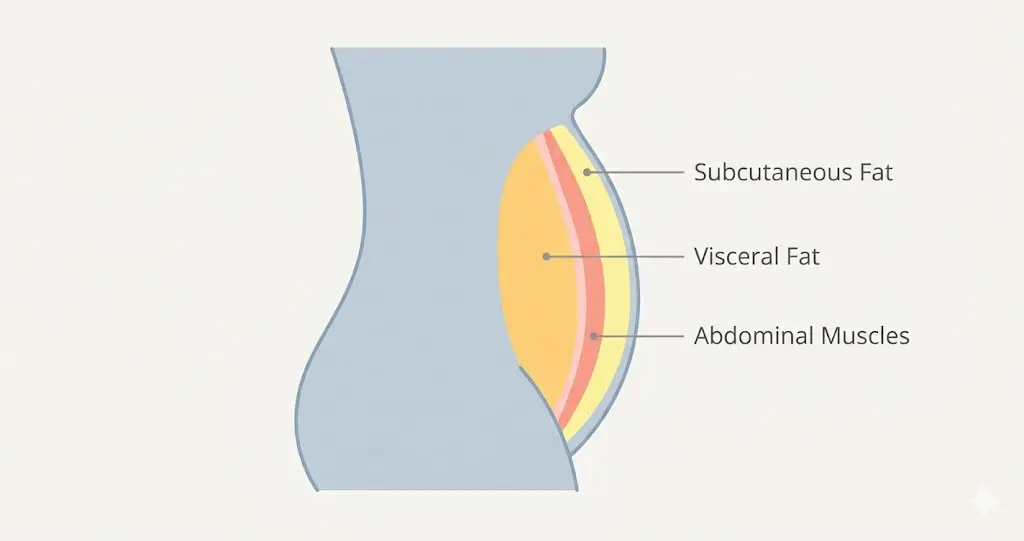
<p><a href="https://fitwithamna.me/how-to-get-rid-of-female-visceral-fat/">Visceral fat</a> is metabolically active in a way <a href="https://fitwithamna.me/how-to-get-rid-of-female-subcutaneous-fat/">subcutaneous fat</a> (the squishy kind just under the skin) isn’t. It pumps out inflammatory molecules, messes with insulin, and raises your risk for cardiovascular disease. Understanding <a href="https://fitwithamna.me/types-of-belly-fat-female/">which type of belly fat you’re dealing with</a> is the first step to tackling it the right way.</p>

<blockquote>
  <p><em>“Cortisol doesn’t just promote fat storage — it specifically redistributes fat toward the abdominal region by activating glucocorticoid receptors that are denser in visceral fat cells than anywhere else in the body.”</em>
— Björntorp P., International Journal of Obesity, 2001</p>
</blockquote>

<p>Alongside fat storage, cortisol also drives <strong>stress eating</strong> — that late-night urge to reach for chips or chocolate. It amps up ghrelin (the hunger hormone) and dulls your body’s satiety signals, creating a vicious loop of cravings, overeating, and more fat deposition. (Epel et al., <a href="https://www.ncbi.nlm.nih.gov/pubmed/11719631">Psychosomatic Medicine</a>, 2001)</p>

<hr />

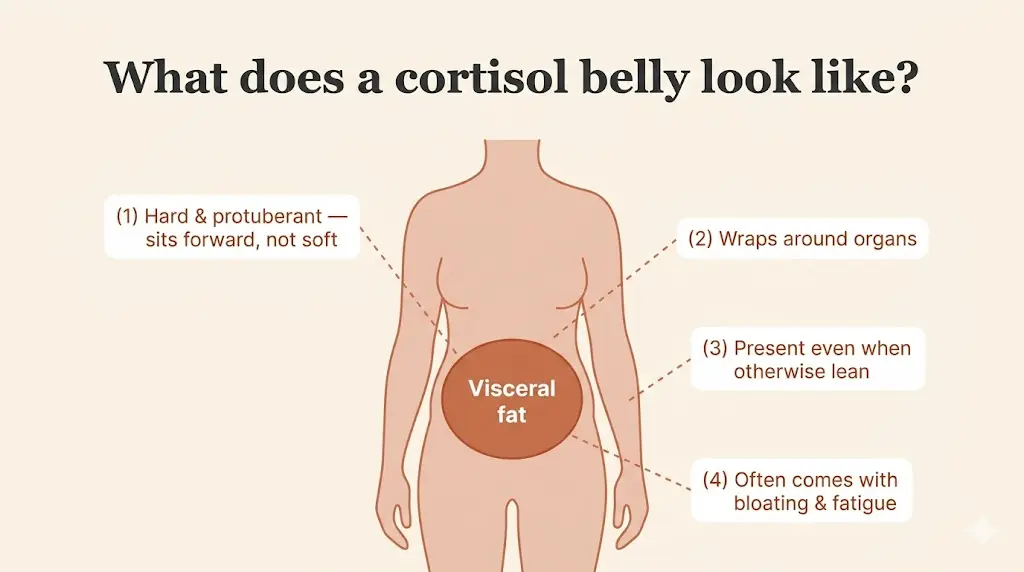
<h2 id="what-does-a-cortisol-belly-look-like">What Does a Cortisol Belly Look Like?</h2>

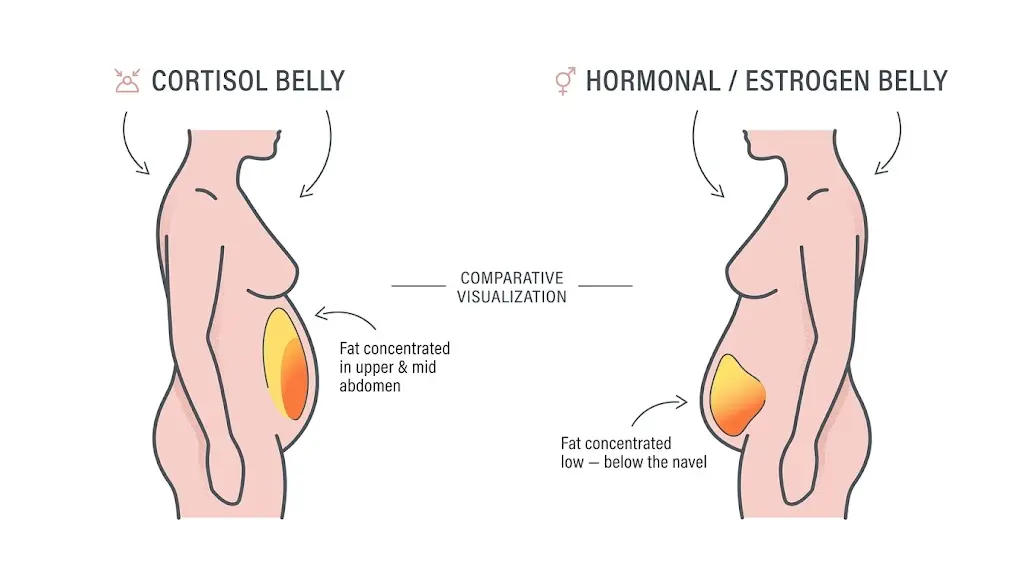
<p>A cortisol belly is distinct from other types of belly fat. Unlike the bloating you get after a salty meal or the soft overhang from subcutaneous fat, stress belly tends to be:</p>

<ul>
  <li><strong>Hard and protuberant</strong> — it sits forward, not soft or droopy</li>
  <li>Located in the <strong>upper and mid-abdomen</strong>, sometimes described as a “pot belly” shape</li>
  <li>Present even when the rest of your body looks relatively lean</li>
  <li><strong>Often accompanied by bloating, water retention</strong>, and chronic fatigue</li>
</ul>

<p><img src="/assets/images/what-does-cortisol-belly-look-like.webp" alt="what-does-cortisol-belly-look-like" /></p>

<p>If yours is the visceral type, you’ll want to approach it very differently from soft subcutaneous fat — the strategies aren’t interchangeable.</p>

<hr />

<h2 id="how-to-check-cortisol-levels-at-home">How to Check Cortisol Levels at Home?</h2>

<p>You don’t need to rush to a lab to get a sense of where your cortisol stands. There are a few accessible options:</p>

<table>
  <thead>
    <tr>
      <th>🧪 At-Home Saliva Test</th>
      <th>💧 Urine Cortisol Test</th>
    </tr>
  </thead>
  <tbody>
    <tr>
      <td>Brands like <a href="https://www.everlywell.com/">Everlywell</a> offer cortisol saliva tests collected at 4 points throughout the day — showing your daily cortisol rhythm. Most accurate for functional assessment.</td>
      <td>A 24-hour urine collection measures total cortisol output. Often used to rule out Cushing’s syndrome. Can be ordered online or through your GP.</td>
    </tr>
    <tr>
      <td><strong>🩸 Blood Test (Lab)</strong></td>
      <td><strong>📋 Symptom Checklist</strong></td>
    </tr>
    <tr>
      <td>Serum cortisol drawn between 8–9 AM (peak time). Gold standard. Ask your doctor for a morning cortisol + DHEA-S panel for a fuller hormonal picture.</td>
      <td>Track your symptoms: poor sleep, waist weight gain, mood swings, afternoon energy crashes, and sugar cravings are all signs of dysregulated cortisol.</td>
    </tr>
  </tbody>
</table>

<blockquote>
  <p><strong>Note:</strong> Home tests are useful for tracking patterns but always confirm with a physician if you suspect adrenal dysfunction.</p>
</blockquote>

<hr />

<h2 id="how-to-reduce-cortisol-belly-5-evidence-based-strategies">How to Reduce Cortisol Belly: 5 Evidence-Based Strategies</h2>

<p>Let me be direct with you — there is no single hack here. But there is a clear, research-backed framework. Let’s go through each one honestly.</p>

<hr />

<h3 id="manage-stress--because-yes-stress-can-cause-weight-gain">Manage Stress — Because Yes, Stress Can Cause Weight Gain</h3>

<p>The short answer to “Can stress cause weight gain?” is an unambiguous <strong>yes.</strong> A landmark study published in <em>Obesity</em> found that women who experienced major life stress had significantly higher visceral fat accumulation over an 18-month period, independent of caloric intake. (Kuo et al., <a href="https://onlinelibrary.wiley.com/doi/10.1038/oby.2009.125">Obesity</a>, 2009)</p>

<p>Cortisol doesn’t just store fat — it also <strong>breaks down muscle</strong> (gluconeogenesis) and raises blood glucose, spiking insulin. Insulin, as you may know, is a powerful fat-storage hormone. So you get a double punch: more fat being deposited AND less muscle to burn it.</p>

<h4 id="what-actually-works-for-stress-reduction">What actually works for stress reduction:</h4>

<ul>
  <li>
    <p><strong>Mindfulness-Based Stress Reduction (MBSR):</strong> An 8-week MBSR program reduced cortisol by 15–20% in clinical trials. (<a href="https://pmc.ncbi.nlm.nih.gov/articles/PMC328554">Turakitwanakan et al., J Med Assoc Thai, 2013</a>)</p>
  </li>
  <li>
    <p><strong>Diaphragmatic breathing (4-7-8 method):</strong> Activates the parasympathetic nervous system and blunts the cortisol spike within minutes. Even 5 minutes daily makes a measurable difference. I really admire <a href="https://youtu.be/9jpchJcKivk?si=W2-TzcsqvyLzgo4V">Michelle Kenway</a> for making it easy.</p>
  </li>
  <li>
    <p><strong>Nature exposure:</strong> A 20-minute walk in green space reduces salivary cortisol by 21%. (<a href="https://www.frontiersin.org/journals/psychology/articles/10.3389/fpsyg.2019.00722/full">Hunter et al., Frontiers in Psychology, 2019</a>) I usually go outside for 6k steps daily — that’s how I get myself involved in nature.</p>
  </li>
  <li>
    <p><strong>Sleep optimization:</strong> Cortisol follows a diurnal rhythm — it’s meant to peak at 7 AM and bottom out by midnight. Disrupting sleep even by 2 hours throws the entire curve off. Aim for 7–9 hours with a consistent bedtime. I would suggest you sleep before 11pm. Trust me, it works.</p>
  </li>
</ul>

<hr />

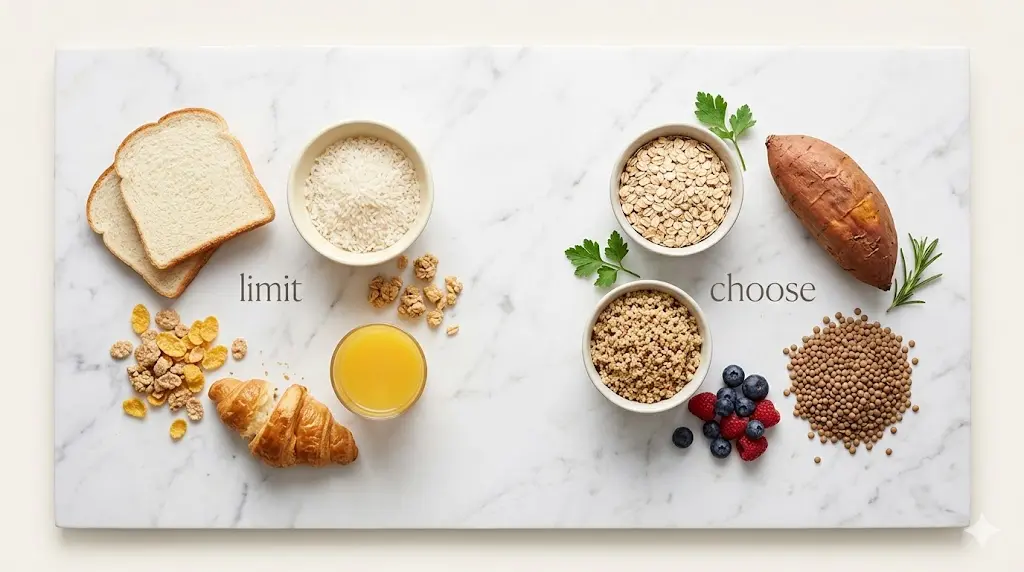
<h3 id="balanced-nutrition-what-to-eat-what-to-ditch">Balanced Nutrition: What to Eat, What to Ditch</h3>

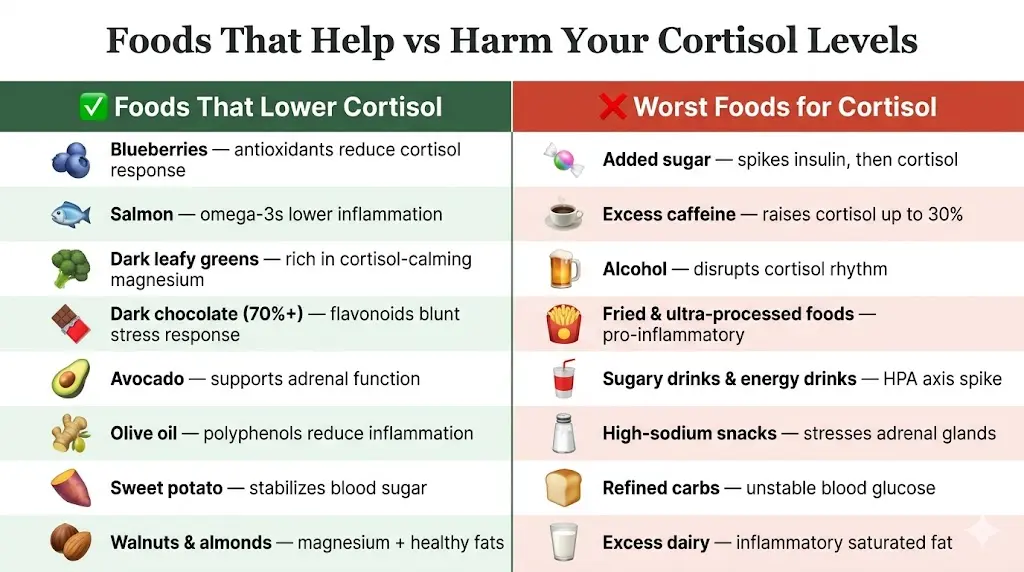
<p>Diet for a cortisol belly isn’t about eating less — it’s about eating smart. Certain foods <strong>reduce cortisol</strong>; others actively raise it.</p>

<hr />
<p><img src="/assets/images/foods-that-lowers-cortisol-vs-foods-that-makes-it-worst.webp" alt="foods-that-lowers-cortisol-vs-foods-that-makes-it-worst.webp" /></p>

<h3 id="vitamins-that-help-cortisol-belly">Vitamins That Help Cortisol Belly</h3>

<p>Several micronutrients play a direct role in keeping cortisol in check. Here’s what the research shows:</p>

<ul>
  <li>
    <p><strong>Vitamin C:</strong> One of the most studied anti-cortisol nutrients. Adrenal glands have the highest concentration of Vitamin C in the body. I eat guavas to ensure my vitamin C needs.</p>
  </li>
  <li>
    <p><strong>Magnesium:</strong> Deficiency is directly linked to HPA axis hyperactivity. Studies show up to 68% of adults are magnesium-deficient. (<a href="https://www.ncbi.nlm.nih.gov/pmc/articles/PMC5786912/">Rosanoff et al., Nutrients, 2018</a>) Magnesium glycinate at 300–400mg before bed is the form I recommend. I eat two almonds and two cashews daily to intake my magnesium.</p>
  </li>
  <li>
    <p><strong>Vitamin D:</strong> Low Vitamin D is associated with elevated cortisol and increased visceral fat in women specifically. (<a href="https://www.ncbi.nlm.nih.gov/pmc/articles/PMC6566188/">Jackson et al., Nutrients, 2019</a>) Never ignore your omelette at breakfast — best source of Vitamin D.</p>
  </li>
  <li>
    <p><strong>B Vitamins (especially B5 &amp; B12):</strong> B5 (pantothenic acid) is essential for adrenal hormone synthesis. B12 deficiency causes elevated homocysteine and oxidative stress, which indirectly drives up cortisol. (<a href="https://www.ncbi.nlm.nih.gov/pmc/articles/PMC4772032/">Kennedy, Nutrients, 2016</a>) I drink a cup of milk and a bowl of yoghurt daily as a source of Vitamin B.</p>
  </li>
</ul>

<hr />

<h3 id="what-is-a-cortisol-detox-diet">What Is a Cortisol Detox Diet?</h3>

<p>The “cortisol detox diet” is a functional eating framework that reduces cortisol-spiking foods while flooding the body with nutrients that support adrenal health. Think of it as an anti-inflammatory, blood-sugar-stable, nutrient-dense approach. In practice:</p>

<ul>
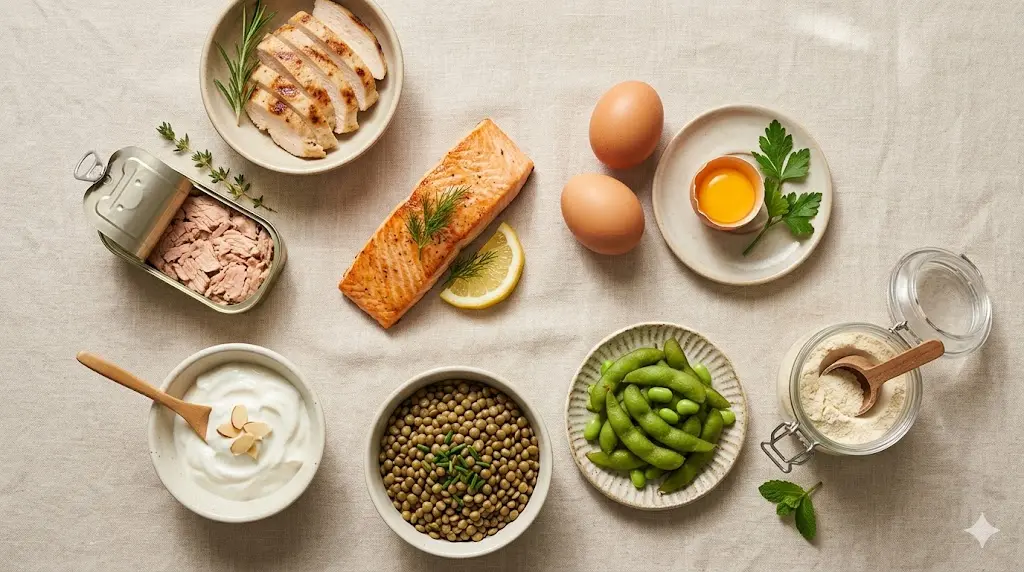
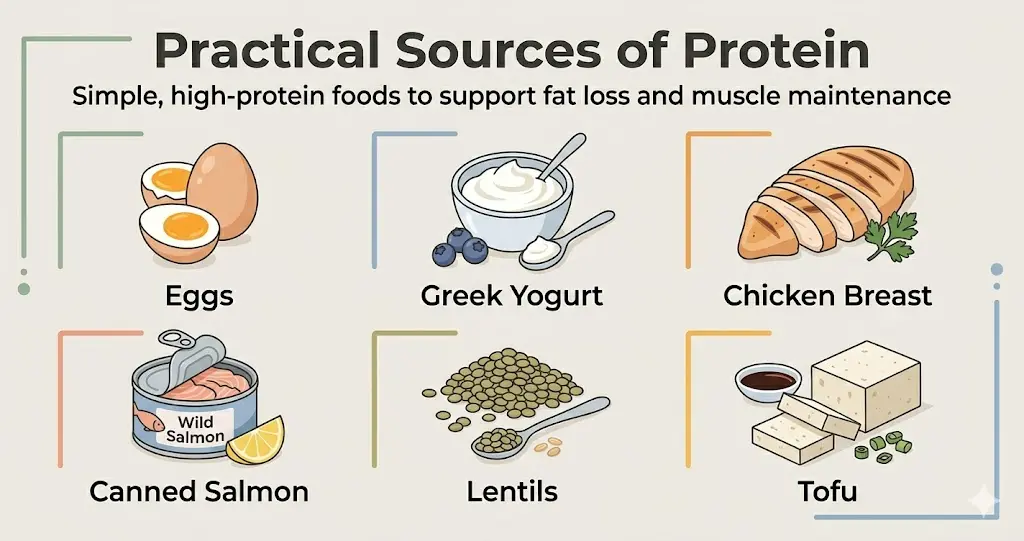
  <li>Eating protein with every meal to stabilize blood glucose (chicken breasts, egg, greek yoghurt)</li>
  <li>Prioritizing omega-3 fatty acids from fish or algae oil</li>
  <li>Cutting caffeine to one cup before noon</li>
  <li>Going 80% whole foods for 3–4 weeks (legumes, leafy greens, cruciferous veggies)</li>
  <li>Avoiding 3-hour gaps between meals (blood sugar drops = cortisol spike) — try light snacks such as two almonds</li>
</ul>

<hr />

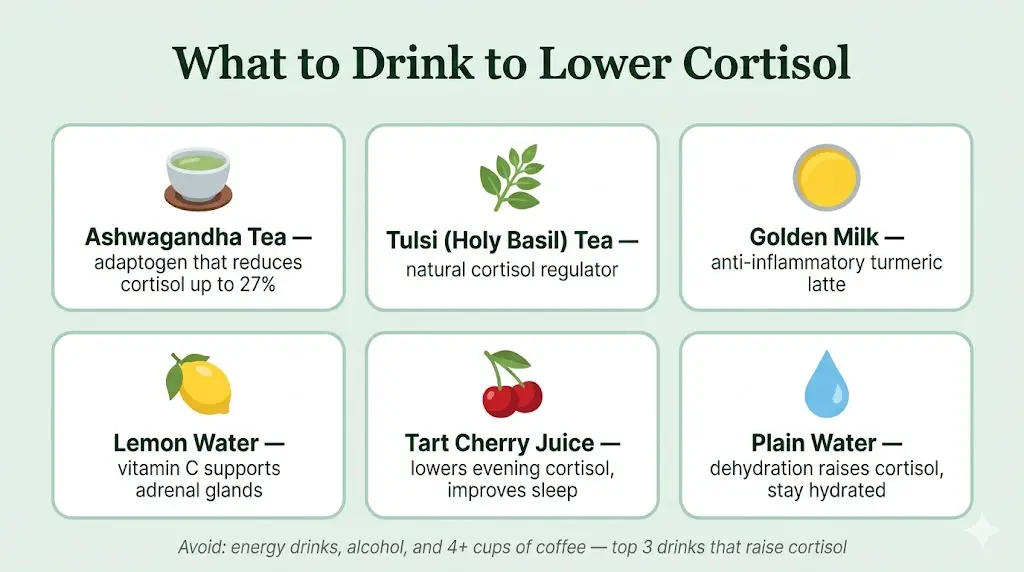
<h3 id="what-to-drink-to-reduce-cortisol">What to Drink to Reduce Cortisol?</h3>

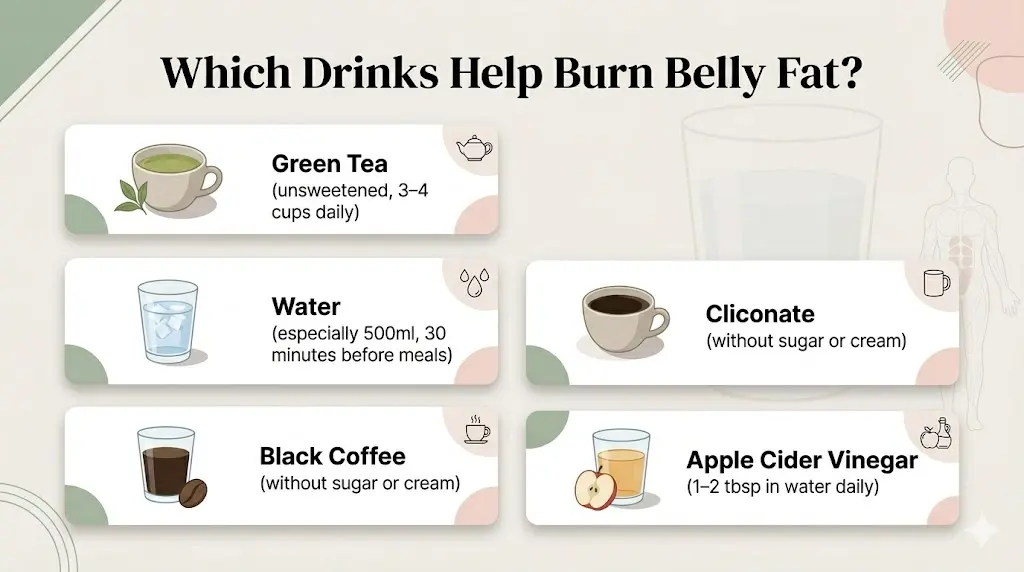
<p>And a quick note on what <strong>not</strong> to drink: energy drinks, alcohol, and 4+ cups of coffee per day are the top three drinks that raise cortisol quickly. <a href="https://fitwithamna.me/what-drinks-burn-belly-fat-in-1-week/">If you want drinks that actively target belly fat</a>, there are a few research-backed options worth adding to your daily routine.</p>

<p><img src="/assets/images/what-to-drink-to-lower-cortisol.webp" alt="what-to-drink-to-lower-cortisol" /></p>

<hr />

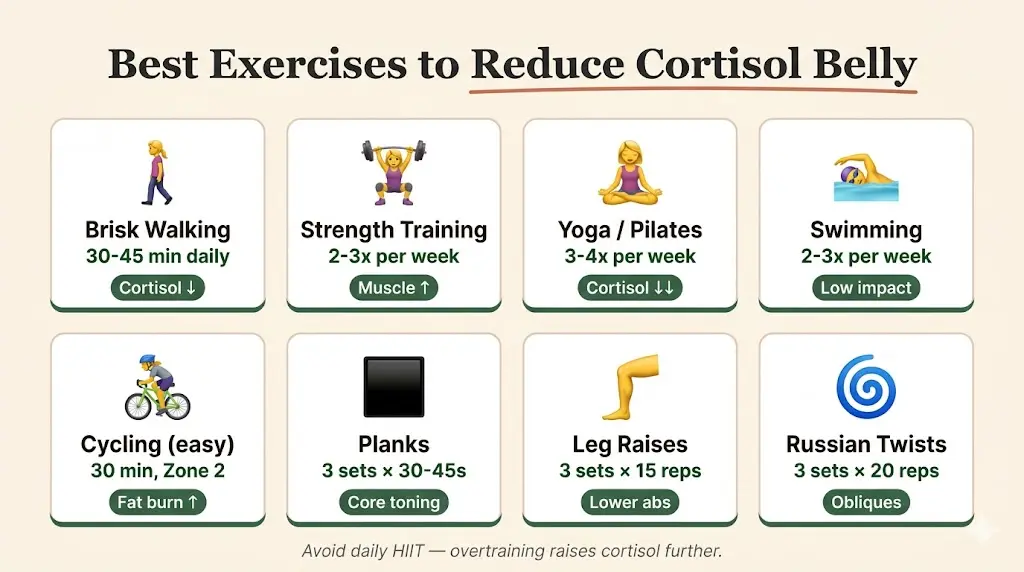
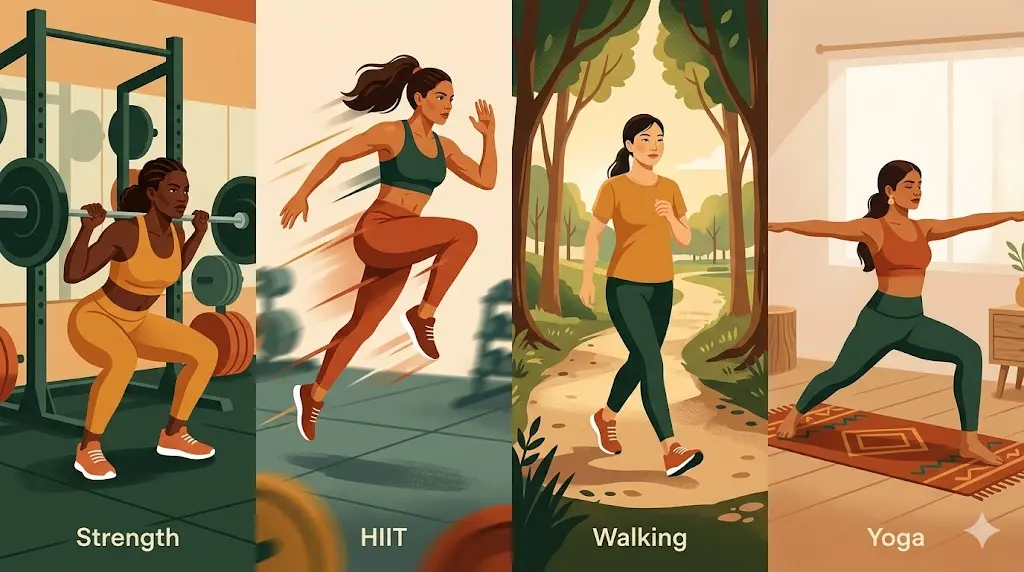
<h3 id="exercise-the-right-kind-lowers-cortisol-the-wrong-kind-raises-it">Exercise: The Right Kind Lowers Cortisol. The Wrong Kind Raises It.</h3>

<p>This is where most women go wrong. You’re already stressed, so you punish yourself with daily intense HIIT or 2-hour cardio sessions.</p>

<p>Here’s the research reality: <strong>high-intensity exercise for 60+ minutes raises cortisol significantly</strong> and keeps it elevated for hours afterward. (Hill et al., JSCR, 2011 — <a href="https://journals.lww.com/nsca-jscr/Fulltext/2011/04000/Cortisol_and_the_Athlete.13.aspx">journals.lww.com</a>)</p>

<p>What you want is <strong>moderate-intensity exercise</strong> that activates fat burning without triggering a cortisol surge. Strength training 2–3x per week builds muscle (which increases resting metabolic rate) without spiking cortisol the way chronic cardio does.</p>

<p>If you’ve been deep in the <a href="https://fitwithamna.me/how-to-get-rid-of-hormonal-belly-fat-in-women/">hormonal belly fat cycle</a>, switching from HIIT-heavy routines to this kind of strategic, lower-intensity approach can produce visible changes within 4–6 weeks — not because you’re burning more calories, but because you’re lowering the hormonal environment that was causing storage in the first place.</p>

<p><img src="/assets/images/best-exercises-to-redice-cortisol-belly.webp" alt="best-exercises-to-redice-cortisol-belly" /></p>

<p><strong>My favs!</strong></p>

<ul>
  <li>🧘 For pilates: <a href="https://youtu.be/3tH88dN3PaI?si=usxaXjKAPjHypNx2">Lily Sabri</a></li>
  <li>🧘 For yoga: <a href="https://youtu.be/sTANio_2E0Q?si=mFr2tUL5-TUhLr3A">MadFit</a></li>
  <li>💪 For strength training: <a href="https://youtu.be/V09O2rwArjI?si=2KBoen-AfReG76el">Rebecca Louise</a></li>
</ul>

<p>I hit strength training on Friday, yoga and pilates on Saturday, and rest on Sunday.</p>

<hr />

<h3 id="sleep-your-most-underrated-cortisol-tool">Sleep: Your Most Underrated Cortisol Tool</h3>

<p>A single night of poor sleep raises morning cortisol by up to <strong>37%.</strong> (Leproult et al., Sleep, 1997 — <a href="https://academic.oup.com/sleep/article/20/10/865/2725079">academic.oup.com/sleep</a>)</p>

<p>Chronic sleep deprivation essentially puts your HPA axis in a permanent stress state. Priority actions: <strong>consistent bedtime, no screens 60 minutes before sleep, blackout curtains, and bedroom temperature under 67°F (19°C).</strong></p>

<p>If you’re getting 7 hours but poor-quality sleep, look into magnesium glycinate and a proper wind-down routine.</p>

<hr />

<h3 id="supplements-what-actually-has-evidence">Supplements: What Actually Has Evidence?</h3>

<p>Let me be honest: supplements work best as a support layer, not a solution. I don’t take supplements and never took one. This data is backed by research. I would suggest consulting a doctor before, or if possible, avoid supplements.</p>

<table>
  <thead>
    <tr>
      <th>Supplement</th>
      <th>What It Does</th>
      <th>Dosage</th>
      <th>Evidence Level</th>
    </tr>
  </thead>
  <tbody>
    <tr>
      <td><strong>Ashwagandha (KSM-66)</strong></td>
      <td>Reduces serum cortisol by up to 27.9% in 8 weeks (adaptogen)</td>
      <td>300–600mg daily</td>
      <td>⭐⭐⭐⭐⭐ Strong RCT evidence</td>
    </tr>
    <tr>
      <td><strong>Magnesium Glycinate</strong></td>
      <td>Calms HPA axis; improves sleep quality and cortisol rhythm</td>
      <td>300–400mg before bed</td>
      <td>⭐⭐⭐⭐ Good evidence</td>
    </tr>
    <tr>
      <td><strong>Phosphatidylserine</strong></td>
      <td>Blunts exercise-induced cortisol spike</td>
      <td>400–800mg/day</td>
      <td>⭐⭐⭐⭐ Moderate-strong</td>
    </tr>
    <tr>
      <td><strong>Vitamin C</strong></td>
      <td>Adrenal support; reduces cortisol response to stress</td>
      <td>500–1,000mg daily</td>
      <td>⭐⭐⭐⭐ Good evidence</td>
    </tr>
    <tr>
      <td><strong>Rhodiola Rosea</strong></td>
      <td>Adaptogen that modulates cortisol under physical/mental stress</td>
      <td>200–400mg daily</td>
      <td>⭐⭐⭐ Emerging evidence</td>
    </tr>
    <tr>
      <td><strong>L-Theanine</strong></td>
      <td>Reduces cortisol and anxiety by promoting alpha brain waves</td>
      <td>100–200mg daily</td>
      <td>⭐⭐⭐ Moderate evidence</td>
    </tr>
  </tbody>
</table>

<p>A quick blood panel (cortisol + magnesium + Vitamin D) will tell you exactly where you’re deficient before you spend money on supplements you don’t need.</p>

<hr />

<h2 id="10-warning-signs-of-high-cortisol">10 Warning Signs of High Cortisol</h2>

<p>Before we move on, it’s worth flagging when you might be dealing with clinically elevated cortisol — not just regular life-stress levels. Here are the ten signs to watch for:</p>

<ol>
  <li>Unexplained abdominal weight gain — especially a round, firm belly that wasn’t there before</li>
  <li>Thin arms and legs with a larger midsection — fat redistribution pattern classic to hypercortisolism</li>
  <li>Purple or pink stretch marks (striae) on the abdomen, breasts, or thighs</li>
  <li>Persistent fatigue despite adequate sleep — adrenal fatigue depletes energy reserves</li>
  <li>High blood pressure — cortisol constricts blood vessels and retains sodium</li>
  <li>Increased sugar and carb cravings — cortisol-driven blood glucose dysregulation</li>
  <li>Brain fog and poor concentration — chronic cortisol shrinks the hippocampus over time</li>
  <li>Low libido and irregular periods — cortisol suppresses reproductive hormones</li>
  <li>Frequent infections or slow wound healing — cortisol suppresses immune function</li>
  <li>Anxiety, irritability, or depression — cortisol dysregulates serotonin and dopamine pathways</li>
</ol>

<p>If you’re ticking 5 or more of these, please get your cortisol formally tested. Conditions like <strong>Cushing’s syndrome</strong> (chronic pathological hypercortisolism) require medical management, not lifestyle tweaks alone. (<a href="https://www.niddk.nih.gov/health-information/endocrine-diseases/cushings-syndrome">National Institute of Diabetes — Cushing’s Syndrome</a>)</p>

<hr />

<h2 id="conclusion">Conclusion</h2>

<p>Stress belly fat isn’t a character flaw, a willpower problem, or a sign that you need to try harder. It’s your body doing exactly what it’s designed to do — <strong>protecting you from a threat.</strong> The problem is that modern life keeps the threat alarm on permanently.</p>

<p>The framework is clear: lower cortisol through stress management and better sleep, feed your adrenals with the right nutrients, exercise without overtaxing your nervous system, and use supplements strategically. None of these are instant fixes. But together, they’re profoundly effective — and the research is solidly behind them.</p>

<p>You didn’t gain a stress belly overnight, and you won’t lose it overnight. But give this approach <strong>8–12 weeks</strong>, and the shift is real.</p>

<hr />

<h2 id="frequently-asked-questions">Frequently Asked Questions</h2>

<h3 id="how-to-lower-cortisol-for-weight-loss">How to lower cortisol for weight loss?</h3>

<p>The most effective cortisol-lowering strategy for weight loss is a combination approach: prioritize 7–9 hours of quality sleep (this alone can reduce morning cortisol by 15–30%), practice daily stress reduction (5–10 minutes of deep breathing or MBSR), limit caffeine after noon, eat balanced meals with protein at each sitting to prevent blood sugar crashes, and incorporate moderate exercise like walking and strength training.</p>

<h3 id="what-vitamin-deficiency-causes-high-cortisol">What vitamin deficiency causes high cortisol?</h3>

<p>The most directly linked deficiencies are <strong>magnesium</strong> (deficiency hyperactivates the HPA axis, raising cortisol), <strong>Vitamin C</strong> (adrenal glands require high concentrations to regulate cortisol synthesis), and <strong>Vitamin D</strong> (low levels correlate with elevated cortisol and greater visceral fat in women). B5 (pantothenic acid) deficiency can also impair adrenal function. A full blood panel including serum magnesium, 25-OH Vitamin D, and RBC Vitamin C levels is your most useful diagnostic tool.</p>

<h3 id="what-reduces-cortisol-quickly">What reduces cortisol quickly?</h3>

<p>For rapid cortisol reduction (within minutes to hours): <strong>diaphragmatic breathing</strong> (4-7-8 technique for 5 minutes) activates the parasympathetic nervous system and measurably drops cortisol almost immediately. Music — specifically slow, calming music — has been shown to reduce cortisol in hospital studies within 20 minutes. For slightly longer-term rapid effects (24–72 hours): reduce caffeine intake, get extra sleep, avoid intense exercise, and eat a high-protein meal with complex carbs.</p>

<hr />

<blockquote>
  <p><strong>Disclaimer:</strong> This article is for informational purposes only and does not constitute medical advice. Always consult a qualified healthcare provider before making changes to your diet, supplement regimen, or exercise routine.</p>
</blockquote>]]></content><author><name>Amna Shahid</name></author><category term="Weight Loss" /><summary type="html"><![CDATA[How to Get Rid of Stress Belly Fat (Female): The Cortisol Belly Complete Guide]]></summary></entry><entry><title type="html">How To Get Rid Of Hormonal Belly Fat In Women</title><link href="https://fitwithamna.me/how-to-get-rid-of-hormonal-belly-fat-in-women/" rel="alternate" type="text/html" title="How To Get Rid Of Hormonal Belly Fat In Women" /><published>2026-05-04T00:00:00+00:00</published><updated>2026-05-04T00:00:00+00:00</updated><id>https://fitwithamna.me/how-to-get-rid-of-hormonal-belly-fat-in-women</id><content type="html" xml:base="https://fitwithamna.me/how-to-get-rid-of-hormonal-belly-fat-in-women/"><![CDATA[<h1 id="how-to-get-rid-of-hormonal-belly-fat-in-women-what-actually-works">How to Get Rid of Hormonal Belly Fat in Women (What Actually Works)</h1>

<h2 id="key-takeaways">Key Takeaways</h2>

<ul>
  <li>Hormonal belly fat — especially the <a href="https://fitwithamna.me/how-to-get-rid-of-stomach-pooch-women/">stubborn lower pooch</a> — is often driven by estrogen decline, high cortisol, or insulin resistance, not just calorie intake.</li>
  <li>Strength training 2–4x per week combined with 7–9 hours of sleep are among the most evidence-backed interventions for visceral fat reduction in women.</li>
  <li>Targeted supplements (ashwagandha, magnesium, omega-3s) and, for menopausal women, hormone replacement therapy (HRT), can meaningfully support fat loss when diet and exercise alone aren’t enough.</li>
</ul>

<hr />
<p><img src="/assets/images/hormonal-belly-fat-female.webp" alt="hormonal-belly-fat-female" /></p>

<p>I want to start with something I read on Reddit that stopped me mid-scroll:</p>

<blockquote>
  <p><em>“I’ve lost 30 lbs, I’m at a healthy weight, I’ve done calorie deficits, intermittent fasting, weight training, more cardio… and that belly pooch is still there.”</em></p>
</blockquote>

<p>That woman is 5’2”, 112 lbs, and 28 years old. By every conventional metric, she’s doing everything “right.” And yet — the belly stays.</p>

<p>If that sounds familiar, I need you to know: <strong>you are not failing</strong>. Your hormones might just be working against you in ways that no amount of extra cardio can override.</p>

<p>Let me break down what’s actually happening — and what I’ve learned actually moves the needle.</p>

<hr />

<h2 id="what-is-a-hormonal-belly-really">What Is a Hormonal Belly, Really?</h2>

<p>A hormonal belly isn’t just a regular <a href="https://fitwithamna.me/types-of-belly-fat-female/">type of belly fat</a>. It’s <a href="https://fitwithamna.me/how-to-get-rid-of-female-visceral-fat/">visceral</a> and <a href="https://fitwithamna.me/how-to-get-rid-of-female-subcutaneous-fat/">subcutaneous fat</a> that accumulates specifically in the lower abdomen as a direct result of hormonal imbalances — most commonly low estrogen, elevated cortisol, or insulin resistance.</p>

<p>Here’s how each one shows up:</p>

<p><strong>Low estrogen (especially during perimenopause/menopause):</strong> As estrogen drops, the body shifts fat storage from the hips and thighs to the abdomen. A 2021 review in <em>Climacteric</em> confirmed that the visceral-to-subcutaneous fat ratio increases sharply after menopause — independent of total body weight.</p>

<p><strong>High cortisol:</strong> Chronic stress keeps cortisol elevated, which directly stimulates fat storage in the abdominal region. Cortisol also raises blood sugar, promotes insulin resistance, and disrupts sleep — three things that compound belly fat. A study published in <em>Psychoneuroendocrinology</em> found that women with higher cortisol reactivity had significantly more central adiposity.</p>

<p><strong>Insulin resistance:</strong> When your cells stop responding efficiently to insulin, excess glucose gets stored as fat — particularly visceral abdominal fat. The American Diabetes Association notes that this is one of the most predictive markers of metabolic disease in women.</p>

<p>The tricky part? These three drivers often overlap and feed each other. High cortisol causes insulin resistance. Low estrogen worsens cortisol regulation. Sleep deprivation accelerates all three.</p>

<hr />

<h2 id="what-does-a-hormonal-belly-look-like">What Does a Hormonal Belly Look Like?</h2>

<p><img src="/assets/images/hormonal-belly-female-pictures.webp" alt="hormonal-belly-female-pictures" /></p>

<p>A hormonal belly typically:</p>

<ul>
  <li>Sits low on the abdomen — below the navel, not just around the waist</li>
  <li>Feels soft and squishy (unlike the harder “beer belly” that sits higher)</li>
  <li>Doesn’t respond proportionally to weight loss — you can lose 20 lbs and the lower pooch barely moves</li>
  <li>Is often paired with other hormonal symptoms: irregular periods, fatigue, mood changes, sleep disruption, or hot flashes</li>
</ul>

<p>According to <a href="https://www.medicalnewstoday.com/articles/hormonal-belly">Medical News Today</a>, hormonal belly fat in women is closely tied to estrogen dominance, low progesterone, and thyroid dysfunction — conditions that don’t show up on a scale but absolutely show up in the mirror.</p>

<hr />

<h2 id="how-to-cure-female-hormonal-belly-the-evidence-based-approach">How to Cure Female Hormonal Belly: The Evidence-Based Approach</h2>

<h3 id="1-fix-the-hormonal-root-cause-first">1. Fix the Hormonal Root Cause First</h3>

<p>Before you change a single thing about your diet or gym routine, get bloodwork done. Ask your doctor to check:</p>

<ul>
  <li>Fasting insulin and blood glucose (insulin resistance panel)</li>
  <li>Estradiol and progesterone (estrogen balance)</li>
  <li>TSH, Free T3, Free T4 (thyroid function)</li>
  <li>DHEA-S and cortisol (adrenal function)</li>
</ul>

<p>You cannot out-train an untreated thyroid disorder. You cannot out-diet estrogen dominance. Functional medicine approaches that start with root-cause testing consistently outperform generic weight-loss programs for women with hormonal belly fat.</p>

<hr />

<h3 id="2-the-diet-strategy-that-actually-addresses-hormones">2. The Diet Strategy That Actually Addresses Hormones</h3>

<p>The goal here isn’t fewer calories. The goal is <strong>hormonal stability</strong> — keeping insulin low and steady, reducing cortisol triggers, and supporting estrogen metabolism.</p>

<p><strong>Cut refined carbs and added sugar aggressively.</strong>
This is the most impactful dietary change for insulin-driven belly fat. A <a href="https://www.mdpi.com/2072-6643/14/7/1430">2022 meta-analysis in <em>Nutrients</em></a> found that low-glycemic diets significantly reduced fasting insulin and visceral adiposity in women — independent of calorie restriction.</p>

<p><img src="/assets/images/high-carb-foods.webp" alt="high-carb-foods" /></p>

<p><strong>Eat 20–25g of protein at every meal.</strong>
Protein blunts the insulin response of carbohydrates eaten in the same meal, keeps you satiated, and preserves muscle mass during fat loss. A <a href="https://onlinelibrary.wiley.com/doi/10.1002/oby.22935">2020 study in <em>Obesity</em></a> showed high-protein diets (&gt;25% of calories from protein) reduced visceral fat significantly more than moderate-protein diets in women.</p>

<p><img src="/assets/images/how-to-get-25-g-protein-per-meal.webp" alt="how-to-get-25-g-protein-per-meal" /></p>

<p><strong>Increase fiber — especially cruciferous vegetables.</strong>
Broccoli, cauliflower, Brussels sprouts, and kale contain Indole-3-Carbinol (I3C), a compound that helps the liver metabolize estrogen more efficiently. This is particularly relevant for estrogen-dominant belly fat.</p>

<p><strong>Limit alcohol.</strong>
Alcohol impairs the liver’s ability to process estrogen, directly worsening estrogen dominance. It also spikes cortisol and disrupts deep sleep — hitting all three root causes at once.</p>

<p><strong>Consider time-restricted eating (not aggressive fasting).</strong>
A <a href="https://www.cell.com/cell-metabolism/fulltext/S1550-4131(20)30248-7">2020 study in <em>Cell Metabolism</em></a> found that a 10-hour eating window — even without calorie restriction — reduced visceral fat, improved insulin sensitivity, and lowered blood pressure. Stop eating at 7pm, start again at 8am. That’s enough.</p>

<hr />

<h3 id="3-exercise-what-the-research-actually-says">3. Exercise: What the Research Actually Says</h3>

<p>Most women default to more cardio, more steps, more HIIT. What the body actually needs for hormonal belly fat is <strong>more muscle and less cortisol output from exercise</strong>.</p>

<p><strong>Strength training is the most important thing you can do.</strong>
A 2021 review in <em>Sports Medicine</em> found that resistance training significantly reduces visceral abdominal fat in women, improves insulin sensitivity, and raises resting metabolic rate — even without dietary changes. Aim for 2–4 sessions per week using compound lifts (squats, deadlifts, rows, presses).</p>

<p><strong>Add HIIT strategically — not daily.</strong>
Two sessions of HIIT per week (20–30 minutes) is enough. More than that starts to chronically elevate cortisol. <a href="https://www.healthline.com/nutrition/20-tips-to-lose-belly-fat">HIIT</a> reduces visceral fat more efficiently than steady-state cardio — but <em>efficiently</em> means less is more.</p>

<p><strong>Moderate cardio for cortisol recovery.</strong>
Walking 30–45 minutes daily is one of the most underrated tools for hormonal balance. It’s anti-cortisol, improves insulin sensitivity, and doesn’t stress the nervous system.</p>

<p><strong>Yoga and resistance training combined.</strong>
A <a href="https://journals.lww.com/menopausejournal/abstract/2020/09000/yoga_for_menopausal_symptoms.00013.aspx">2020 study in <em>Menopause</em></a> found that 12 weeks of combined yoga and resistance training significantly reduced cortisol levels and abdominal fat in perimenopausal women — hitting the stress axis and metabolic axis simultaneously.</p>

<hr />

<p><img src="/assets/images/hormonal-belly-fat-female-exercises.webp" alt="hormonal-belly-fat-female-exercises" /></p>

<h3 id="4-sleep-the-most-underrated-lever">4. Sleep: The Most Underrated Lever</h3>

<p>Every hormonal system involved in belly fat — cortisol, insulin, estrogen, ghrelin, leptin — is regulated during sleep.</p>

<p>A <a href="https://www.acpjournals.org/doi/10.7326/0003-4819-153-7-201010050-00006">2010 study in <em>Annals of Internal Medicine</em></a> found that reducing sleep from 8.5 hours to 5.5 hours cut fat loss from a calorie-restricted diet by <strong>55%</strong> — even though both groups were eating the same amount.</p>

<p><strong>The target is 7–9 hours.</strong> Not as a suggestion — as a biological requirement for hormonal fat loss.</p>

<p>Practical non-negotiables:</p>

<ul>
  <li>Consistent wake time (even on weekends)</li>
  <li>No screens 45 minutes before bed</li>
  <li>Keep your room cool (65–68°F / 18–20°C)</li>
  <li>Magnesium glycinate (200–400mg before bed)</li>
</ul>

<hr />

<h3 id="5-stress-management-is-not-optional">5. Stress Management Is Not Optional</h3>

<p>Cortisol-driven belly fat will not respond to diet and exercise if cortisol remains chronically elevated. You cannot outsmart the adrenal system with willpower.</p>

<p><strong>Mindfulness-based stress reduction (MBSR):</strong>
A <a href="https://onlinelibrary.wiley.com/doi/10.1002/oby.21394">2016 study in <em>Obesity</em></a> found MBSR significantly reduced cortisol levels and abdominal fat in overweight women — no dietary change, no exercise change required.</p>

<p><strong>Journaling and expressive writing:</strong>
Research from <a href="https://liberalarts.utexas.edu/psychology/faculty/pennebak">UT Austin</a> found that expressive writing about stressors reduces cortisol reactivity over time.</p>

<hr />

<h3 id="6-supplements-worth-considering">6. Supplements Worth Considering</h3>

<p>Supplements are not a substitute for the above. But for some women — especially those under high stress or in perimenopause — the right supplements make a meaningful difference.</p>

<table>
  <thead>
    <tr>
      <th>Supplement</th>
      <th>Dose</th>
      <th>Evidence</th>
    </tr>
  </thead>
  <tbody>
    <tr>
      <td>Ashwagandha (KSM-66)</td>
      <td>300–600mg daily</td>
      <td><a href="https://journals.lww.com/md-journal/fulltext/2019/09060/an_investigation_into_the_stress_relieving_and.36.aspx">2019 RCT in <em>Medicine</em></a>: reduced cortisol, body weight, BMI, and food cravings</td>
    </tr>
    <tr>
      <td>Magnesium glycinate</td>
      <td>200–400mg before bed</td>
      <td>Improves cortisol regulation, insulin sensitivity, and sleep quality</td>
    </tr>
    <tr>
      <td>Omega-3 fatty acids</td>
      <td>2–3g EPA+DHA daily</td>
      <td><a href="https://www.mdpi.com/2072-6643/13/6/2071">2021 meta-analysis in <em>Nutrients</em></a>: reduced visceral and liver fat</td>
    </tr>
  </tbody>
</table>

<p><strong>What to skip:</strong> Over-the-counter “fat burner” and “metabolism booster” products. Most lack credible clinical evidence, and several contain stimulants that chronically elevate cortisol — making hormonal belly fat worse.</p>

<hr />

<h3 id="7-medical-options-hrt-and-thyroid-treatment">7. Medical Options: HRT and Thyroid Treatment</h3>

<p><strong>Menopausal hormone therapy (MHT/HRT):</strong> For women in perimenopause or menopause, estrogen therapy has legitimate evidence for reducing abdominal fat accumulation and slowing the shift toward central fat distribution. This is a conversation worth having with your doctor.</p>

<p><strong>Levothyroxine for thyroid dysfunction:</strong> If thyroid dysfunction is suspected (fatigue, hair loss, cold intolerance, unexplained weight gain), treatment can be life-changing. No lifestyle intervention adequately compensates for untreated hypothyroidism.</p>

<hr />

<h2 id="conclusion">Conclusion</h2>

<p>Hormonal belly fat is one of the most frustrating things a woman can deal with. Not because we’re lazy or doing things wrong — but because nobody tells us the full story: that our hormones are running an entirely separate conversation in the background, and no amount of extra crunches changes what’s being said.</p>

<p>Start with bloodwork. Build muscle. Sleep like it’s your job. Manage stress with the same seriousness you manage your diet. And be patient — because this kind of fat responds to consistency, not punishment.</p>

<p>Your body isn’t your enemy. It’s just been trying to protect you — with the wrong fuel.</p>

<hr />

<h2 id="frequently-asked-questions">Frequently Asked Questions</h2>

<h3 id="does-hormonal-belly-fat-go-away">Does Hormonal Belly Fat Go Away?</h3>

<p>Yes — but not by accident, and not quickly. Belly fat in women, especially hormonal belly fat, responds poorly to acute interventions (crash diets, intense short cardio programs) and responds well to <strong>sustained, multi-system lifestyle changes</strong>. Rapid weight loss spikes cortisol, which can actually make hormonal belly fat worse.</p>

<h3 id="what-are-the-signs-of-a-hormonal-belly">What Are the Signs of a Hormonal Belly?</h3>

<p>Beyond the visual lower pooch, here are signs that your belly fat is hormone-driven:</p>

<ul>
  <li>Fat accumulates disproportionately in the lower abdomen despite overall weight loss</li>
  <li>You have symptoms of hormonal imbalance (irregular periods, mood changes, fatigue, low libido, sleep disruption)</li>
  <li>You’ve lost significant weight but the belly pooch remains</li>
  <li>Fat storage shifted after a major hormonal event (starting/stopping hormonal birth control, postpartum, perimenopause)</li>
  <li>You carry stress chronically and struggle to switch off</li>
</ul>

<h3 id="what-is-the-3-day-hormone-reset">What Is the 3-Day Hormone Reset?</h3>

<p>The “3-day hormone reset” is not a medically recognized protocol. While some principles (cutting sugar, prioritizing vegetables, improving sleep) are sound, the idea that hormones can be “reset” in 3 days is physiologically inaccurate.</p>

<ul>
  <li>Cortisol regulation responds to <strong>weeks</strong> of stress reduction</li>
  <li>Estrogen metabolism improves over <strong>months</strong></li>
  <li>Insulin sensitivity shifts noticeably in <strong>2–4 weeks</strong> with consistent dietary change</li>
</ul>

<p>There are no shortcuts here — but the sustained approach works, and works well.</p>

<h3 id="how-to-get-female-hormones-back-to-normal">How to Get Female Hormones Back to Normal?</h3>

<ol>
  <li><strong>Get tested.</strong> Know which hormones are actually out of range before spending energy guessing.</li>
  <li><strong>Build muscle.</strong> Resistance training is the single most impactful exercise modality for hormonal belly fat.</li>
  <li><strong>Sleep 7–9 hours.</strong> Non-negotiable. Sleep deprivation breaks every other intervention.</li>
  <li><strong>Lower cortisol deliberately.</strong> Not as a lifestyle suggestion — as an active, daily practice.</li>
  <li><strong>Be patient and consistent.</strong> Hormonal fat didn’t accumulate in a week. It won’t leave in one either.</li>
</ol>

<hr />

<p><em>This article is informational and does not constitute medical advice. Please consult a qualified healthcare provider before changing your diet, exercise routine, or supplement regimen.</em></p>]]></content><author><name>Amna Shahid</name></author><category term="Weight Loss" /><summary type="html"><![CDATA[How to Get Rid of Hormonal Belly Fat in Women (What Actually Works)]]></summary></entry><entry><title type="html">How To Get Rid Of Female Visceral Fat</title><link href="https://fitwithamna.me/how-to-get-rid-of-female-visceral-fat/" rel="alternate" type="text/html" title="How To Get Rid Of Female Visceral Fat" /><published>2026-05-01T00:00:00+00:00</published><updated>2026-05-01T00:00:00+00:00</updated><id>https://fitwithamna.me/how-to-get-rid-of-female-visceral-fat</id><content type="html" xml:base="https://fitwithamna.me/how-to-get-rid-of-female-visceral-fat/"><![CDATA[<h1 id="how-to-get-rid-of-female-visceral-fat-what-actually-works-in-2026">How to Get Rid of Female Visceral Fat (What Actually Works in 2026)</h1>

<h2 id="key-takeaways">Key Takeaways</h2>

<ol>
  <li><strong>Visceral fat is hormonal, not just dietary.</strong> That drop in estrogen during perimenopause? It actively redirects fat storage to your abdomen. Which is why the same habits that kept you lean at 35 stop working at 45.</li>
  <li><strong>The scale lies.</strong> Visceral fat loss shows up first in your waist measurement, blood sugar, and energy levels — not your weight. Track the right things.</li>
  <li><strong>One genuinely good thing: this is the most reversible fat you carry.</strong> Unlike subcutaneous fat, visceral fat responds quickly to targeted change. Most women see measurable improvement in 6–12 weeks.</li>
</ol>

<p><img src="/assets/images/visceral-fat.webp" alt="visceral-fat" /></p>

<p>You haven’t changed your diet. You haven’t stopped exercising. But somewhere between 42 and 48, your body quietly rewrote the rules — and your waist paid the price.</p>

<p>That firm, swollen belly that won’t budge no matter how many salads you eat? That’s not laziness. That’s visceral fat — and it plays by a completely different set of rules than the soft, pinchable fat on your lower abdomen, <a href="https://fitwithamna.me/how-to-get-rid-of-female-subcutaneous-fat/">subcutaneous fat.</a></p>

<p>Worse? Visceral fat is largely invisible on the scale. You can be a “healthy” weight by every standard metric and still carry dangerous levels of deep abdominal fat.</p>

<p>This guide covers what visceral fat actually is, how to know if you have it in dangerous amounts, and — most importantly — what research says actually works to get rid of it.</p>

<h2 id="what-is-visceral-fat-and-why-do-women-get-more-of-it-with-age">What Is Visceral Fat, and Why Do Women Get More of It With Age?</h2>

<p><strong>Location</strong>: Visceral fat, a <a href="https://fitwithamna.me/types-of-belly-fat-female/">type of belly fat</a>, is the metabolically active fat stored <em>inside</em> the abdominal cavity, packed around your internal organs. You can’t grab it. That’s how you know it’s different.</p>

<p><img src="/assets/images/Visceral-fat-location.webp" alt="Visceral-fat-location" /></p>

<p><strong>Why is visceral fat dangerous?</strong>
Visceral fat isn’t passive tissue. It behaves more like an endocrine organ — constantly secreting inflammatory compounds, cytokines, and free fatty acids directly into the portal bloodstream feeding your liver. This is why high <a href="https://my.clevelandclinic.org/health/diseases/24147-visceral-fat">visceral fat</a> is independently linked to type 2 diabetes, cardiovascular disease, high blood pressure, and certain cancers — even in women who are not technically overweight.</p>

<p><strong>Why women accumulate it faster after 40:</strong>
For most of your reproductive years, estrogen acts as a metabolic bodyguard — directing fat storage toward your hips, thighs, and buttocks (subcutaneous depots) rather than the abdomen. As estrogen drops during perimenopause (typically beginning between ages 40–52), this protective routing breaks down. The body defaults to a more similar to a more “male” pattern: central, visceral accumulation.</p>

<p>Here’s the kicker. Research published in <a href="https://www.bodyspec.com/blog/post/visceral_fat_menopause_why_it_rises_how_to_lose_it"><em>Obesity</em></a> confirms that the menopausal transition is associated with a significant increase in visceral adipose tissue independent of total body fat change — meaning you can gain visceral fat even when your overall weight doesn’t budge.</p>

<p>Then add cortisol. Chronic stress — <a href="https://www.womenshealthnetwork.com/weight-loss/belly-fat-know-thy-enemy/">a fixture of your 40s</a> if you are balancing careers, caregiving, and hormonal upheaval — elevates cortisol levels, which actively drives fat into visceral depots.</p>

<h2 id="how-to-get-rid-of-female-visceral-fat-what-the-research-actually-says">How to Get Rid of Female Visceral Fat: What the Research Actually Says</h2>

<p>There is no single magic intervention. What works is a protocol — and the research is surprisingly clear about which matters most.</p>

<h3 id="fix-the-hormonal-trigger-first-manage-cortisol-and-insulin">Fix the Hormonal Trigger First: Manage Cortisol and Insulin</h3>

<p>Before you change a single meal, understand this: if your cortisol is chronically elevated, your body will resist visceral fat loss regardless of caloric deficit. Cortisol activates glucocorticoid receptors that are particularly dense in visceral adipose tissue — essentially telling your body to <em>keep</em> storing fat there.</p>

<p>Practical cortisol management that has clinical backing:</p>

<ul>
  <li><strong>Mindfulness-based stress reduction (MBSR):</strong> A <a href="https://www.health.harvard.edu/newsletter_article/taking-aim-at-belly-fat">randomized controlled trial</a> found that MBSR reduced cortisol and visceral fat in overweight women independently of diet changes.</li>
  <li><strong>Prioritizing sleep:</strong> Both under-sleeping (&lt;6 hours) and over-sleeping (&gt;9 hours) are independently associated with increased visceral fat. The target is <a href="https://www.aarp.org/health/healthy-living/lose-belly-fat-after-fifty/"><strong>7–8 hours</strong></a> of quality sleep per night.</li>
</ul>

<h3 id="the-diet-protocol-that-targets-visceral-fat">The Diet Protocol That Targets Visceral Fat</h3>

<p><strong>Increase dietary fiber to 30–40g/day.</strong></p>

<p><img src="/assets/images/top-high-soluble-fiber-foods-that-target-visceral-fat.webp" alt="top-high-soluble-fiber-foods-that-target-visceral-fat" /></p>

<p><strong>Eliminate sugar-sweetened beverages entirely.</strong>
Fructose — particularly from liquid sources — is metabolized almost exclusively in the liver and is preferentially converted to <a href="https://www.webmd.com/diet/what-is-visceral-fat">visceral fat.</a> This is not a “reduce” situation; it’s a hard stop. Sodas, fruit juices, sweetened coffees, and alcohol are the top contributors.</p>

<p><strong>Prioritize protein at 1.2–1.6g per kg of body weight.</strong>
Higher protein intake increases satiety, preserves lean mass during caloric deficit, and has a higher thermic effect than fat or carbohydrates. For a 150 lb (68 kg) woman, that’s roughly 82–109g of protein daily. This is particularly important post-40, when muscle loss accelerates and preserving lean mass becomes metabolically critical.</p>

<p><strong>Add carotenoid-rich vegetables.</strong>
Carrots, spinach, kale, red bell peppers, and sweet potatoes are high in carotenoids — pigment compounds with demonstrated anti-inflammatory and anti-adipogenic effects. Studies show higher serum carotenoid levels are inversely associated with <a href="https://my.clevelandclinic.org/health/diseases/24147-visceral-fat">visceral fat accumulation</a>.</p>

<p><strong>Consider time-restricted eating (TRE).</strong>
Compressing your eating window to <strong>8–10 hours</strong> (e.g., 10am–6pm) without caloric restriction has shown reductions in visceral fat in clinical trials. The mechanism appears to involve improved insulin sensitivity and alignment with circadian rhythm. This is different from aggressive fasting and is generally well-tolerated by perimenopausal women.</p>

<h3 id="exercise-the-two-non-negotiables">Exercise: The Two Non-Negotiables</h3>

<p><strong>HIIT (High-Intensity Interval Training)</strong>
HIIT is the most time-efficient exercise modality for visceral fat reduction. A <a href="https://austinthyroid.com/12-ways-how-to-burn-belly-fat-visceral/">meta-analysis</a> of 39 studies found HIIT significantly reduced visceral fat in adults — more effectively than continuous moderate-intensity exercise per unit of time invested. A basic protocol: 20–30 minutes, 3x/week, alternating 30–40 seconds of maximum effort with 60–90 seconds of recovery.</p>

<p><strong>Resistance Training</strong>
Muscle tissue is metabolically expensive — the more you have, the higher your resting metabolic rate. Resistance training 2–3x/week is the best long-term investment for visceral fat control, particularly post-menopause when muscle loss accelerates. Compound movements (squats, deadlifts, rows, presses) recruit the most total muscle mass and produce the greatest metabolic effect. Follow <a href="https://youtu.be/V09O2rwArjI?si=o7XQ7LbUQupzi_4M">Rebecca</a> and thank me later.</p>

<p><strong>Note on “spot reduction”:</strong> Crunches and planks do not selectively burn visceral fat. Abdominal exercises strengthen the underlying musculature, but visceral fat reduction requires systemic fat loss through the strategies above.</p>

<h3 id="targeted-add-ons-with-emerging-evidence">Targeted Add-Ons With Emerging Evidence</h3>

<p><strong>Probiotics and gut microbiome support</strong>
The gut-liver axis is a direct pathway between visceral fat and inflammation. Certain probiotic strains — particularly <em>Lactobacillus gasseri</em> — have shown reductions in visceral fat area in Japanese clinical trials. The <a href="https://my.clevelandclinic.org/health/diseases/24147-visceral-fat">Cleveland Clinic</a> notes that probiotics/prebiotics may aid in reducing visceral fat by up to 35%, though larger trials are needed.</p>

<p><strong>Turmeric (curcumin)</strong>
Curcumin inhibits NF-κB, a master regulator of the inflammatory cascade that visceral fat drives. While it won’t independently reduce fat mass, it directly targets the inflammatory output of visceral adipose tissue. Bioavailability requires pairing with piperine (black pepper).</p>

<p><strong>Capsaicin (chili peppers)</strong>
Capsaicinoids have thermogenic properties and have shown modest but consistent effects on visceral fat in systematic reviews. Daily intake equivalent to 2–4mg capsaicin — achievable through cooking with chili peppers — is sufficient.</p>

<h2 id="visceral-fat-female-range-how-much-is-too-much">Visceral Fat Female Range: How Much Is Too Much?</h2>

<p>There is no universal blood test for visceral fat, but several accessible markers give you a strong signal:</p>

<p><strong>Waist circumference</strong> is the simplest and most validated tool. A waist measurement of <strong>35 inches (88 cm) or more</strong> in women is the clinical threshold for elevated <a href="https://www.mayoclinic.org/healthy-lifestyle/womens-health/in-depth/belly-fat/art-20045809">visceral fat risk</a>, associated with metabolic syndrome and cardiovascular disease.</p>

<p><strong>Waist-to-hip ratio (WHR)</strong> adds more context. A WHR above <strong>0.85 in women</strong> indicates abdominal obesity and increased visceral fat. Measure your waist at the narrowest point and your hips at the widest, then divide.</p>

<p><strong>Body fat scanner ratings (Tanita/InBody scales)</strong> assign visceral fat levels on a 1–59 scale. A visceral fat level of <strong>1–9 is considered healthy</strong>, 10–14 is high, and 15+ is very high. These scales use bioelectrical impedance and aren’t perfectly accurate, but they’re a <a href="https://www.myjuniper.com/blog/visceral-fat-level">useful tracking tool</a>.</p>

<p><strong>DEXA scan</strong> remains the gold standard for quantifying visceral fat precisely. If you have metabolic concerns, it’s worth requesting or paying out-of-pocket for one assessment baseline.</p>

<p><img src="/assets/images/visceral-fat-level-chart-for-women.webp" alt="visceral-fat-level-chart-for-women" /></p>

<h2 id="signs-you-are-losing-visceral-fat-before-the-scale-moves">Signs You Are Losing Visceral Fat (Before the Scale Moves)</h2>

<p><img src="/assets/images/signs-you-are-loosing-visceral-fat.webp" alt="signs-you-are-loosing-visceral-fat" /></p>

<h2 id="visceral-fat-symptoms-when-your-body-is-telling-you-something">Visceral Fat Symptoms: When Your Body Is Telling You Something</h2>

<p>Visceral fat often produces symptoms that get misattributed to stress, aging, or perimenopause:</p>

<ul>
  <li>Persistent abdominal bloating that doesn’t resolve with digestion</li>
  <li>A firm, distended belly (distinct from soft subcutaneous fat)</li>
  <li>Elevated fasting blood sugar (pre-diabetic range: 100–125 mg/dL)</li>
  <li>Elevated triglycerides (above 150 mg/dL)</li>
  <li>Low HDL cholesterol (below 50 mg/dL in women)</li>
  <li>High blood pressure (130/80 or above)</li>
  <li>Fatigue disproportionate to sleep quality</li>
  <li>Brain fog and poor concentration (linked to inflammatory cytokines from <a href="https://www.webmd.com/diet/what-is-visceral-fat">visceral fat</a>)</li>
</ul>

<p>If you have three or more of these markers, that cluster is called <strong>metabolic syndrome</strong> — and visceral fat is its primary driver.</p>

<h2 id="conclusion">Conclusion</h2>

<p>Visceral fat is not a cosmetic problem and it doesn’t respond to cosmetic solutions. It’s a metabolic problem — driven by hormonal shifts, chronic stress, poor sleep, and refined-food diets — and it requires a metabolic response.</p>

<p>Most women see meaningful progress in 6–12 weeks when these elements are applied consistently. Visceral fat is stubborn — but it’s also among the most responsive to lifestyle change of any fat depot in the body. That’s the one piece of genuinely good news here.</p>

<h2 id="frequently-asked-questions">Frequently Asked Questions</h2>

<h3 id="1-why-am-i-skinny-with-visceral-fat">1. Why am I skinny with visceral fat?</h3>

<p>Because visceral fat and body weight are not the same thing. “Normal weight obesity” (sometimes called “skinny fat”) describes individuals with healthy BMI but elevated visceral fat — and it’s more common than people realize. BMI measures total weight relative to height, not fat distribution. A woman can have a BMI of 22 while carrying dangerous levels of visceral fat if her waist circumference exceeds 35 inches. Genetics, low muscle mass, poor diet quality, and chronic stress are primary drivers. (<a href="https://alignlife.com/are-you-skinny-fat-take-a-look-at-your-visceral-fat-numbers-to-know/">AlignLife</a>)</p>

<h3 id="2-what-foods-dissolve-visceral-fat">2. What foods dissolve visceral fat?</h3>

<p>No food “dissolves” fat, but several foods demonstrably reduce visceral fat accumulation over time: high-fiber vegetables (especially cruciferous), avocado, fatty fish (omega-3s reduce visceral fat via anti-inflammatory mechanisms), green tea (EGCG has shown modest visceral fat reduction in RCTs), and fermented foods supporting the gut microbiome. The most important dietary moves are <em>eliminating</em> fructose-heavy beverages and ultra-processed foods rather than adding any single “superfood.”</p>

<h3 id="3-how-to-lose-visceral-fat-in-2-weeks">3. How to lose visceral fat in 2 weeks?</h3>

<p>You can reduce visceral fat <em>measurably</em> in 2 weeks — primarily through eliminating sugar-sweetened beverages, reducing refined carbohydrates, starting HIIT 3x/week, and improving sleep. However, two weeks is not enough for significant reduction. The most honest answer: 2–4 weeks to see early metabolic improvements (blood sugar, blood pressure), 6–12 weeks for measurable waist reduction with consistent effort. (<a href="https://www.healthline.com/nutrition/lose-visceral-fat">Healthline</a>)</p>

<h3 id="4-do-healthy-people-have-visceral-fat">4. Do healthy people have visceral fat?</h3>

<p>Yes. All humans carry some visceral fat — it serves as energy reserve and provides cushioning for organs. The issue is <em>quantity</em>. Visceral fat levels in the “1–9” range on body composition scales, or a waist under 35 inches in women, fall within healthy parameters. Problems arise when levels exceed this threshold and the fat becomes metabolically active at an inflammatory level. (<a href="https://my.clevelandclinic.org/health/diseases/24147-visceral-fat">Cleveland Clinic</a>)</p>

<h3 id="5-can-supplements-help-reduce-visceral-fat">5. Can supplements help reduce visceral fat?</h3>

<p>Modestly, and only as additions to lifestyle change — not replacements. The best-supported options: fish oil (omega-3s, EPA/DHA), <em>Lactobacillus gasseri</em> probiotics, green tea extract (EGCG), and berberine (which activates AMPK, improving insulin sensitivity). Berberine in particular has shown results comparable to metformin in some studies, though it should be used under supervision. No supplement replaces diet, sleep, and exercise.</p>

<h3 id="6-what-is-the-1-vegetable-to-eat-more-of-to-reduce-visceral-fat">6. What is the #1 vegetable to eat more of to reduce visceral fat?</h3>

<p>Broccoli — and broadly, cruciferous vegetables. Beyond their fiber content, cruciferous vegetables contain DIM (diindolylmethane) and indole-3-carbinol, which support estrogen metabolism. For perimenopausal and postmenopausal women whose visceral fat accumulation is partly driven by estrogen decline, optimizing estrogen metabolism is relevant — and cruciferous vegetables directly support this pathway.</p>

<h3 id="7-can-you-live-a-long-life-with-visceral-fat">7. Can you live a long life with visceral fat?</h3>

<p>It depends on quantity and trajectory. Chronically elevated visceral fat — particularly above a visceral fat level of 13 on body composition assessments, or a consistent waist circumference above 35 inches — is independently associated with shortened healthspan and increased all-cause mortality risk. However, <a href="https://www.mayoclinic.org/healthy-lifestyle/womens-health/in-depth/belly-fat/art-20045809">visceral fat</a> is one of the most responsive fat depots to lifestyle change. Unlike subcutaneous fat, visceral fat shrinks relatively quickly with consistent diet and exercise intervention, giving it a more reversible risk profile.</p>

<p><em>Medical disclaimer: This article is for informational purposes only and does not constitute medical advice. Consult a qualified healthcare provider for personalized guidance, particularly regarding hormonal health and metabolic conditions.</em></p>]]></content><author><name>Amna Shahid</name></author><category term="Weight Loss" /><summary type="html"><![CDATA[How to Get Rid of Female Visceral Fat (What Actually Works in 2026)]]></summary></entry><entry><title type="html">What drinks burn belly fat in 1 week</title><link href="https://fitwithamna.me/what-drinks-burn-belly-fat-in-1-week/" rel="alternate" type="text/html" title="What drinks burn belly fat in 1 week" /><published>2026-04-29T00:00:00+00:00</published><updated>2026-04-29T00:00:00+00:00</updated><id>https://fitwithamna.me/what-drinks-burn-belly-fat-in-1-week</id><content type="html" xml:base="https://fitwithamna.me/what-drinks-burn-belly-fat-in-1-week/"><![CDATA[<h1 id="what-to-drink-to-lose-belly-fat-in-1-week">What to Drink to Lose Belly Fat in 1 Week?</h1>

<h2 id="key-takeaways-before-you-read">Key Takeaways Before You Read</h2>

<ol>
  <li><strong>No drink eliminates belly fat in 7 days</strong> — but the right drinks do reduce bloating, improve gut function, and support the metabolic conditions needed for real fat loss.</li>
  <li><strong>Green tea, ginger water, and apple cider vinegar</strong> have the strongest clinical evidence for reducing abdominal fat — each works through a distinct, proven biological mechanism.</li>
  <li>Timing your drinks matters as much as choosing them. This guide gives you a practical, hour-by-hour routine.</li>
</ol>

<p><img src="/assets/images/drinks-that-burn-belly-fat-in-one-week.webp" alt="drinks-that-burn-belly-fat-in-one-week" />
<em>What you drink daily can influence bloating, digestion, and how your lower belly looks within a week.</em></p>

<p><strong>“What you drink daily can influence bloating, digestion, and how your lower belly looks within a week.”</strong></p>

<p>You’ve been eating the same way. You haven’t skipped the gym. But in the last week or two, your stomach is noticeably more swollen, heavier, and harder to button your jeans over. If that sounds familiar, there’s a good chance your hormones are behind it — not your habits.</p>

<p>Women most commonly face these situations during two very specific hormonal windows: the luteal phase of their menstrual cycle (the 10–14 days before a period, when progesterone peaks and then drops sharply) and the perimenopause transition, when estrogen fluctuations slow metabolism and shift fat storage directly to the abdomen. In both cases, the bloating and weight gain feel disproportionate to what you’re eating — because largely, they are.</p>

<p>This is exactly where certain drinks become genuinely useful — not as magic solutions, but as targeted tools that work with your body’s hormonal state.</p>

<p>Below are six drinks backed by peer-reviewed research, each explained by mechanism — not just listed and forgotten. There’s also a full 7-day timing routine, because when you drink matters almost as much as what you drink. If you’re in a difficult hormonal phase right now, this is the most practical place to start.</p>

<h2 id="best-drinks-to-flatten-your-stomach-in-7-days">Best Drinks to Flatten Your Stomach in 7 Days</h2>

<h3 id="warm-lemon-water--ginger-tea">Warm Lemon Water &amp; Ginger Tea</h3>

<p><strong>When to take:</strong> Empty stomach</p>

<p><strong>How to make it</strong></p>

<ul>
  <li>Slice a 1-inch piece of fresh ginger into thin rounds</li>
  <li>Steep in 300ml of water that’s just off the boil for 10 minutes</li>
  <li>Squeeze half a lemon directly in; don’t add sugar</li>
  <li>Enjoy</li>
</ul>

<p><em>If you don’t like unsweetened one, try mixing one teaspoon of honey for taste.</em></p>

<p><strong>Why lemon and ginger tea for belly fat?</strong></p>

<p>Lemon contains d-limonene, a compound studied in animal models for its effect on liver enzymes involved in fat metabolism. More practically for the 7-day timeline, the warm water stimulates peristalsis — the wave-like muscular contractions that move food and gas through your gut. This directly reduces the overnight bloat accumulation that makes your stomach look larger first thing in the morning.</p>

<p>Ginger’s contribution is more potent. Its active compound gingerol has been studied extensively for its thermogenic and anti-nausea effects. A meta-analysis covering 14 randomised controlled trials found that ginger supplementation significantly reduced body weight and waist-to-hip ratio across diverse populations. The proposed mechanism is dual: gingerol enhances heat production in fat tissue (thermogenesis) and suppresses appetite signalling in the hypothalamus.</p>

<p><img src="/assets/images/warm-lemon-water-and-ginger-tea.webp" alt="warm-lemon-water-and-ginger-tea" /></p>

<h3 id="green-tea">Green Tea</h3>

<p><strong>When to take:</strong> Pre-breakfast or Mid day</p>

<p><strong>How to make it</strong></p>

<ul>
  <li>Boil the water and dip the tea bag for five minutes</li>
  <li>Don’t add sugar</li>
  <li>Enjoy</li>
</ul>

<p><strong>If you don’t have a tea bag, you can also make it using leaves.</strong></p>

<ul>
  <li>Boil the water</li>
  <li>Add 3 to 4 leaves</li>
  <li>Leave them for 5 minutes</li>
  <li>Strain</li>
  <li>Enjoy</li>
</ul>

<p><em>You can add cardamom for taste. Big fan of them. I eat them raw after every meal as a mouth freshener.</em></p>

<p><strong>How green tea aids in burning belly fat?</strong></p>

<p>The catechin EGCG (epigallocatechin gallate) inhibits an enzyme called catechol-O-methyltransferase, which normally breaks down norepinephrine — the hormone that signals fat cells to release stored fat for energy. By inhibiting this enzyme, EGCG effectively prolongs the fat-releasing signal. Caffeine, which also appears in green tea, amplifies this exact pathway. The two compounds together are meaningfully more effective than either alone.</p>

<p>A 2009 meta-analysis in the <a href="https://pubmed.ncbi.nlm.nih.gov/19597519/">International Journal of Obesity</a>reviewed 11 trials and found green tea catechins with caffeine produced significantly greater reductions in body weight and waist circumference than caffeine alone. The abdominal region showed the most pronounced response.</p>

<p><img src="/assets/images/green-tea-for-weight-loss.webp" alt="green-tea-for-weight-loss" /></p>

<h3 id="apple-cider-vinegar-acv-water">Apple Cider Vinegar (ACV) Water</h3>

<p><strong>When to take:</strong> Before or With Lunch - moderate amount buddy!</p>

<p><strong>How to make it</strong></p>

<ul>
  <li>Never drink ACV undiluted.</li>
  <li>It erodes tooth enamel and can damage the oesophagus.</li>
  <li>Always mix 1–2 tablespoons into at least 250ml of water, drink through a straw, and rinse your mouth after.</li>
</ul>

<p><em>I was taking it in the morning with lukewarm water for 3 months and ended up feeling dizzy. Less is more in the ACV case.</em></p>

<p><strong>How ACV aids in belly fat loss?</strong></p>

<p>Acetic acid — the primary active compound in ACV — activates AMPK (AMP-activated protein kinase), an enzyme that functions as the body’s metabolic master switch. When AMPK is active, fat storage is suppressed and fat burning is promoted, particularly in the liver. <a href="https://pubmed.ncbi.nlm.nih.gov/19661687/">Bioscience, Biotechnology &amp; Biochemistry, 2009</a></p>

<p><img src="/assets/images/acv-for-belly-fat.webp" alt="acv-for-belly-fat" /></p>

<h3 id="cucumber--mint-water">Cucumber &amp; Mint Water</h3>

<p><strong>When to take:</strong> Throughout the afternoon</p>

<p><strong>How to make it</strong></p>

<ul>
  <li>Wash cucumber and mint leaves with fresh water</li>
  <li>Slice the cucumber in small pieces</li>
  <li>Add cucumber slices and mint in your daily water bottle</li>
  <li>Finish it before 8 pm</li>
</ul>

<p><em>I usually take cucumber and mint water throughout summer.</em></p>

<p><strong>Why cucumber and mint for belly fat?</strong></p>

<p>Cucumbers contain cucurbitin, a compound with mild but measurable diuretic properties that reduces water retention — a significant driver of [lower-belly bloat, particularly in women during the second half of their menstrual cycle.</p>

<p>Mint works separately: it relaxes the smooth muscle lining of the gastrointestinal tract, which reduces intestinal spasm and gas accumulation. Many people notice visible bloat reduction within hours.</p>

<p><img src="/assets/images/cucumber-and-minty-water-for-belly-loss.webp" alt="cucumber-and-minty-water-for-belly-loss" /></p>

<h3 id="chia-seed-water">Chia Seed Water</h3>

<p><strong>When to take it:</strong> Mid morning</p>

<p><strong>How to make it</strong></p>

<ul>
  <li>Stir 1 tablespoon of chia seeds into 350ml of water</li>
  <li>Let sit for 15 minutes until a gel forms</li>
  <li>Add a squeeze of lemon or a pinch of cinnamon for palatability</li>
  <li>Don’t exceed 2 tablespoons per day initially — high fibre intake needs a gradual introduction period</li>
</ul>

<p><strong>Why Chia seed water for flat belly?</strong></p>

<p>Chia seeds contain roughly 10 grams of fibre per 28-gram serving — among the highest fibre density of any food you can easily add to a drink. When soaked in water, they absorb up to twelve times their weight, forming a gel that slows gastric emptying. This produces a prolonged sense of fullness that reduces caloric intake across the rest of the morning.</p>

<p>Beyond appetite, the fibre feeds Bacteroidetes — the family of gut bacteria consistently associated with <a href="https://fitwithamna.me/how-to-get-rid-of-stomach-pooch-women/">lower body weight and reduced abdominal fat</a> in the microbiome literature.</p>

<p><img src="/assets/images/chia-seed-for-flat-belly.webp" alt="chia-seed-for-flat-belly" /></p>

<h3 id="black-coffee">Black Coffee</h3>

<p><strong>When to take:</strong> Mid to late morning</p>

<p><strong>How to make it</strong></p>

<ul>
  <li>Boil the water</li>
  <li>Add full tea spoon of black coffee</li>
  <li>Don’t add sugar or cream</li>
  <li>Drink</li>
</ul>

<p><em>I drink black coffee in winters. In summer, it causes stomach pain for me. So my advice in not empty stomach and more than two cups a day.</em></p>

<p><strong>Why Black Coffee for flat belly?</strong></p>

<p>The two mechanisms are distinct. First, caffeine increases resting metabolic rate by 3 to 11 percent in short-term studies, with the largest effects seen in lean individuals and those new to caffeine. <a href="https://pubmed.ncbi.nlm.nih.gov/2912010/">American Journal of Clinical Nutrition, 1989</a> Second, chlorogenic acids in coffee slow glucose absorption from the small intestine, reducing post-meal insulin spikes. Because chronically high insulin is one of the primary hormonal drivers of abdominal fat storage, this second mechanism is arguably more valuable for long-term belly fat reduction.</p>

<p><img src="/assets/images/black-coffee-for-flat-belly.webp" alt="black-coffee-for-flat-belly" /></p>

<h2 id="the-7-day-daily-drink-routine">The 7-Day Daily Drink Routine</h2>

<table>
  <thead>
    <tr>
      <th style="text-align: left">Time</th>
      <th style="text-align: left">Drink</th>
      <th style="text-align: left">Why This Timing</th>
    </tr>
  </thead>
  <tbody>
    <tr>
      <td style="text-align: left">Morning 6–8 AM</td>
      <td style="text-align: left">Warm lemon water or ginger tea (300ml)</td>
      <td style="text-align: left">Activates digestion, stimulates bile production, clears overnight gut stagnation</td>
    </tr>
    <tr>
      <td style="text-align: left">Pre-Breakfast 30 min later</td>
      <td style="text-align: left">Black coffee or matcha green tea</td>
      <td style="text-align: left">Raises metabolic rate before your largest calorie intake of the day</td>
    </tr>
    <tr>
      <td style="text-align: left">Mid-Morning 10–11 AM</td>
      <td style="text-align: left">Chia seed water (1 tbsp in 350ml)</td>
      <td style="text-align: left">Creates preemptive fullness before lunch; starts feeding gut bacteria early</td>
    </tr>
    <tr>
      <td style="text-align: left">Midday 12–2 PM</td>
      <td style="text-align: left">ACV water (1–2 tbsp in 250ml) or green tea</td>
      <td style="text-align: left">Acetic acid and catechins work best around meals — blunts the post-meal blood sugar spike</td>
    </tr>
    <tr>
      <td style="text-align: left">Afternoon 3–5 PM</td>
      <td style="text-align: left">Cucumber-mint water or cumin-cinnamon water (500ml)</td>
      <td style="text-align: left">Replaces the afternoon snack urge; cinnamon compounds improve afternoon insulin sensitivity</td>
    </tr>
    <tr>
      <td style="text-align: left">Evening 7–9 PM</td>
      <td style="text-align: left">Peppermint or chamomile herbal tea</td>
      <td style="text-align: left">Relaxes the gut for overnight digestion; chamomile lowers cortisol, a direct driver of belly fat</td>
    </tr>
  </tbody>
</table>

<h2 id="tips-for-success-what-to-eliminate-first">Tips for Success: What to Eliminate First</h2>

<ul>
  <li>Carbonated drinks — including sparkling water — physically introduce gas into your gut and can worsen bloating even if they contain no calories.</li>
  <li>Alcohol is metabolised before fat and raises cortisol for up to 24 hours after consumption.</li>
  <li>Sugar-sweetened beverages trigger the insulin spikes that directly signal abdominal fat cells to grow.</li>
  <li>Fruit juices, even fresh-pressed ones, deliver fructose without fibre — and fructose at high doses is processed preferentially by the liver into fat.</li>
</ul>

<h2 id="conclusion">Conclusion</h2>

<p>These drinks work — not as miracles, but as tools that each target a specific part of the belly fat puzzle.</p>

<p>Green tea and coffee support fat metabolism. Ginger and ACV improve insulin sensitivity and reduce inflammation. Chia seed water feeds the gut microbiome and controls appetite. Cucumber-mint and herbal teas manage water retention and cortisol. Layered together, they create the biological conditions for real change.</p>

<p>In one week, the most realistic outcome is a noticeably flatter, less bloated stomach — often by 1–3 centimetres in waist measurement. Over 4–8 weeks of consistent use alongside a modest caloric deficit, the research supports genuine reductions in visceral fat.</p>

<p>Start with just two: warm lemon-ginger water in the morning, and green tea mid-morning. Add one new drink every two days so your digestive system adjusts without distress. Consistency across 7 days, not perfection within any one, is what produces visible results.</p>

<h2 id="frequently-asked-questions">Frequently Asked Questions</h2>

<h3 id="1-what-to-drink-at-night-to-burn-fat">1. What to drink at night to burn fat?</h3>

<p>The most effective nighttime options are chamomile tea, peppermint tea, and warm turmeric milk — sometimes called golden milk. Each works through a distinct mechanism at night specifically.
What not to drink after 7 PM: any caffeinated drink, ACV (can cause acid reflux when lying down), or high-sugar anything.</p>

<h3 id="2-what-drink-burns-the-most-belly-fat">2. What drink burns the most belly fat?</h3>

<p>Based on the volume and quality of clinical evidence, green tea — particularly matcha — has the strongest and most consistent data for reducing abdominal fat specifically. Multiple meta-analyses have confirmed both the weight-loss effect and the abdominal specificity.</p>

<h3 id="3-what-drink-reduces-belly-fat-in-4-days">3. What drink reduces belly fat in 4 days?</h3>

<p>In 4 days, the goal must be set correctly: you are targeting bloating and water retention, not stored fat. The fastest-acting drinks for a flatter stomach in 4 days are peppermint tea (reduces intestinal gas within hours), ginger tea (accelerates gastric emptying measurably within 2–3 days, per European Journal of Gastroenterology &amp; Hepatology, 2008), and ACV water (begins blunting post-meal blood sugar spikes from the first dose).</p>

<p>Simultaneously cutting carbonated drinks, alcohol, and high-sodium foods across those same 4 days will produce the most visible difference.</p>

<h3 id="4-how-to-lose-100-belly-fat">4. How to lose 100% belly fat?</h3>

<p>Complete elimination of visceral fat is neither achievable nor advisable — a small amount is necessary for organ protection. The realistic and medically supported goal is bringing visceral fat to a healthy range: waist circumference below 80cm for women and 94cm for men, per WHO guidelines.</p>

<p>Drinks support the process but do not drive it. The evidence-based pillars for visceral fat reduction are a sustained caloric deficit of 500–750 calories per day, resistance training three times per week (muscle tissue burns fat at rest even when you’re not exercising), 150 or more minutes of moderate aerobic activity weekly, 7–9 hours of quality sleep (insufficient sleep raises cortisol by up to 37 percent, (JCEM, 1997) and consistent stress management.</p>

<h3 id="5-what-is-the-no-1-weight-loss-drink">5. What is the No. 1 weight loss drink?</h3>

<p>By volume of research, reproducibility across populations, safety profile, and cost, plain water is the number-one weight loss drink. Water is a natural appetite suppressant, boosts thermogenesis within 30 minutes of consumption, supports liver function (the organ most directly responsible for fat metabolism), and costs nothing.</p>]]></content><author><name>Amna Shahid</name></author><category term="Weight Loss" /><summary type="html"><![CDATA[What to Drink to Lose Belly Fat in 1 Week?]]></summary></entry><entry><title type="html">How To Get Rid Of Female Subcutaneous Fat</title><link href="https://fitwithamna.me/how-to-get-rid-of-female-subcutaneous-fat/" rel="alternate" type="text/html" title="How To Get Rid Of Female Subcutaneous Fat" /><published>2026-04-29T00:00:00+00:00</published><updated>2026-04-29T00:00:00+00:00</updated><id>https://fitwithamna.me/how-to-get-rid-of-female-subcutaneous-fat</id><content type="html" xml:base="https://fitwithamna.me/how-to-get-rid-of-female-subcutaneous-fat/"><![CDATA[<h1 id="how-to-get-rid-of-female-subcutaneous-fat-the-honest-science-backed-guide">How to Get Rid of Female Subcutaneous Fat (The Honest, Science-Backed Guide)</h1>

<h2 id="key-takeaways">Key Takeaways</h2>

<ul>
  <li><strong>Subcutaneous fat makes up 85–90% of total body fat and is the <em>last</em> to go</strong> — not because you’re failing, but because abdominal fat cells have fewer fat-releasing receptors, making them biologically resistant to burning.</li>
  <li><strong>For women, hormonal shifts (especially dropping estrogen during perimenopause) actively redirect fat storage toward the belly</strong> — meaning diet and exercise alone must work harder without hormonal support.</li>
  <li><strong>The most effective combination is a moderate calorie deficit + high protein intake + HIIT or strength training + 7–9 hours of sleep</strong>; chronic stress and poor sleep can stall results even when diet and exercise are on point.</li>
</ul>

<p><img src="/assets/images/subcutaneous-fat.webp" alt="subcutaneous-fat" /></p>

<p>You can grab your belly fat. You can pinch it, jiggle it, and feel every last stubborn inch of it — and somehow, it refuses to leave. If that sounds painfully familiar, you’re not alone.</p>

<p>There’s a Reddit thread that went quietly viral, where someone simply wrote: <em>“A reminder that subcutaneous fat is a bitch and is the last to go away. Don’t give up!”</em> — and hundreds of women flooded the comments with relief. <em>Finally, someone said it.</em></p>

<p>That pinchable, jiggly belly fat sitting just under your skin? That’s subcutaneous fat. And if you’ve been eating clean, working out, and still asking “why can I still grab my belly fat?”, just like me — this guide will explain exactly why, and what actually works to get rid of it.</p>

<h2 id="what-is-subcutaneous-fat-exactly">What Is Subcutaneous Fat, Exactly?</h2>

<p><strong>Location</strong>: Subcutaneous fat, a <a href="https://fitwithamna.me/types-of-belly-fat-female/">type of belly fat</a> is the layer of fat stored directly beneath the skin, above the muscle. It’s the kind you can pinch between your fingers — soft, jiggly, and maddeningly persistent.</p>

<p><img src="/assets/images/location-of-subcutaneous-fat.webp" alt="location-of-subcutaneous-fat" /></p>

<p>It accounts for roughly <strong>85–90% of your total body fat</strong>, according to research published via <a href="https://inbodyusa.com/blogs/inbodyblog/what-is-subcutaneous-fat-and-how-can-i-get-rid-of-it/">InBody</a>. The remaining 10–15% is visceral fat — the deeper, harder fat that wraps around your organs. Visceral fat is the <em>dangerous</em> one metabolically, but subcutaneous fat is the one you see and feel every day.</p>

<h2 id="how-to-lose-subcutaneous-fat-what-the-evidence-actually-shows">How to Lose Subcutaneous Fat: What the Evidence Actually Shows</h2>

<h3 id="build-a-moderate-calorie-deficit-not-a-crash-diet">Build a Moderate Calorie Deficit (Not a Crash Diet)</h3>

<p>A deficit of <strong>300–500 calories per day</strong> is the sweet spot for sustainable fat loss — roughly 0.5–1 lb per week. Anything more aggressive tends to cause muscle loss, hormonal dysregulation, and rebound weight gain, according to guidelines from the Academy of Nutrition and Dietetics.</p>

<p>Crash dieting is particularly counterproductive for women because aggressive restriction spikes cortisol — which promotes abdominal fat storage. You can literally diet your way into <em>more</em> belly fat. I literally suffered from constipation due to a crash diet for two years. Sounds harsh? Yes it was that I ended up with a blood hemorrhage.</p>

<h3 id="prioritize-protein-at-every-meal">Prioritize Protein at Every Meal</h3>

<p>Protein is non-negotiable. It preserves lean muscle during a deficit, keeps you fuller longer, and has the highest thermic effect of any macronutrient (meaning your body burns more calories digesting it).
I usually eat an egg daily for breakfast, greek yoghurt with dinner and lentils for lunch. I consume tofu in moderate amount as I don’t like the texture.</p>

<p>A 2020 meta-analysis in <a href="https://pubmed.ncbi.nlm.nih.gov/31895290/"><em>Advances in Nutrition</em></a> found that higher protein intake — roughly <strong>1.2–1.6g per kg of body weight per day</strong> — significantly reduced fat mass while preserving muscle in women, compared to standard protein intake.</p>

<p><img src="/assets/images/high-sources-of-protein.webp" alt="high-sources-of-protein" /></p>

<h3 id="subcutaneous-fat-exercises-that-actually-work">Subcutaneous Fat Exercises That Actually Work</h3>

<p><strong>HIIT (High-Intensity Interval Training)</strong> HIIT is the most efficient exercise method for subcutaneous fat reduction. A 2012 study in the <a href="https://pubmed.ncbi.nlm.nih.gov/21113312/"><em>Journal of Obesity</em></a> found that HIIT significantly reduced total abdominal fat — including subcutaneous fat — in women compared to steady-state cardio. Example: 20–30 minute sessions, 3x per week (sprint 30s, recover 90s, repeat).</p>

<p><a href="https://youtu.be/hLVTgnk7mLI?si=f8m_qvOXTwyQAl-R">Growwithjo</a> HIIT sessions are a life saver. Not lying. She makes the HIIT training sessions fun and engaging. I know it’s not easy for women to hit the gym daily. And there are a lot of videos on youtube for working ladies to workout without gym equipment. Just find the one that works for you and hit your goals girl.</p>

<p><strong>Strength Training</strong> Building muscle directly counters the metabolic slowdown that causes fat to accumulate. Resistance training 2–3x per week increases resting metabolic rate and improves insulin sensitivity — both of which accelerate subcutaneous fat loss over time. The <a href="https://www.acsm.org/education-resources/trending-topics-resources/physical-activity-guidelines">American College of Sports Medicine</a> recommends at least 2 days of resistance training per week for body composition improvements.
I can’t move forward with talking about <a href="https://youtu.be/V09O2rwArjI?si=s2xiyvwbp1pylZD1">Rebecca</a> here. She is a gem! 8 minute strength training without equipment. God Bless You Rebecca!</p>

<p><strong>Zone 2 Cardio (The Underrated One)</strong> Steady, moderate-intensity cardio (where you can hold a conversation) for 30–45 minutes done 3–4x per week trains your body to oxidize fat as a primary fuel source. While less “flashy” than HIIT, it’s sustainable, low-injury risk, and effective for stubborn subcutaneous fat over the long term.</p>

<p>Follow <a href="https://youtu.be/2pWX4FXSvb8?si=EkVEptKVadt6v58H">Tracy Steen for Zone 2 Cardio</a> and don’t forget to thank me by sharing this blog with your girlie.</p>

<p><strong>What <em>doesn’t</em> work:</strong> Spot reduction — the idea that doing crunches will burn belly fat — is a myth thoroughly debunked by research. Fat doesn’t burn from where you train; it burns systemically. (<a href="https://www.verywellhealth.com/subcutaneous-fat-7971622">Verywell Health</a>)</p>

<h3 id="fix-your-sleep-seriously-this-one-is-underrated">Fix Your Sleep (Seriously, This One Is Underrated)</h3>

<p>Sleep deprivation raises cortisol, increases hunger hormones (ghrelin), and decreases satiety hormones (leptin). A 2022 study in <a href="https://jamanetwork.com/journals/jamainternalmedicine/fullarticle/2788694"><em>JAMA Internal Medicine</em></a> found that adults who increased sleep from under 6.5 hours to 8.5 hours per night spontaneously consumed ~270 fewer calories per day — without any dietary changes.</p>

<p>Aim for <strong>7–9 hours</strong> of quality sleep consistently. I sleep 10 hours daily. And I really feel so productive throughout the day.</p>

<h3 id="reduce-refined-carbohydrates-and-ultra-processed-foods">Reduce Refined Carbohydrates and Ultra-Processed Foods</h3>

<p>You don’t need to go zero-carb. But replacing refined carbohydrates (white bread, sugary snacks, packaged cereals) with fiber-dense alternatives (oats, legumes, vegetables, berries) dramatically improves insulin sensitivity — which directly reduces abdominal fat storage.</p>

<p>Packaged cereals are a big no for me. They are super sweet and unhealthy.
If you want a healthy option, try veggies (you can literally cut them and store them in zip locked bags), with shredded chicken (boiled and freezed), egg, and some spices. Gurl you are good to go.</p>

<p>Research in <a href="https://www.acpjournals.org/doi/10.7326/M14-0611"><em>Annals of Internal Medicine</em></a> found that simply increasing fiber intake to 30g per day produced significant reductions in body weight and abdominal fat, even without any other dietary changes.</p>

<h3 id="manage-stress-not-optional">Manage Stress (Not Optional)</h3>

<p>Chronic psychological stress is an underappreciated driver of abdominal subcutaneous fat, particularly in women. Strategies that have research support: mindfulness meditation (reduces cortisol), regular walking in nature, diaphragmatic breathing, and social connection. These aren’t wellness clichés — they’re cortisol management.</p>

<p>I spend good time with my family and at shopping malls for stress management. Don’t judge me with this one. I am just being honest.</p>

<p><img src="/assets/images/how-to-loose-subcutaneous-fat.webp" alt="how-to-loose-subcutaneous-fat" /></p>

<h2 id="what-causes-subcutaneous-fat-to-increase-in-women">What Causes Subcutaneous Fat to Increase in Women?</h2>

<h3 id="caloric-surplus-the-obvious-one">Caloric Surplus (The Obvious One)</h3>

<p>Consuming more calories than your body burns — consistently — gets stored as fat. Simple carbohydrates, ultra-processed foods, and high-sugar diets accelerate this. The <a href="https://my.clevelandclinic.org/health/diseases/23968-subcutaneous-fat">Cleveland Clinic</a> identifies excess calorie intake as the primary driver of subcutaneous fat accumulation. If you are feeling a lil bit hungry before going to bed, you are in calorie deficit.</p>

<h3 id="hormonal-shifts--especially-estrogen">Hormonal Shifts — Especially Estrogen</h3>

<p>This is where it gets uniquely female. Estrogen actively directs fat storage <em>away</em> from the abdomen during a woman’s reproductive years, preferring the hips and thighs. When estrogen drops during perimenopause and menopause, fat storage shifts — often dramatically — toward the <a href="https://fitwithamna.me/how-to-get-rid-of-stomach-pooch-women/">lower belly.</a></p>

<p>Research published in <a href="https://www.stonybrookmedicine.edu/southbayobgyn/news/fat"><em>Climacteric</em></a> confirms that postmenopausal women experience significant redistribution of body fat toward central (abdominal) subcutaneous deposits.</p>

<h3 id="chronic-stress-and-cortisol">Chronic Stress and Cortisol</h3>

<p>Cortisol — your primary stress hormone — doesn’t just affect your mood. Chronically elevated cortisol has been shown to promote the deposition of fat specifically in the abdominal region. A 2000 study in <em>Psychosomatic Medicine</em> found that women with greater abdominal fat had higher cortisol reactivity to stress compared to women with peripheral fat distribution. This matters: if you’re sleeping 5 hours a night and running on anxiety, your fat loss will stall regardless of diet.</p>

<h3 id="physical-inactivity">Physical Inactivity</h3>

<p>Skeletal muscle is metabolically active tissue — it burns calories even at rest. When muscle mass declines (a process called sarcopenia, which accelerates after 30), your resting metabolic rate drops. Less muscle = fewer calories burned = more fat retained. The Mayo Clinic confirms that muscle mass is one of the largest determinants of basal metabolic rate. You are laying on couch for straight 6-10 hours and complaining about belly fat needs to be studied!</p>

<h3 id="genetics">Genetics</h3>

<p>Fat distribution patterns are substantially heritable. Twin studies have shown that where your body <em>prefers</em> to store fat — and how readily it releases it — is partially written in your DNA. This doesn’t mean you’re stuck. It means your baseline is different from someone else’s, and comparing results is counterproductive.</p>

<p>Reminder: Don’t complain about your forefathers for being bulky, fix your routine buddy.</p>

<p><img src="/assets/images/what-causes-subcutaneous-fat-in-women.webp" alt="what-causes-subcutaneous-fat-in-women" /></p>

<h2 id="why-is-subcutaneous-fat-so-hard-to-lose-the-real-answer">Why Is Subcutaneous Fat So Hard to Lose? (The Real Answer)</h2>

<p>Here’s what no one tells you upfront: <strong>subcutaneous abdominal fat cells have fewer beta-adrenergic receptors</strong> — the receptors that receive fat-releasing signals from hormones like adrenaline and noradrenaline. Fewer receptors means the cells respond <em>more slowly</em> to fat-burning signals compared to fat elsewhere in the body.
As explained by <a href="https://marcoellismd.com/blog/why-is-it-so-hard-to-lose-belly-fat/">Marco Ellis, MD</a>, this is why you might lose fat visibly in your face or arms before your belly budges. It’s not that you’re doing anything wrong — the belly region is physiologically <em>last in line</em>.</p>

<p>Women also tend to have a higher proportion of alpha-2 adrenergic receptors in lower-body and abdominal subcutaneous fat, which actually <em>inhibit</em> lipolysis (fat breakdown). It’s a feature, not a bug — evolutionarily designed to preserve fat reserves for pregnancy. But when you’re trying to lean out post-kids or post-menopause, it works against you.</p>

<h2 id="conclusion">Conclusion</h2>

<p>Subcutaneous fat — especially female abdominal subcutaneous fat — is genuinely one of the harder things to change about your body. The biology is stacked: fewer fat-releasing receptors, hormonal influences, and the simple reality that it’s the last reserve your body wants to give up.</p>

<p>But “hard” is not the same as “impossible.” The women who succeed are the ones who stop chasing 30-day transformations and commit to the long game: eating enough protein, moving their body consistently, sleeping properly, and managing stress. Not because it’s poetic — because those are genuinely the levers that move this particular kind of fat.</p>

<h2 id="frequently-asked-questions">Frequently Asked Questions</h2>

<h3 id="1-how-long-does-it-take-to-lose-subcutaneous-belly-fat">1. How long does it take to lose subcutaneous belly fat?</h3>

<p>Realistically, <strong>3–6 months of consistent effort</strong> to see meaningful visible reduction, and up to 12 months for significant change in stubborn abdominal areas. This assumes a consistent caloric deficit, adequate protein, regular exercise, and good sleep. Expect the last few inches to take disproportionately longer — that’s biology, not failure.</p>

<h3 id="2-at-what-age-do-you-lose-subcutaneous-fat">2. At what age do you lose subcutaneous fat?</h3>

<p>You don’t automatically “lose” subcutaneous fat with age — it actually tends to increase and redistribute. Muscle mass peaks in your 30s and declines steadily after that (sarcopenia), which lowers metabolic rate and shifts body composition toward more fat. After menopause, the abdominal region sees the largest increase. This makes proactive resistance training especially important from your 30s onward.</p>

<h3 id="3-does-subcutaneous-fat-burn-first">3. Does subcutaneous fat burn first?</h3>

<p>No — typically the opposite. Visceral fat (the deep organ fat) is metabolically more active and tends to respond faster to diet and exercise. Subcutaneous abdominal fat, with its higher density of alpha-2 receptors, is generally last to go. You may see changes in your face, arms, and chest before your belly responds noticeably.</p>

<h3 id="4-why-is-my-subcutaneous-fat-increasing">4. Why is my subcutaneous fat increasing?</h3>

<p>The most common culprits: caloric surplus, declining muscle mass (especially if you’re not strength training), hormonal changes (perimenopause, postpartum), chronic stress and poor sleep, and high intake of processed foods. If fat is increasing despite a good lifestyle, a hormonal panel (checking thyroid, cortisol, estrogen) may be worth discussing with your doctor.</p>

<h3 id="5-what-is-the-fastest-way-to-burn-subcutaneous-fat">5. What is the fastest way to burn subcutaneous fat?</h3>

<p>The combination of a moderate calorie deficit + high protein intake + HIIT and strength training + optimized sleep produces the fastest results that are also sustainable. There are no legitimate shortcuts. Medical options like CoolSculpting (cryolipolysis) can reduce localized subcutaneous fat but do not address the underlying metabolic conditions — and without lifestyle changes, fat returns. (<a href="https://www.medicalnewstoday.com/articles/319236">Medical News Today</a>)</p>

<h3 id="6-how-does-subcutaneous-fat-feel">6. How does subcutaneous fat feel?</h3>

<p>It feels soft and squishy — the “pinchable” fat you can grab between your fingers. It’s pliable, moves when you poke it, and feels distinctly different from the hard, bloated feeling of visceral fat. If you can pinch it, it’s subcutaneous. If your belly feels hard and drum-tight despite not being visibly large, that’s more likely visceral.</p>

<p>The Reddit commenter was right. Subcutaneous fat is a bitch. But it does go. Eventually. Don’t give up.</p>

<p><em>Disclaimer: This article is for informational purposes only and does not constitute medical advice. Consult a qualified healthcare provider before making significant changes to your diet or exercise routine.</em></p>]]></content><author><name>Amna Shahid</name></author><category term="Weight Loss" /><summary type="html"><![CDATA[How to Get Rid of Female Subcutaneous Fat (The Honest, Science-Backed Guide)]]></summary></entry><entry><title type="html">How to Get Rid of stomach pooch — From a Woman Who Actually Did It</title><link href="https://fitwithamna.me/how-to-get-rid-of-stomach-pooch-women/" rel="alternate" type="text/html" title="How to Get Rid of stomach pooch — From a Woman Who Actually Did It" /><published>2026-04-28T00:00:00+00:00</published><updated>2026-04-28T00:00:00+00:00</updated><id>https://fitwithamna.me/how-to-get-rid-of-stomach-pooch-women</id><content type="html" xml:base="https://fitwithamna.me/how-to-get-rid-of-stomach-pooch-women/"><![CDATA[<h1 id="how-to-get-rid-of-lower-stomach-pooch-a-real-talk-guide-for-women">How to Get Rid of Lower Stomach Pooch: A Real-Talk Guide for Women</h1>

<h2 id="key-takeaways">Key Takeaways</h2>

<ul>
  <li>A lower belly pooch is not just about fat — it’s often hormonal, structural, or digestive.</li>
  <li>You can’t spot-reduce fat — but you can change your body’s environment to reduce it.</li>
  <li>If it’s not soft fat, it might not be fat at all — and requires a different solution.</li>
</ul>

<hr />
<p><img src="/assets/images/get-rid-of-lower-belly-pooch-women.webp" alt="get-rid-of-lower-belly-pooch-women" />
<em>Lower Belly Pooch Explained: It’s Not Just Fat</em>
—</p>

<p>You are eating well. You are moving your body. And yet — that little shelf below your belly button just sits there, completely unbothered by everything you do.</p>

<p>If that sentence hits close to home, keep reading. This guide is not going to tell you to just eat less and do more crunches. We are going to get into what is actually happening in your body, why the standard advice keeps failing so many women, and what the research says you can do differently.</p>

<blockquote>
  <p>“I’m 38, 125 lbs, work out 3x/week, have been doing this for months. There has been zero change to my lower abs. In fact, I feel like they stick out more. I have undiagnosed GI issues and had a c-section. My lower abs have been a mess even before my kid. It feels more firm than soft. I don’t even know what is fat versus underlying issues anymore.”</p>
</blockquote>

<p>That thread got hundreds of replies from women saying the same thing. And that is the first clue that this problem is almost never just about diet and exercise.</p>

<hr />

<h2 id="how-do-i-lose-my-belly-pooch-female">How Do I Lose My Belly Pooch Female?</h2>

<p>Spot reduction is a myth. Wish someone could have told me this thing in the start. No crunch, no waist trainer, no specific exercise melts fat from one exact area.</p>

<blockquote>
  <p>“I’ve been eating 1,500-1,700 calories a day to lose fat and eating healthier than I ever have. My waistline drops, then goes up, then down again. But the lower part of my belly is what makes my tummy look big no matter what. I eat Subway for lunch with no sauce, chicken breast with egg at home, some rice, and I work at KFC so I eat there once a week. I order out 1-2 times a week too.”</p>
</blockquote>

<p>This is a situation a lot of women are in — genuinely doing many things right, but a few invisible factors are holding the lower belly in place.</p>

<hr />

<h2 id="what-foods-should-i-avoid-to-reduce-lower-belly-pooch">What Foods Should I Avoid to Reduce Lower Belly Pooch?</h2>

<p>What you eat creates the hormonal and inflammatory environment your body operates in. These are the biggest dietary drivers of lower belly fat accumulation — backed by research.</p>

<hr />

<p><img src="/assets/images/what-foods-should-i-avoid-to-burn-lower-belly-fat.webp" alt="what-foods-should-i-avoid-to-burn-lower-belly-fat" />
<em>Cut these triggers to calm hormones, reduce bloating, and support lower belly fat loss.</em></p>
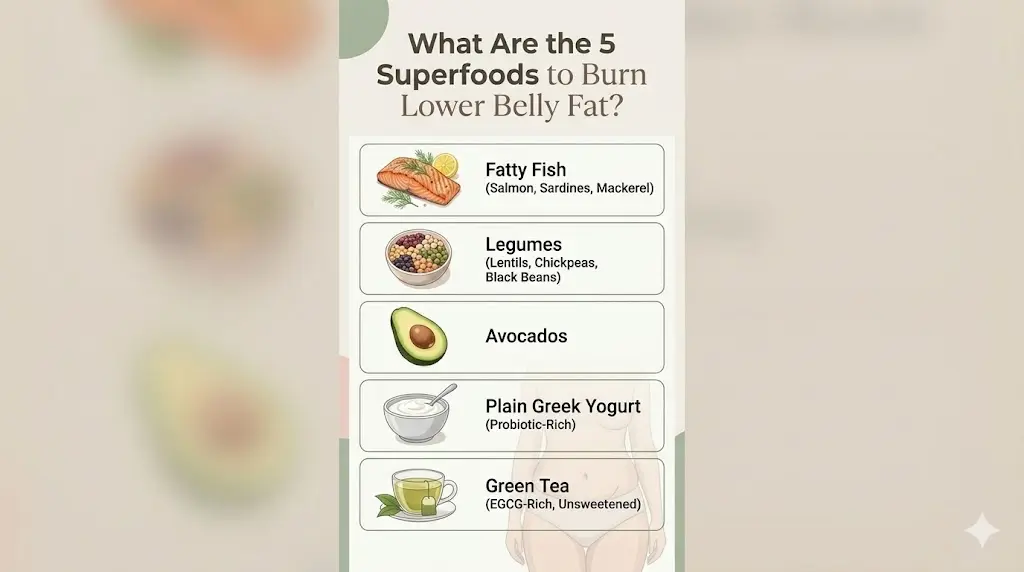
<hr />

<h2 id="what-are-the-5-superfoods-to-burn-lower-belly-fat">What Are the 5 Superfoods to Burn Lower Belly Fat?</h2>

<p>No single food burns fat. But these five have the strongest research evidence for reducing abdominal fat accumulation specifically in women, by improving insulin sensitivity, feeding beneficial gut bacteria, and supporting fat oxidation.</p>

<h3 id="fatty-fish-salmon-sardines-mackerel">Fatty Fish (Salmon, Sardines, Mackerel)</h3>

<p>The omega-3 fatty acids EPA and DHA reduce triglycerides and visceral fat. A <a href="https://link.springer.com/article/10.1186/1743-7075-11-8">2014 RCT in Nutrition &amp; Metabolism</a>found fish oil supplementation measurably reduced liver fat and abdominal adiposity in overweight individuals. Aim for 2-3 servings per week. I eat salmon thrice a week for hair growth. Did I just touch the whole interesting topic?</p>

<h3 id="legumes-lentils-chickpeas-black-beans">Legumes (Lentils, Chickpeas, Black Beans)</h3>

<p>High in soluble fiber, which feeds butyrate-producing gut bacteria and stabilizes blood sugar over hours, not minutes. A systematic review in <a href="https://pubmed.ncbi.nlm.nih.gov/26864369/">AJCN</a> found that swapping high-glycemic foods for legumes significantly reduced waist circumference across multiple RCTs.</p>

<p>Black beans + chickpeas + cucumber + yoghurt + onion = favourite lunch for summers. Yumm!</p>

<h3 id="avocados">Avocados</h3>

<p>A 2021 RCT published in The Journal of Nutrition gave women one avocado daily for 12 weeks. The result: significant reductions in visceral abdominal fat and improved insulin sensitivity compared to the control group. The monounsaturated fat and fiber combination appears to be the mechanism. Not a fan of this green!</p>

<h3 id="plain-greek-yogurt-probiotic-rich">Plain Greek Yogurt (Probiotic-Rich)</h3>

<p>Lactobacillus gasseri strains found in quality probiotic yogurts have been shown in multiple Japanese RCTs to significantly reduce abdominal fat mass over 12 weeks. The protein content also supports muscle retention during a calorie deficit, which keeps your metabolism from tanking.</p>

<p>I usually prefer yoghurt without sweetener, it boosts my metabolism.</p>

<h3 id="green-tea-egcg-rich-unsweetened">Green Tea (EGCG-Rich, Unsweetened)</h3>

<p>EGCG (epigallocatechin gallate) enhances fat oxidation, particularly during moderate-intensity exercise. A meta-analysis of 11 <a href="https://pubmed.ncbi.nlm.nih.gov/21366839/">RCTs</a> found that green tea catechins combined with exercise produced significantly greater reductions in abdominal fat than exercise alone. 3-4 cups daily is the threshold used in most studies. I usually drink before bed.</p>

<hr />
<p><img src="/assets/images/5-superfoods-to-burn-belly-fat.webp" alt="5-superfoods-to-burn-belly-fat" />
<em>These nutrient-rich foods can support fat metabolism when combined with a healthy lifestyle.</em>
—</p>

<h2 id="targeted-exercises-for-the-lower-belly">Targeted Exercises for the Lower Belly</h2>

<p>You cannot spot-reduce fat. But you can build the deep core muscles that support your spine, lift your pelvic floor, and literally change the silhouette of your lower abdomen — even at the same body fat percentage. For women with diastasis recti (very common post-C-section), the right exercises also close the midline gap that causes the “pregnant-looking” protrusion.</p>

<p>These are the most evidence-supported moves for women, and none of them are regular crunches:</p>

<h3 id="dead-bug">Dead Bug</h3>

<p>My lower abs hate them. The gold standard for TVA (transverse abdominis) activation. It builds your deepest core layer without loading the spine or worsening any ab separation. Physical therapists recommend this for postpartum rehab universally.</p>

<h3 id="reverse-crunches">Reverse Crunches</h3>

<p>Fan of them! EMG studies show 28% greater lower-ab activation compared to standard crunches, with far less neck and hip flexor compensation. Keep your lower back pressed firmly into the floor.</p>

<h3 id="pallof-press-with-resistance-band">Pallof Press (with resistance band)</h3>

<p>Anti-rotation core training that builds the deep stabilizers that sit-ups never reach. Stand sideways to an anchor point, press the band straight out, hold. Your whole core fires to resist rotation.</p>

<h3 id="bird-dog">Bird Dog</h3>

<p>Builds core-pelvis coordination, essential for women whose lower belly protrusion is partly postural. Slow and controlled is the entire point here. They work really well for sexy back.</p>

<h3 id="diaphragmatic-breathing-with-pelvic-floor-engagement">Diaphragmatic Breathing with Pelvic Floor Engagement</h3>

<p>Underrated almost everywhere. Breathing into your belly fully, then exhaling with a gentle pelvic floor lift, directly trains the TVA-pelvic floor connection that determines how much your lower abdomen protrudes. I always do this as post workout.</p>

<p><img src="/assets/images/targeted-exercies-for-the-lower-belly.webp" alt="targeted-exercies-for-the-lower-belly" /></p>

<blockquote>
  <p><strong>Important if you have had a C-section or suspect diastasis recti:</strong> Standard crunches, sit-ups, and many Pilates exercises can worsen the midline gap. Have a pelvic floor physiotherapist assess you before beginning any core program. This is not optional — it is the difference between progress and making things worse. [Lee &amp; Hodges, JOSPT 2016]</p>
</blockquote>

<blockquote>
  <p>“For women whose belly feels firm, protrudes without being soft, and does not change with diet — please see a pelvic floor physio before any exercise program. Exercises will not fix structural separation, organ positioning, or gut-related distension. You need a diagnosis first.”</p>
</blockquote>

<hr />

<h2 id="cardiovascular-activity">Cardiovascular Activity</h2>

<p>Cardio is one of the most powerful tools for overall fat reduction, with particular impact on visceral and abdominal fat. The research is fairly clear on what works best:</p>

<h3 id="hiit-high-intensity-interval-training">HIIT (High-Intensity Interval Training)</h3>

<p>A 2018 meta-analysis of 39 studies in British <a href="https://bjsm.bmj.com/content/53/10/6550">Journal of Sports Medicine</a> found HIIT reduced waist circumference by 4.3 cm more than moderate-intensity steady-state cardio, in 40% less total exercise time. 2 sessions per week is the sweet spot for most women — more than that raises cortisol and can backfire on lower belly fat specifically. I prefer once a week on bollywood songs.</p>

<h3 id="zone-2--low-intensity-steady-state-liss">Zone 2 / Low-Intensity Steady State (LISS)</h3>

<p>Do not dismiss walking. Zone 2 (roughly 60-70% max heart rate — you can still hold a conversation) primarily uses fat as fuel. Dr. Inigo San-Millan at <a href="https://www.ncbi.nlm.nih.gov/pmc/articles/PMC6019055/">University of Colorado</a> has published extensively showing Zone 2 is the primary driver of mitochondrial fat oxidation. 30-45 minutes of brisk walking daily has a profound cumulative effect on lower belly fat over 8-12 weeks. Thinking about this one now.</p>

<p>A practical weekly combination that works for most women: 2 HIIT sessions + 3-4 LISS sessions (brisk walking, cycling, swimming). Keep your HIIT sessions under 25 minutes. Keep your Zone 2 sessions enjoyable enough that you will actually do them.</p>

<hr />

<h2 id="lifestyle-and-stress-management">Lifestyle and Stress Management</h2>

<p>Cortisol is, without question, one of the biggest hidden drivers of lower belly fat in women. The stress hormone directly signals abdominal fat cells to hold on and accumulate — and it disproportionately affects women, who tend to show stronger cortisol responses to emotional and social stressors than men.</p>

<ul>
  <li>Get 7-9 hours of actual sleep — not just time in bed. Sleep is a metabolic intervention, not a luxury.</li>
  <li>Add 10 minutes of slow diaphragmatic breathing or meditation daily. Apps like Insight Timer are free and effective.</li>
  <li>Do not eat while stressed or distracted. Cortisol during eating impairs digestion and shifts nutrient partitioning toward fat storage. This one is hard to follow.</li>
  <li>Limit caffeine after 2pm — caffeine extends the cortisol response and disrupts deep sleep architecture even when it doesn’t obviously prevent you from falling asleep.</li>
  <li>If you have undiagnosed GI symptoms (bloating, irregular digestion, food sensitivities), pursue a GI evaluation. Gut inflammation can cause lower abdominal distension that no lifestyle habit will fix without treating the underlying issue.</li>
</ul>

<hr />

<h2 id="non-surgical-and-medical-options">Non-Surgical and Medical Options</h2>

<p>For women who have genuinely done the foundational work and still struggle — or for those whose lower belly protrusion has a structural or hormonal root cause — these are the options worth knowing about:</p>

<h3 id="pelvic-floor-physiotherapy">Pelvic Floor Physiotherapy</h3>

<p>This is the most underutilized and most impactful option for post-pregnancy and post-C-section women. A pelvic floor physio can assess for diastasis recti, organ prolapse, and pelvic floor dysfunction — all of which produce a lower abdominal protrusion that looks like fat but isn’t. Many women who think they have a belly fat problem actually have a 2-3 finger diastasis that makes their abs physically incapable of holding things flat. Treatment works. Most people see improvement in 8-12 weeks.</p>

<h3 id="coolsculpting-cryolipolysis">CoolSculpting (Cryolipolysis)</h3>

<p>FDA-cleared for subcutaneous fat reduction. A meta-analysis in Aesthetic Surgery Journal found an average 25% reduction in subcutaneous fat layer thickness after one treatment. Best for specific, stubborn pockets of fat in people who are otherwise at a healthy weight.</p>

<h3 id="emsculpt-neo">EMSCULPT NEO</h3>

<p>Combines electromagnetic muscle stimulation with radiofrequency fat reduction. Clinical studies show an average 30% reduction in subcutaneous fat and 25% increase in local muscle mass after 4 sessions. Some women find it helpful post-diastasis repair for rebuilding lower ab musculature.</p>

<h3 id="glp-1-agonists-semaglutidewegovy">GLP-1 Agonists (Semaglutide/Wegovy)</h3>

<p>The STEP-1 trial in <a href="https://www.nejm.org/doi/full/10.1056/NEJMoa2032183">NEJM</a> showed an average 14.9% body weight reduction with semaglutide 2.4mg, with significant visceral and subcutaneous abdominal fat reduction. Requires physician prescription, ongoing monitoring, and is best suited for those with metabolic health concerns rather than cosmetic goals alone.</p>

<h3 id="functional-gi-and-hormonal-testing">Functional GI and Hormonal Testing</h3>

<p>For women with undiagnosed GI issues, food sensitivities, ovarian cysts, or hormonal irregularities: a comprehensive workup including gut microbiome testing, SIBO breath test, hormonal panel (estrogen, progesterone, cortisol, thyroid), and pelvic ultrasound can identify causes that no exercise program will address.</p>

<blockquote>
  <p>“One thing worth saying plainly: if your lower belly protrusion is firm, doesn’t change much day to day, and you’re otherwise lean — please see a doctor before spending money on aesthetic treatments. You may be dealing with something medical, not cosmetic.”</p>
</blockquote>

<hr />

<h2 id="which-drink-burns-belly-fat">Which Drink Burns Belly Fat?</h2>

<p>No drink burns belly fat on its own. But several beverages have legitimate research supporting their role in reducing abdominal fat over time — and one category makes everything dramatically worse.</p>

<hr />
<p><img src="/assets/images/drinks-that-burn-belly-fat-fast.webp" alt="drinks-that-burn-belly-fat-fast" />
<em>Drinks that burn belly fat fast</em></p>

<hr />

<h2 id="what-causes-a-pooch-belly-in-females">What Causes a Pooch Belly in Females?</h2>

<p>The lower belly pooch in women is usually subcutaneous fat — the soft, pinchable kind that sits just beneath the skin.</p>

<p>Subcutaneous fat is directly influenced by estrogen, and your body has biological reasons for putting it there.</p>

<p>Estrogen (primarily female sex hormone) directs fat storage toward the hips, thighs, and lower abdomen during your reproductive years as an energy reserve.</p>

<p>When estrogen levels drop — during perimenopause, after childbirth, or due to hormonal imbalances — fat redistribution accelerates toward the lower belly specifically.</p>

<p>A 2012 review in <a href="https://pubmed.ncbi.nlm.nih.gov/22281161/">Obesity Reviews</a> confirmed that sex hormones are primary regulators of where women store fat regionally, and that declining estrogen is directly linked to abdominal fat accumulation — even in women who have not changed their diet or exercise habits at all.</p>

<p>But here is where it gets more complicated for many women: what looks like a belly fat problem is not always a belly fat problem. Sometimes it is a structural problem — like diastasis recti (ab muscle separation after pregnancy), a pelvic floor dysfunction, chronic bloating from gut issues, or even postural imbalances that push the lower abdomen forward. This is why two women with similar body fat percentages can look completely different from the side.</p>

<blockquote>
  <p>“I’m slightly above average height, weigh about 105 lbs, eat extremely strictly to prevent inflammation, and I still have a lower stomach that always bulges out slightly. I look toned from the front but almost like I have a baby bump from the side. I saw the SI Swim Week runway show and people significantly larger than me had flat stomachs. I genuinely don’t understand what the secret is.”</p>
</blockquote>

<p>The answer in cases like this is often not fat at all. Organ positioning, pelvic tilt, gut microbiome issues, food intolerances, ovarian cysts, and fascial tension can all create a persistent lower abdominal protrusion that no amount of calorie restriction touches. More on this below.</p>

<p>Additional evidence-backed causes include chronically elevated cortisol from stress, insufficient or disrupted sleep, poor gut microbiome diversity, and a sedentary lifestyle that weakens the deep core muscles responsible for holding everything in.</p>

<hr />

<h2 id="two-types-of-belly-fat-what-you-are-actually-dealing-with"><a href="https://fitwithamna.me/types-of-belly-fat-female/">Two Types of Belly Fat</a>: What You Are Actually Dealing With</h2>

<p>Before you can fix the problem, you need to know which type of belly fat you are dealing with — or whether it is fat at all. This table breaks it down:</p>

<table>
  <thead>
    <tr>
      <th>Feature</th>
      <th>Visceral Fat</th>
      <th>Subcutaneous Fat</th>
    </tr>
  </thead>
  <tbody>
    <tr>
      <td>Location</td>
      <td>Deep inside abdomen, packed around your organs</td>
      <td>Just under the skin — the soft, pinchable layer at your lower belly, hips, thighs</td>
    </tr>
    <tr>
      <td>Feel</td>
      <td>Firm belly; looks like bloat from the inside out</td>
      <td>Soft and squeezable — this is your visible pooch</td>
    </tr>
    <tr>
      <td>Health Risk</td>
      <td>HIGH — strongly linked to heart disease, T2 diabetes, metabolic syndrome</td>
      <td>MODERATE — less dangerous but still significant when excess accumulates over time</td>
    </tr>
    <tr>
      <td>Main Causes</td>
      <td>Chronic stress (cortisol), sedentary lifestyle, poor sleep, high-sugar diet</td>
      <td>Hormonal changes (estrogen decline), genetics, caloric surplus, post-pregnancy changes</td>
    </tr>
  </tbody>
</table>

<p><em>Source: Harvard T.H. Chan School of Public Health</em></p>

<p><strong>Quick self-check:</strong> Pinch your lower belly. If it’s soft and squeezable, you’re likely dealing with subcutaneous fat. If the area feels hard or the protrusion doesn’t move when you press on it, it may be bloat, organ positioning, or a structural issue — not fat. This distinction changes your entire strategy.</p>

<hr />

<h2 id="is-lower-belly-pooch-a-health-problem">Is Lower Belly Pooch a Health Problem?</h2>

<p>The short answer: subcutaneous fat — the kind making up most visible pooches — carries moderate health risk, while visceral fat (the deeper kind) is the more metabolically dangerous variety. But moderate does not mean harmless, and the two types often coexist.</p>

<p>Subcutaneous fat in the lower abdomen is also not metabolically inert. Research shows it secretes inflammatory signaling molecules — including leptin and resistin — that can contribute to insulin resistance over time, particularly in postmenopausal women. The <a href="https://www.who.int/publications/i/item/9789241501491">WHO</a> classifies a waist-to-hip ratio above 0.85 in women as a marker of abdominal obesity that warrants medical attention.</p>

<p>For women whose pooch is firmness-related, structural, or driven by gut issues — as is common in the threads above — the health picture is different. Persistent gut inflammation, SIBO, IBS, ovarian cysts, and pelvic floor dysfunction all warrant medical evaluation rather than more aggressive dieting.</p>

<hr />

<p><img src="/assets/images/health-risk-for-a-lower-belly-pooch.webp" alt="health-risk-for-a-lower-belly-pooch" />
<em>Above 88 cm, your waistline—not your weight—signals higher health risk.</em>
—</p>

<h2 id="conclusion">Conclusion</h2>

<p>Getting rid of a lower stomach pooch is not about quick fixes, extreme dieting, or endless crunches. It’s about understanding what your body is actually dealing with — whether that’s fat distribution, hormones, posture, stress, or gut health.</p>

<p>Once you identify the real cause, your approach becomes more targeted and effective. With the right combination of nutrition, movement, stress management, and in some cases medical support, visible and lasting change is absolutely possible — but it requires patience, consistency, and the right strategy for your specific body.</p>

<hr />

<h2 id="frequently-asked-questions">Frequently Asked Questions</h2>

<h3 id="1-what-is-the-best-breakfast-for-losing-belly-fat">1. What is the best breakfast for losing belly fat?</h3>

<p>High-protein, high-fiber breakfasts consistently outperform low-protein options in clinical trials — not just for weight loss, but specifically for abdominal fat reduction. Research-backed options include eggs with vegetables, plain Greek yogurt with berries and chia seeds, or a protein shake with oats. If your breakfast is mainly carbs — even “healthy” carbs — shifting toward protein first will likely produce visible results in 4-6 weeks.</p>

<h3 id="2-what-is-the-3-3-3-rule-for-weight-loss">2. What is the 3-3-3 rule for weight loss?</h3>

<p>The 3-3-3 rule is a simple daily framework that captures three evidence-supported habits: eat 3 balanced meals per day (avoiding the grazing pattern that keeps insulin elevated all day), stop eating at least 3 hours before bed (aligned with research on circadian eating patterns and improved sleep quality), and drink 3 liters of water throughout the day. It is not an official clinical protocol, but it works because it wraps three independently proven behaviors into one rule that’s easy to follow. Think of it as a floor, not a ceiling.</p>

<h3 id="3-what-kills-belly-fat-the-fastest">3. What kills belly fat the fastest?</h3>

<p>A moderate calorie deficit (around 500 kcal/day, not a crash diet), HIIT 2x per week, 7-9 hours of sleep, and active cortisol management. Speed matters less than sustainability — the approach that works the fastest is the one you can actually maintain for 12+ weeks, because lower belly fat, especially the hormonal kind, responds to sustained consistency rather than intense short-term effort.</p>

<h3 id="4-whats-the-worst-carb-for-belly-fat">4. What’s the worst carb for belly fat?</h3>

<p>Fructose — particularly in liquid form in sodas and fruit juices — is the carbohydrate most strongly linked to visceral and abdominal fat accumulation. Unlike glucose, which your muscles and brain can use directly, fructose is metabolized almost entirely by the liver, which converts excess amounts into triglycerides and VLDL particles that directly fuel visceral fat storage. If you drink soda, juice, or sweetened beverages regularly, eliminating those alone often produces visible waist reduction within a month.</p>

<h3 id="5-what-foods-are-metabolism-killers">5. What foods are metabolism killers?</h3>

<p>The most research-supported foods and eating patterns that suppress metabolic rate, impair fat burning, or make the lower belly worse specifically: ultra-processed foods, alcohol, highly processed seed oils, crash diets under 1200 calories, and eating while stressed or rushed.</p>

<hr />

<p><em>I’m Amna Shahid, a content and SEO writer focused on turning complex health and wellness research into simple, practical insights women can actually use. This article is based on a combination of peer-reviewed studies, clinical research, and real experiences shared by women struggling with persistent lower belly pooch. My goal is to bridge the gap between science and everyday life — so you’re not just told what to do, but understand why it works. While this guide is educational and research-backed, it is not a substitute for medical advice, and any persistent or unusual symptoms should always be discussed with a qualified healthcare professional.</em></p>]]></content><author><name>Amna Shahid</name></author><category term="Weight Loss" /><summary type="html"><![CDATA[Discover how to reduce stomach pooch women struggle with—real tips, science-backed strategies, and one woman’s 30kg weight loss journey that actually works..]]></summary></entry><entry><title type="html">What Type of Belly Fat Do You Have — And How Do You Lose It? A Woman’s Complete Guide</title><link href="https://fitwithamna.me/types-of-belly-fat-female/" rel="alternate" type="text/html" title="What Type of Belly Fat Do You Have — And How Do You Lose It? A Woman’s Complete Guide" /><published>2026-04-26T00:00:00+00:00</published><updated>2026-04-26T00:00:00+00:00</updated><id>https://fitwithamna.me/types-of-belly-fat-female</id><content type="html" xml:base="https://fitwithamna.me/types-of-belly-fat-female/"><![CDATA[<h1 id="types-of-belly-fat-in-women--and-how-to-lose-them">Types of Belly Fat in Women — and How to Lose Them</h1>

<h2 id="key-takeaways">Key Takeaways</h2>

<ul>
  <li><strong>There are two</strong> <em>biological</em> <strong>types of belly fat</strong> (subcutaneous and visceral) and four common belly shapes — the treatment that works depends entirely on which one you’re dealing with.</li>
  <li><strong>Visceral fat is the dangerous kind.</strong> It wraps around your organs, drives inflammation, and raises your risk of heart disease and type 2 diabetes — but it also responds to lifestyle changes faster than the fat you can pinch.</li>
  <li>A <a href="https://newsroom.heart.org/news/women-felt-more-stigma-about-abdominal-fat-than-men-regardless-of-body-weight"><strong>2023 University of Alabama</strong></a> <strong>study</strong> found that how you <em>feel</em> about your body directly affects visceral fat accumulation in women — meaning stress and self-stigma are biological, not just emotional, problems.</li>
</ul>

<hr />
<p><img src="/assets/images/types-of-belly-fat-female.webp" alt="Types of Belly Fat Female" /></p>

<h2 id="youre-not-failing-you-just-havent-identified-the-enemy-yet">You’re Not Failing. You Just Haven’t Identified the Enemy Yet.</h2>

<p>Gurl go and find your belly type from this video: <a href="https://www.youtube.com/live/hlQIV1O50tQ?si=sf6NWy-MNmk9uF1w">GirlGuageTraining</a>. She is explaining beautifully.</p>

<p>Six months postpartum. Eating well, walking daily — and yet that soft, rounded pouch below your belly button just <em>sits</em> there, completely unbothered.</p>

<p>I’ve heard this story more times than I can count, and I’ve lived a version of it myself. And here’s the thing nobody tells you:</p>

<p><strong>Belly fat in women is not one thing. It is not one problem. And it absolutely does not have one solution.</strong></p>

<p>Before you pick an approach — a diet, a workout, a supplement — you need to know <em>what kind</em> of belly fat you’re working with. Treating a stress belly with postpartum exercises is like taking antibiotics for a sprained ankle. Technically active. Completely wrong.</p>

<p>Let me walk you through everything: the biology, the shapes, and — most importantly — what actually moves the needle for each type.</p>

<hr />

<h2 id="the-two-main-types-of-belly-fat-in-women-subcutaneous-vs-visceral">The Two Main Types of Belly Fat in Women: Subcutaneous vs. Visceral</h2>

<p>At the biological level, all belly fat falls into one of two categories. Think of these as the <strong>architecture</strong> beneath whatever shape your belly takes on the outside.</p>

<h3 id="subcutaneous-fat--the-pinchable-layer">Subcutaneous Fat — The Pinchable Layer</h3>

<p>Subcutaneous fat sits <strong>just beneath the skin</strong>, above the abdominal muscles. It’s the soft, squeezable layer you can grab when you pinch your midsection.</p>

<table>
  <thead>
    <tr>
      <th> </th>
      <th> </th>
    </tr>
  </thead>
  <tbody>
    <tr>
      <td><strong>Location</strong></td>
      <td>Between skin and muscle wall</td>
    </tr>
    <tr>
      <td><strong>Feel</strong></td>
      <td>Soft, doughy, movable</td>
    </tr>
    <tr>
      <td><strong>Visibility</strong></td>
      <td>Visible and palpable; shows as a soft pouch or layer over the abdomen</td>
    </tr>
    <tr>
      <td><strong>Health risks</strong></td>
      <td>Lower than visceral fat. It can contribute to insulin resistance at very high levels, but it’s primarily a cosmetic and mechanical concern.</td>
    </tr>
    <tr>
      <td><strong>Responds to</strong></td>
      <td>Consistent caloric deficit + strength training. It’s stubborn, but it does yield to the right sustained effort.</td>
    </tr>
  </tbody>
</table>

<p>The catch? <a href="https://fitwithamna.me/how-to-get-rid-of-female-subcutaneous-fat/">Subcutaneous fat</a> <em>protects</em> you to a degree — it acts as an energy reserve and insulator. Women naturally carry more of it than men, and some of that is by physiological design.</p>

<h3 id="visceral-fat--the-hidden-hazard">Visceral Fat — The Hidden Hazard</h3>

<p>Visceral fat is where things get serious. It lives <strong>deep inside the abdominal cavity</strong>, packed around your liver, intestines, and other organs. You cannot pinch it. You cannot see it directly. And it is metabolically far more active than the fat beneath your skin.</p>

<table>
  <thead>
    <tr>
      <th> </th>
      <th> </th>
    </tr>
  </thead>
  <tbody>
    <tr>
      <td><strong>Location</strong></td>
      <td>Deep in the abdomen, surrounding vital organs</td>
    </tr>
    <tr>
      <td><strong>Feel</strong></td>
      <td>Firm belly, often appearing as a protruding upper abdomen</td>
    </tr>
    <tr>
      <td><strong>Visibility</strong></td>
      <td>Belly may look hard or bloated rather than soft; waist measurement is a key indicator</td>
    </tr>
    <tr>
      <td><strong>Health risks</strong></td>
      <td>Significant. Visceral fat secretes inflammatory cytokines and hormones that raise your risk of type 2 diabetes, cardiovascular disease, and certain cancers. The <a href="https://www.mayoclinic.org/healthy-lifestyle/womens-health/in-depth/belly-fat/art-20045809">Mayo Clinic</a> notes that a waist circumference above 35 inches in women is a warning sign.</td>
    </tr>
    <tr>
      <td><strong>Responds to</strong></td>
      <td>Diet changes and aerobic exercise — and actually responds <em>faster</em> than subcutaneous fat in many cases.</td>
    </tr>
  </tbody>
</table>

<p>There’s also a concept worth knowing: <strong>TOFI — Thin on the Outside, Fat on the Inside.</strong> Some women who appear slim at a healthy BMI still carry dangerous amounts of <a href="https://fitwithamna.me/how-to-get-rid-of-female-visceral-fat/">visceral fat</a>, often due to a sedentary lifestyle or a high-sugar diet. Weight alone doesn’t tell the whole story.</p>

<p>Still not sure if yours is subcutaneous or visceral? This 3-minute visual test is the clearest explanation I’ve found: <a href="https://youtube.com/shorts/MorofEnOFXQ?si=KDQ-IzYsilWkMHOX">drmaryclarie</a>.</p>

<hr />

<h2 id="a-study-you-need-to-read">A Study You Need to Read</h2>

<p>A study from the University of Nebraska-Lincoln found something that stopped me in my tracks:</p>

<p><strong>Women who had higher internalized weight stigma — meaning they absorbed society’s negative judgments about their bodies — had measurably more visceral fat.</strong> For every one-point increase on the Weight Bias Internalization Scale, women carried an average of 0.14 pounds more visceral fat. Men showed no such relationship.</p>

<blockquote>
  <p><em>“For women, the way we view our bodies, and the way others view and judge our bodies appears to have negative effects. Even though women had less visceral fat than men on average, it may be impacting our health more because of the negative way we feel about ourselves.”</em>
— Researcher Keirns</p>
</blockquote>

<p>I’ll say this plainly: <strong>how you speak to yourself about your body is a health variable, not just an emotional one.</strong> <em>I’ve seen this play out with so many women I work with, including myself — what does this mean for how you approach your fat loss journey?</em></p>

<hr />
<p>##Types of Belly Fat Females Picture</p>

<p><img src="/assets/images/types-of-belly-fat-females-pictures.webp" alt="types-of-belly-fat-females-pictures" /></p>

<h2 id="types-of-belly-shapes-in-females-the-4-you-need-to-know">Types of Belly Shapes in Females: The 4 You Need to Know</h2>

<p>Once you understand the biology, you can look at how it shows up in real life. These four shapes are the most common patterns I see — and each has a distinct driver.</p>

<h3 id="the-stress-belly">The Stress Belly</h3>

<p>This one tends to sit <strong>across the mid-section</strong>, giving the abdomen a rounded, firm look — not necessarily soft and doughy, but full. Women with stress bellies often eat reasonably well and exercise, and still can’t shift the fat.</p>

<p>Why? Because when cortisol stays chronically elevated, your body actively <em>directs</em> fat storage toward the abdomen. A <a href="https://www.scripps.org/news_items/7605-how-to-lose-belly-fat-what-actually-works">2018 review in <em>Obesity Reviews</em></a> confirmed that cortisol excess promotes visceral adiposity specifically — not just general weight gain. (<a href="https://www.scripps.org/news_items/7605-how-to-lose-belly-fat-what-actually-works">Source: Scripps Health</a>)</p>

<p>The fix is not another HIIT class. You need to know <a href="https://fitwithamna.me/how-to-get-rid-of-stress-belly-fat-female/">how to get rid of stress belly fat in women</a> — with what to eat, how to move, and what to stop doing.</p>

<h3 id="the-hormonal--menopausal-belly">The <a href="https://fitwithamna.me/how-to-get-rid-of-hormonal-belly-fat-in-women/">Hormonal / Menopausal Belly</a></h3>

<p>As estrogen drops during perimenopause and menopause, fat redistribution shifts. What used to go to your hips and thighs now goes to your <strong>abdomen</strong>. This is documented, well-studied, and affects the majority of women over 45.</p>

<p>The result is a belly that appears even when overall body weight hasn’t changed dramatically — often described as a “spare tire” around the middle. This is predominantly <strong>visceral fat</strong>, which is why it’s also a <a href="https://www.hingehealth.com/resources/articles/menopause-belly/">cardiovascular risk</a> conversation, not just an aesthetic one.</p>

<p>Thyroid imbalance and PCOS can produce a similar pattern in younger women — any hormonal disruption that affects estrogen, progesterone, or insulin sensitivity tends to reroute fat to the belly.</p>

<h3 id="the-lower-belly-pooch">The Lower Belly Pooch</h3>

<p>This is the gentle mound that sits <strong>below the belly button</strong> — the one that makes wearing fitted tops feel impossible. It’s extremely common and has several layered causes: weakened core muscles, subcutaneous fat accumulation, chronic bloating, and in some cases pelvic floor dysfunction.</p>

<p>Contrary to popular belief, this is not fixed by endless crunches. Crunches strengthen the rectus abdominis but do nothing to address fat tissue or deep core stability. The approach involves <strong>targeted core work, anti-inflammatory eating, and gut health</strong> — and knowing the cause to <a href="https://fitwithamna.me/how-to-get-rid-of-stomach-pooch-women/">get rid of the stomach pooch in women</a>.</p>

<h3 id="the-postpartum-belly">The Postpartum Belly</h3>

<p>This is the one so many of us know personally. After pregnancy, the body goes through a seismic hormonal shift. Estrogen and progesterone plummet, cortisol often stays elevated (hello, newborn sleep deprivation), and the abdominal muscles — stretched for nine months — need time and specific work to recover.</p>

<p>Gurl, you just have given birth to a human!</p>

<p>What makes postpartum belly particularly complex is <strong>diastasis recti</strong> — a separation of the abdominal muscles that affects up to 60% of women postpartum according to research published in the <em>Journal of Orthopaedic &amp; Sports Physical Therapy</em>. If diastasis is present, standard core exercises can actually <em>worsen</em> the separation. This is why a generic “get your pre-baby body back” plan can feel completely useless — because for many women, it is.</p>

<p>The <a href="https://fitwithamna.me/how-to-get-rid-of-hormonal-belly-fat-in-women/">postpartum belly</a> needs its own protocol.</p>

<hr />

<h2 id="common-myths-i-hear-about-belly-fat">Common Myths I Hear About Belly Fat</h2>

<blockquote>
  <p><strong>Myth:</strong> Crunches burn belly fat.
<strong>Reality:</strong> They strengthen muscle under the fat — the fat itself doesn’t move.</p>
</blockquote>

<blockquote>
  <p><strong>Myth:</strong> If you can pinch it, it’s the dangerous kind.
<strong>Reality:</strong> The fat you can’t pinch is the one to worry about.</p>
</blockquote>

<blockquote>
  <p><strong>Myth:</strong> Belly fat after menopause is inevitable.
<strong>Reality:</strong> The redistribution is hormonal, but the accumulation is lifestyle-driven.</p>
</blockquote>

<hr />

<h2 id="conclusion">Conclusion</h2>

<p>Your belly is not a personal failure. It is a biological system responding to hormones, stress, history, and yes — how the world has treated you and how you’ve internalized that.</p>

<p>The women who make real, lasting progress with belly fat are the ones who stop guessing and start targeting. They identify <em>what</em> they’re working with, and then apply the right lever — not just harder effort in the wrong direction.</p>

<p><strong>So here’s what I want you to do next:</strong></p>

<ul>
  <li>Identify your belly type from the four shapes above</li>
  <li>Determine whether it feels soft and pinchable (subcutaneous) or firm and internal (visceral)</li>
  <li>Click into the guide that matches your type and follow the targeted protocol</li>
</ul>

<p>You’ve been trying hard enough. Let’s make sure you’re trying <strong>smart</strong>.</p>

<hr />

<h2 id="frequently-asked-questions">Frequently Asked Questions</h2>

<h3 id="how-do-i-know-what-kind-of-belly-fat-i-have">How do I know what kind of belly fat I have?</h3>

<p>The pinch test is your first clue: if you can grab a meaningful amount of fat between your fingers, you’re looking at subcutaneous fat. If your belly feels firm, protrudes prominently, and you carry most of it above the navel, visceral fat is likely the dominant issue.</p>

<h3 id="what-is-the-best-way-to-lose-belly-fat-for-a-woman">What is the best way to lose belly fat for a woman?</h3>

<p>There is no single best way — it depends on the type. That said, the evidence-backed fundamentals that work across all types include: a moderate caloric deficit, sufficient protein (1.6–2.2g per kg of body weight), resistance training, quality sleep, and cortisol management. The <a href="https://mydoctor.kaiserpermanente.org/mas/news/how-to-lose-belly-fat-a-lifestyle-medicine-doctor-s-expert-advice-1857344">Kaiser Permanente lifestyle medicine approach</a> emphasizes that all four factors compound each other — poor sleep alone can increase visceral fat storage even in a caloric deficit.</p>

<h3 id="which-belly-fat-is-hardest-to-lose">Which belly fat is hardest to lose?</h3>

<p>Subcutaneous fat — the soft, pinchable kind — tends to be more stubborn than visceral fat. Visceral fat, while more dangerous, often responds faster to diet and exercise because it is metabolically very active. Lower belly subcutaneous fat in women is particularly resistant due to higher density of alpha-2 adrenergic receptors, which inhibit fat breakdown.</p>

<h3 id="why-is-belly-fat-so-hard-to-lose">Why is belly fat so hard to lose?</h3>

<p>Several intersecting reasons: hormonal fluctuations in women redirect fat to the abdomen, cortisol actively promotes abdominal fat storage, subcutaneous fat has fat-release-inhibiting receptors, and spot reduction through exercise is not physiologically possible. Add in the weight stigma research above — the fact that chronic stress about your body literally increases visceral fat — and you have a multi-layered problem that requires a multi-layered answer.</p>

<h3 id="which-exercise-burns-the-most-belly-fat">Which exercise burns the most belly fat?</h3>

<p>No single exercise targets belly fat specifically. That said, <strong>compound resistance training</strong> (squats, deadlifts, rows) paired with <strong>moderate-intensity cardio</strong> produces the best visceral fat reduction according to current research. A 2019 study in <em>Obesity</em> found that combining aerobic exercise with resistance training reduced visceral fat more than either modality alone. <a href="https://www.regencyspecialist.com/learning-hub/wellness-articles/types-of-belly-fat">HIIT</a> has strong evidence for visceral fat reduction in shorter time windows.</p>]]></content><author><name>Amna Shahid</name></author><category term="Weight Loss" /><summary type="html"><![CDATA[Still carrying belly fat despite eating well? You might be targeting the wrong type. Discover the 4 female belly shapes and the fix that actually matches yours.]]></summary></entry></feed>