How To Lose Saggy Belly Post Weightloss
Key Takeaways
- A saggy lower belly after weight loss is usually caused by leftover fat, loose skin, or a combination of both - and each requires a different approach.
- Strength training, protein intake, and patience can help reduce stubborn lower belly fat, while mild loose skin may improve with time and muscle building.
- Significant hanging skin after major weight loss often cannot be fixed naturally, and procedures like a tummy tuck may be the only realistic solution.
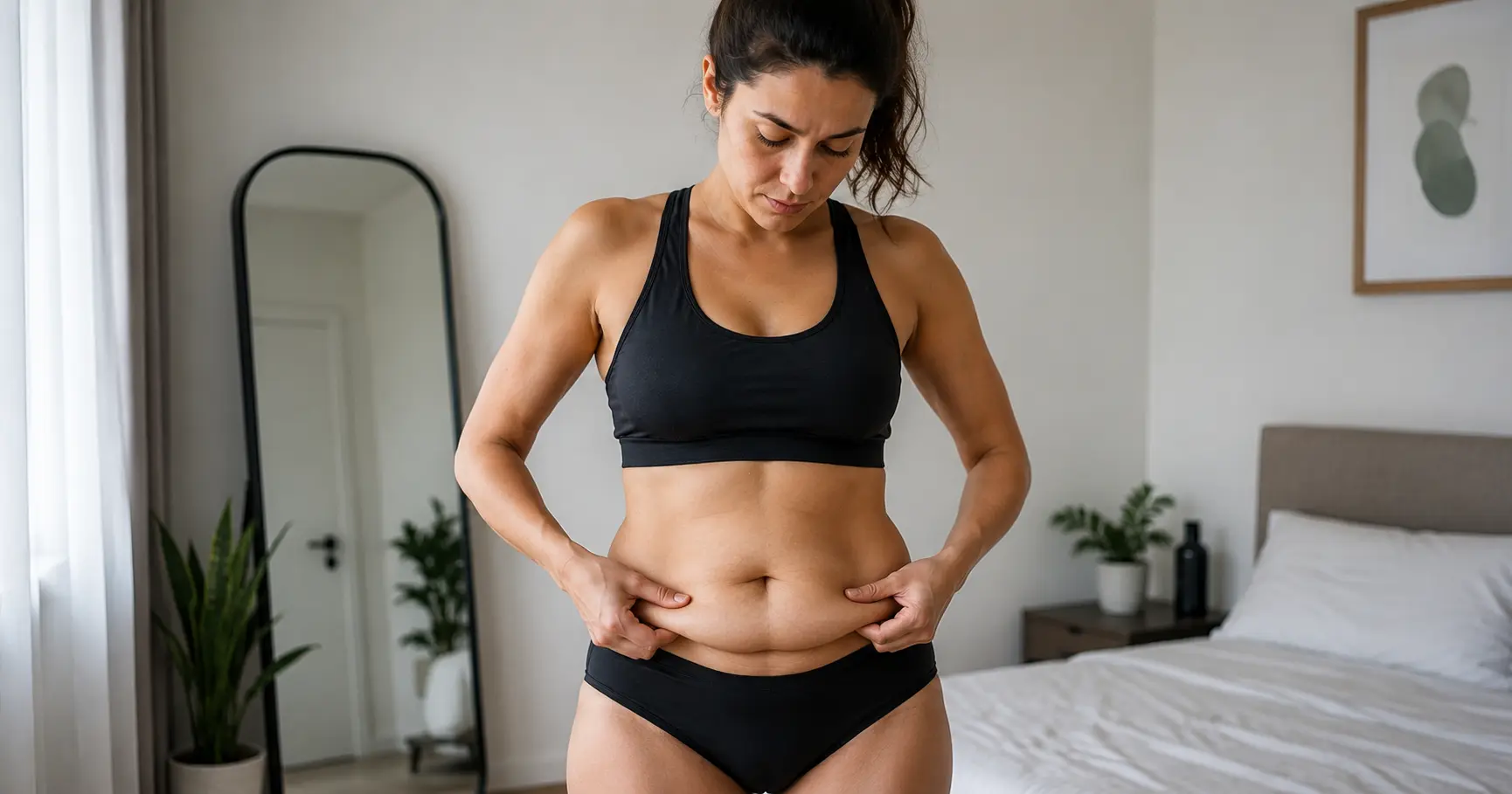
We both celebrated weight loss as the final step toward confidence, yet nobody told us about this stubborn lower belly peeking at us and saying: “Hey, I am going to destroy your mood and efforts likewise.”
If you have been avoiding bodycon dresses, you dreamed of wearing after weightloss. And those crop tops, that have been there to show off your belly button, and still you are avoiding them. Girl, bring a cup of tea/coffee, because we are on the same boat.
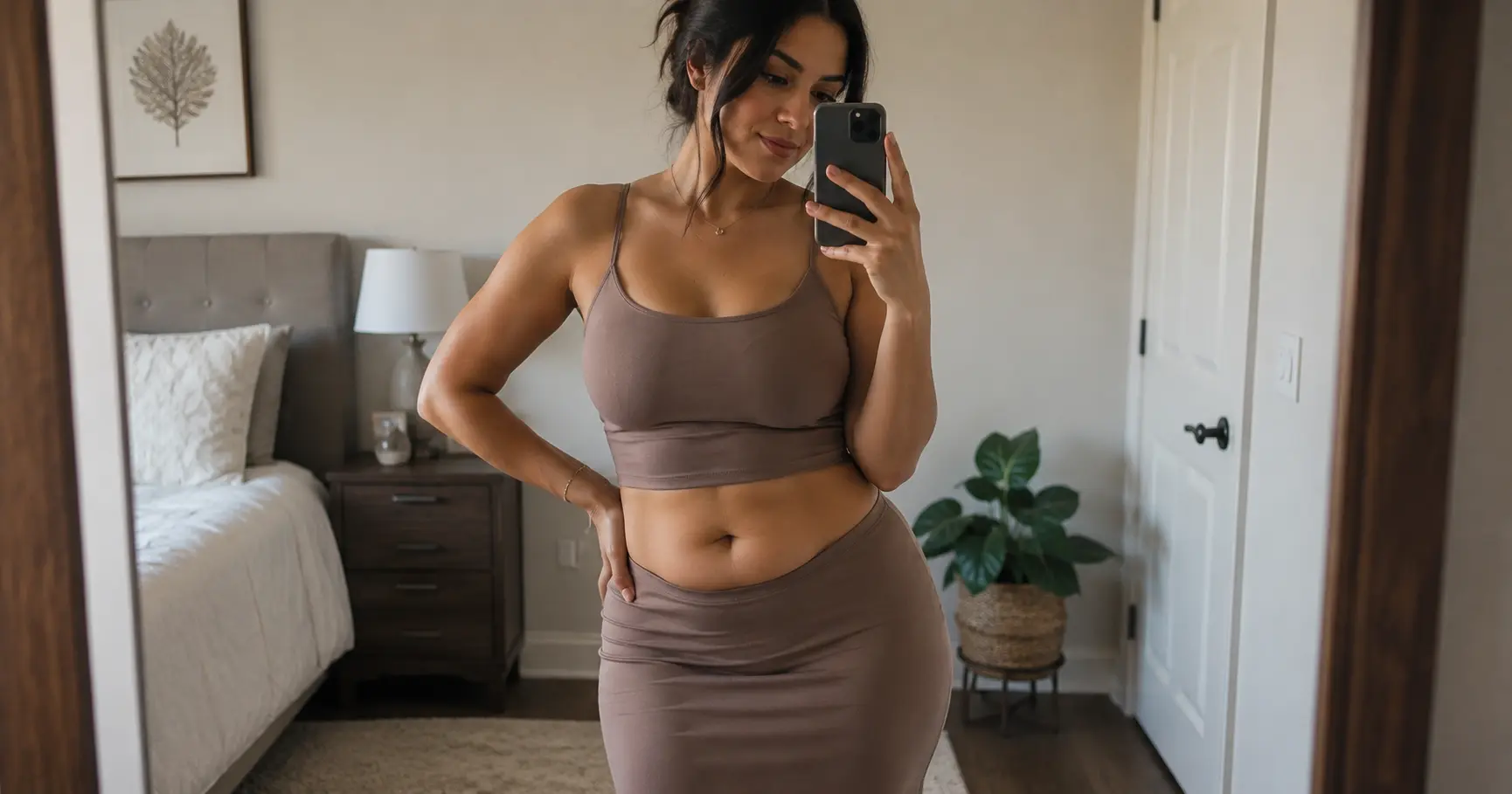
After 2 years of research, I have found that many women are hating this and trying everything they can to lose it. But girl, let’s take time to appreciate that we have come so far, and this body has endured a lot, rather than continuously pushing it too far.
The fix just depends on what you’re actually dealing with - leftover fat, loose skin, or a mix of both. I’ve spent years writing about post-weight-loss baddies (bodies), and I’ve lost a meaningful amount of weight myself. I still carry some lower belly softness on my own journey, so I’m not writing this from a distance. I’m writing it from inside the same mirror-check moment you’re having right now.
This guide will help you figure out which one you’re dealing with - and what actually helps next, without the fake promises.
Is your lower belly fat or loose skin if it looks worse when you sit?
Pinch your lower belly fat. If it feels thick, dense, or jiggly but bounces back into place, you likely still have fat there. If it feels thin, crepey, or hangs and folds - especially when you sit or lean forward - you’re probably looking at loose skin.
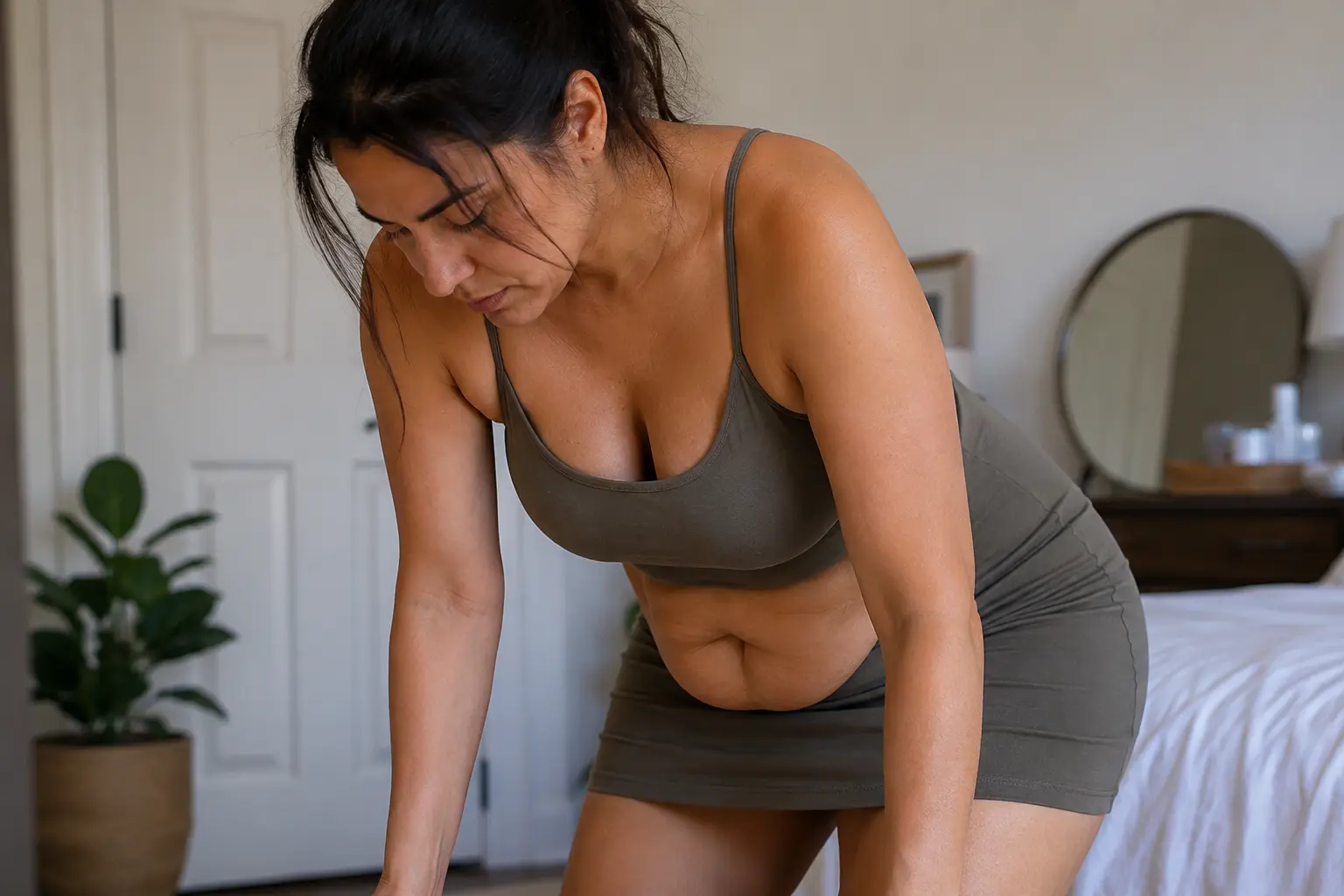
The two feel and behave differently, and your eyes can trick you here more than your hands can.
| Sign | Likely Fat | Likely Loose Skin |
|---|---|---|
| Texture when pinched | Thick, springy | Thin, crepey, paper-like |
| Behavior when sitting | Stays roughly the same | Folds or hangs more |
| Behavior when standing tall | Slightly softer | Often still droops |
| Color/texture of skin | Normal | Sometimes wrinkled or stretch-marked |
| Response to weight loss | Shrinks with continued fat loss | Stays the same regardless of further loss |
| Response to muscle gain | Less noticeable as muscle fills in | No real change |
Resource: Difference between fat and loss skin in lower belly
Most women I talk to actually have some of both. That’s normal. It’s not one-or-the-other for a lot of post-weight-loss bodies.
What Helps If Your Lower Belly is mostly Fat
If the lower belly is still soft and pinchable but firms up over time, a modest calorie deficit and resistance training are your real tools - not spot-reduction gimmicks.
You can’t out-crunch a stubborn fat pocket. But you can shift your overall body composition in ways that eventually reach it. A few specifics that actually move the needle:
1- Keep strength training non-negotiable
Two to four sessions a week, focused on compound lifts, helps your body hold onto muscle while it’s releasing fat, which matters more than cardio alone. Try Growwithjo. This structured strength training program is perfect for beginners, and keeps your hormones happy. I personally love her.
2- Protein at every meal
Aim for a serving with each meal - eggs at breakfast, chicken or tofu at lunch, Greek yogurt as a snack. This supports muscle retention while you’re in a deficit. Protein helps me stay full for a longer period. Try black chick peas - they are life saver for me. They are yummy and easy to make. Boiled chick peas + olive oil + spices (you prefer) = your favourite go-to-lunch is ready.
3- Patience past the plateau
Lower belly fat tends to be the last to go because of how it’s biologically wired. If your overall body fat percentage is still dropping, the lower belly often catches up eventually - it’s usually not stuck forever, it’s just slow. I know this feels like someone punching in the gut. But girl, we are not unhealthy anymore.
4- Stop chasing ab-specific workouts as the fix
Crunches build muscle under the fat. They don’t burn the fat sitting on top of it. They just hurt you in ways you can possibly imagine.
If this is your situation, you’re not doing anything wrong. You’re just in the “last 10%” phase that takes the longest.
What Helps If Your Lower Belly is Mostly Loose skin?
Mild looseness can improve somewhat with time, hydration, and muscle building underneath it - but skin that hangs or folds significantly usually needs a procedure to fully resolve.
This is the part nobody wants to hear, and it’s also the part I want to be the most honest about, because you deserve a straight answer instead of a vague one.
Skin doesn’t have the same metabolic mechanism fat does. Your body can burn fat for energy. It cannot “burn off” excess skin - there’s no blood-flow or cellular process that shrinks a large fold of stretched skin once collagen and elastin fibers have been pushed past their limit.
What can realistically help with mild-to-moderate looseness:
1- Building muscle underneath the area
A stronger core and glutes can fill out the space and improve how the area sits, even if the skin itself doesn’t change. Try this 20 min sculpt workout every morning. I know you might be thinking that I am sponsoring her, wish I could!
2- Time, especially under age 40
Younger skin has more elastin reserve and can continue tightening gradually for a year or more after weight stabilizes.
A strong girl on a women’s wellness forum, 28, lost 10–15 lbs. She described her stomach going from “hard as a rock” to soft and jiggly with a relatively small amount of weight loss, and worried it meant something was wrong with her collagen. In reality, this kind of softness early in a weight-loss journey is usually fat redistributing and skin adjusting in real time - not a preview of permanent sagging. Skin tone often continues settling for months after the scale stabilizes, especially under 35.
3- Hydration and protein-supportive nutrition
This won’t reverse significant sagging, but it supports whatever elasticity you have left. Keep your sipper right by your side, and take small sips throughout the day.
Mid-30s, lost 45 lbs through walking and calorie tracking. Her lower belly was still soft and pinchable a year after reaching her goal weight. This pattern usually points to a mix of remaining fat and mild skin looseness. Adding protein-focused meals and twice-weekly strength training over the following six months noticeably firmed the area - proof that the “mostly fat” category often responds well to consistency over time.
4- Non-invasive skin-tightening treatments
Radiofrequency or ultrasound-based options for mild cases - these can offer modest improvement, not dramatic transformation.
For more significant sagging - skin that hangs like an empty pocket, sometimes called an “apron” - these tools won’t fully resolve it.
At that point, a panniculectomy or tummy tuck (abdominoplasty) is the only path to physically removing the excess skin. That’s not a failure on your part. It’s a structural reality, the same way you wouldn’t expect a stretched-out sweater to shrink back on its own.
Don’t get upset, read this:
A warrior in her late 30s shared that adding dry brushing, derma rolling, strength training, and better nutrition noticeably improved the appearance of her lower belly after weight loss. She dry brushed her stomach for a few minutes before showering, applied castor or Bio-Oil afterward, and used a derma roller twice weekly. While these methods didn’t create a perfectly flat stomach, she felt they helped improve skin texture and firmness enough that she became confident wearing crop tops for the first time in years.
It’s important to keep expectations realistic, though. Dry brushing and topical oils may temporarily improve circulation and skin appearance, but there’s limited scientific evidence that they can significantly tighten loose skin on their own! So don’t come here and say: “Amna you gave us bad advice”. Kidding!
Why Body Shape Matters More Than Belly-Only Fixes
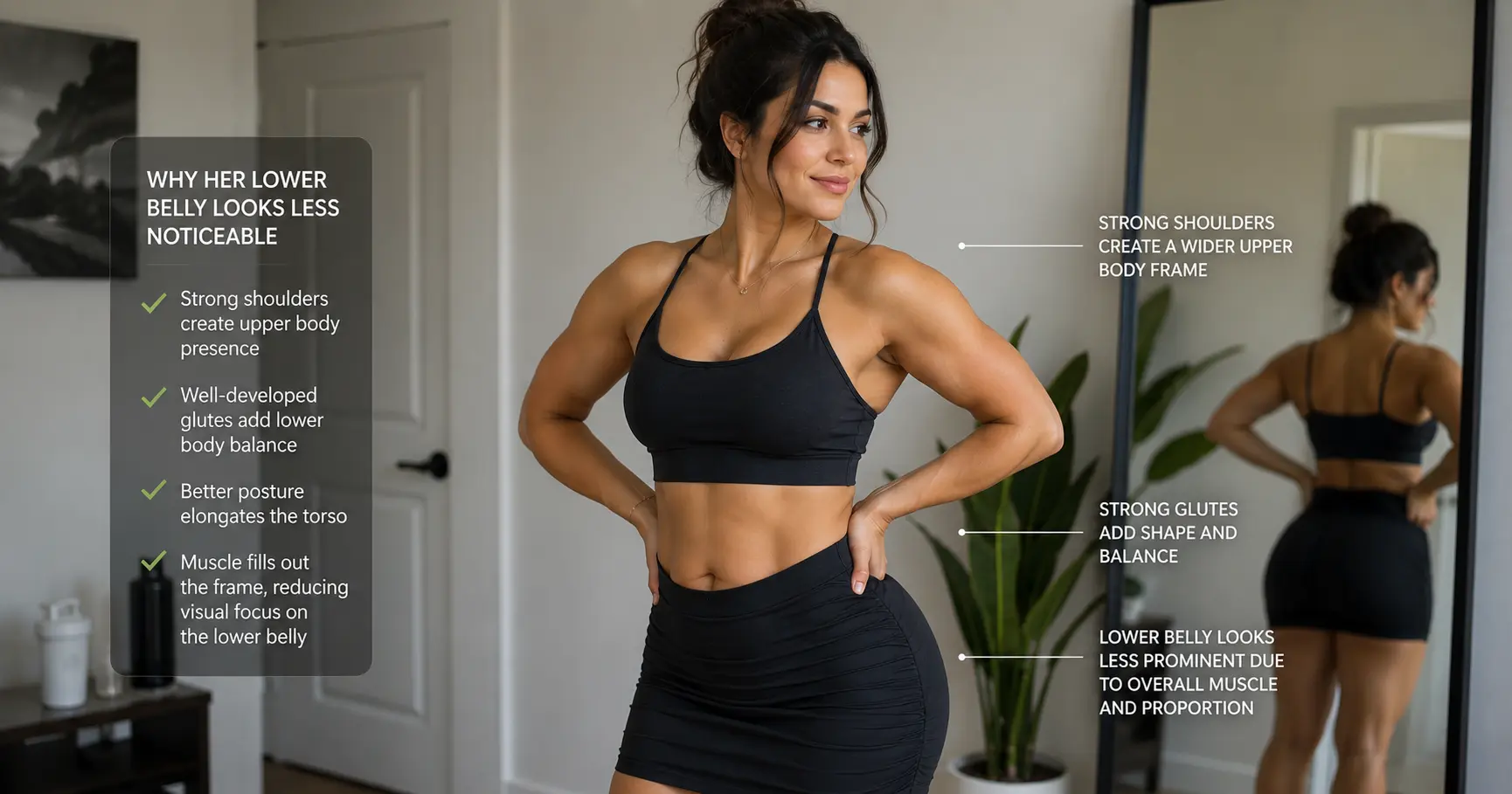
Building muscle in your shoulders, back, glutes, and legs changes your proportions in a way that makes the lower belly less visually dominant - even before the belly itself changes.
This is the piece a lot of advice skips entirely. Your lower belly doesn’t exist in isolation. It exists in relation to the rest of your shape.
Broader shoulders, a fuller glute shape, and better posture all shift visual balance away from the midsection. Women who add structured strength training often report their stomach “looks better” months before it actually measures any differently - because the surrounding shape changed the way the eye reads the whole picture.
What Causes a Saggy Lower Belly After Weight Loss
Your lower belly fat is biologically stubborn, and your skin doesn’t always bounce back at the speed your scale does.
Lower belly fat is dense with what’s called alpha-2 adrenergic receptors - think of them as chemical brakes that hold fat in place, compared to beta-receptors elsewhere on the body that act more like accelerators for fat release. That’s part of why this area is often the last to respond, even when you’ve lost weight everywhere else.
Skin is a separate story entirely. It stretched to accommodate the extra weight, and depending on how long it was stretched, your age, genetics, and how fast you lost the weight, it may or may not fully retract. Skin has its own elasticity timeline, and it doesn’t always match your fat-loss timeline.
How much time would it take you to lose lower belly fat after weight loss?
Let’s be straight about timelines, because vague reassurance helps nobody.
- Mild looseness, under 35, gradual weight loss: Often improves 20–40% over 6–12 months with consistent strength training and stable weight.
- Moderate looseness, any age, faster weight loss: Some improvement is possible, but expect a partial result - not a fully flat outcome - without intervention.
- Significant hanging skin (an “apron”), especially after major weight loss: Natural improvement is usually minimal. Surgical correction is the realistic path to a flat result.
None of these categories make you broken. They just tell you what tool actually matches your situation.
Conclusion
You did not fail at weight loss because your lower belly still looks different than you imagined. Bodies are not symmetrical in how they respond, and the lower belly is one of the slowest, most stubborn areas on the entire human body - by design, not by your effort level.
Three things to hold onto:
- Fat and loose skin are different problems with different solutions, and most women have some mix of both.
- If it’s fat, time, protein, and strength training genuinely keep working, even when progress feels invisible.
- If it’s loose skin, especially after major weight loss, surgery is sometimes the only tool that gets you a fully flat result - and that’s not a moral failing.
The smartest next step isn’t guessing. It’s figuring out which category you’re actually in, then choosing the fix that matches it instead of chasing another random Instagram routine.
You got this far. That counts for something real.
FAQs
Can sagging skin be firm again after weight loss?
Sometimes, yes - especially if the looseness is mild and you’re early in the post-weight-loss phase. If the skin is hanging or wrinkled after major weight loss, it may improve only a little without treatment.
Will losing 50 pounds cause saggy skin?
It can, but not always. It depends on your age, how long the skin was stretched, how fast you lost the weight, and whether the loss happened gradually or all at once.
How much loose skin will you have after losing 80 lbs?
This varies a lot from woman to woman, so there’s no universal number. If the weight stayed on for years, or you’ve had pregnancies or weight cycling, you may notice more looseness than someone who lost the weight sooner.
Can you lose 70 lbs and not have loose skin?
Yes, some women do - especially if they’re younger, lose weight slowly, and preserve muscle along the way. Many women still have some looseness, though, and that doesn’t mean they did anything wrong.
How do you know if you’re going to have loose skin after losing weight?
A good clue is how long your skin was stretched and how elastic it currently feels. If your skin already looks thin, stretchy, or crepey before you lose weight, there’s a higher chance of looseness afterward.
Why does your stomach still look round after you lose weight?
This can happen from a mix of loose skin, posture, bloating, or deeper fat that hasn’t fully released yet. Sometimes the scale drops before your visible shape fully catches up.
Can building muscle make your saggy belly less obvious?
Yes, and this is the part many women and I overlooked. Building muscle through your whole body improves shape, posture, and proportion, which often makes the lower belly look more balanced even before it changes much on its own.
About the author: I’m a health and fitness content writer focused on research-backed women’s wellness, translating medical and physiological topics into plain, everyday language. I lost a significant amount of weight myself through diet and home workouts - no pills, no shortcuts - and I’m still working through my own lower belly journey today. I write this content because I wish someone had explained it to me clearly back when I was standing in front of my own mirror, confused about what I was looking at.
← Back to all posts