Best Pilates For Pcos Belly Fat And Weightloss For Beginners
3 Key Takeaways
- Low-impact beats high-intensity for PCOS. High-cortisol workouts can actually worsen PCOS symptoms — slow, controlled Pilates keeps stress hormones in check while still burning fat.
- Consistency over perfection. Three to four 20-minute sessions a week outperform daily hour-long sessions you’ll abandon by Thursday.
- PCOS belly isn’t just fat — it’s hormonal. Targeting insulin resistance and cortisol through Pilates is what makes the difference, not just “working your core harder.”
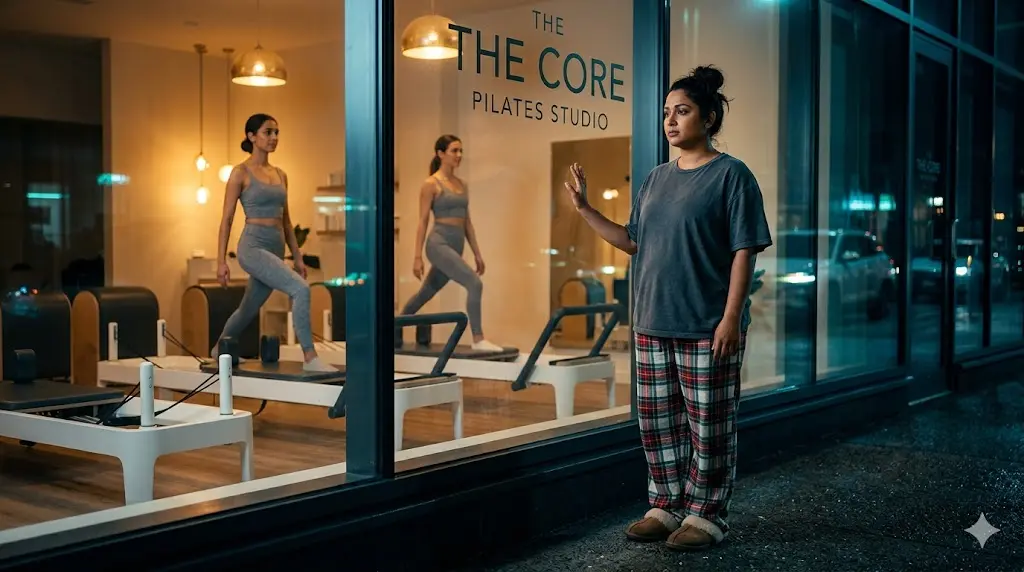
The fitness industry lied to us. Work harder. Sweat more. Push through it. So we did — bloated, exhausted, cortisol spiking — and our bellies stayed exactly where they were. That’s not a willpower problem. That’s an anatomy problem nobody explained.
PCOS belly fat is visceral — deep inside the abdominal cavity, pushed forward by inflammation and hormonal dysfunction. Crunches don’t touch it. Because the muscle actually responsible for pulling that belly in — your transverse abdominis — was never being trained at all.
Pilates trains exactly that. Every controlled contraction, every deliberate exhale compresses visceral fat inward and rebuilds the deep core structure that PCOS breaks down. After 30 kilograms and years of trial and error, this is what actually worked. Precise over punishing. That’s what this is.
Why Pilates Works for PCOS (The Science Behind It)
I know some of you have already tried Pilates and felt like “this is too gentle, I need to sweat more.” I felt that too. But here’s what I learned:
Pilates improves insulin sensitivity. Resistance-based movement — even slow, bodyweight resistance — helps your muscles absorb glucose more efficiently. This directly addresses one of the root causes of PCOS belly. Medical News Today cites evidence that regular low-to-moderate exercise improves insulin function in women with PCOS.
Pilates lowers cortisol through breathwork. The deep diaphragmatic breathing central to Pilates activates your parasympathetic nervous system — basically, it tells your body to calm down. Lower cortisol means less abdominal fat storage over time.
Pilates builds deep core muscles. Not just the visible “six-pack” muscles, but the transverse abdominis — the deep corset muscle that actually supports your organs, improves posture, and visually flattens the belly even before you lose a single pound.
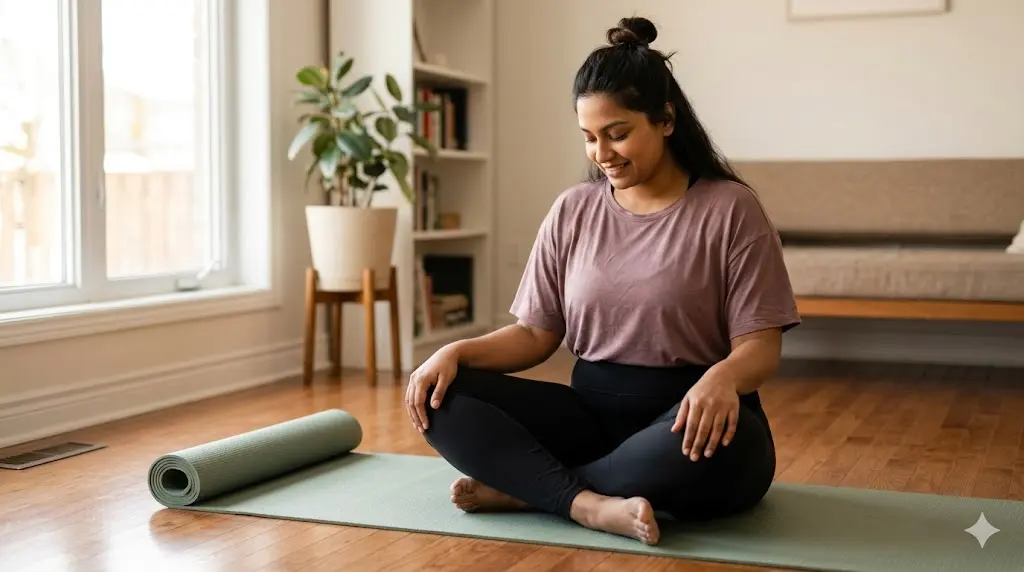
Best Beginner Pilates for PCOS Belly: Where to Actually Start
Here’s what I’d recommend if you are brand new and have no idea where to begin. I’m not going to give you a long list and overwhelm you. I’m going to give you what works.
Start With These Five Foundational Moves
These target your deep core, reduce bloating, and are gentle enough for absolute beginners. Turn that music on, because you are a celebrity. You are your own idol. Enjoy your 15 minute session.
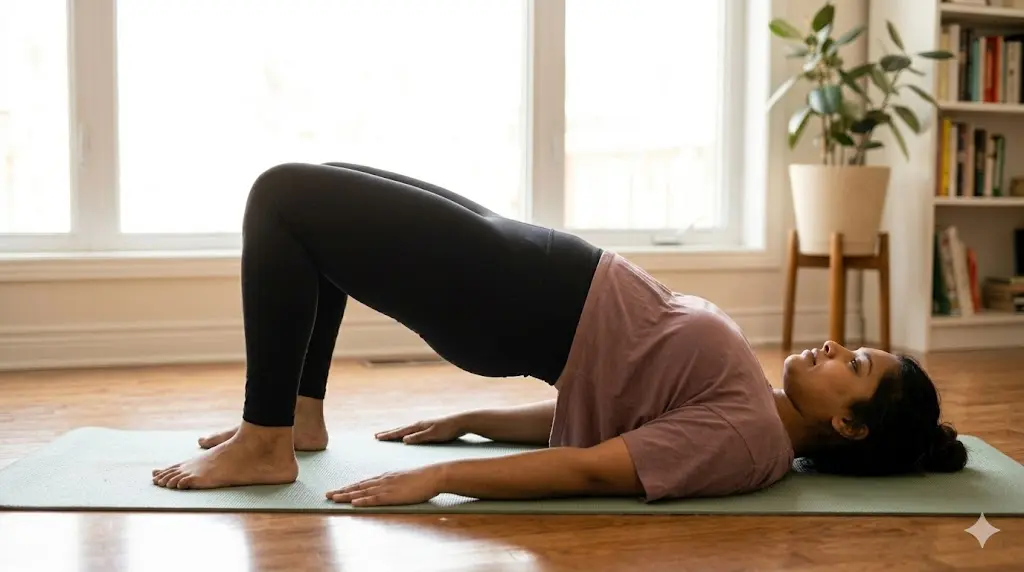
1. Glute Bridges
Lie on your back, feet flat, knees bent. Slowly lift your hips, squeeze your glutes, hold for two seconds, lower. This activates your posterior chain and helps regulate blood sugar by engaging large muscle groups. Do 10–12 reps. Don’t forget to inhale and exhale during each rep.
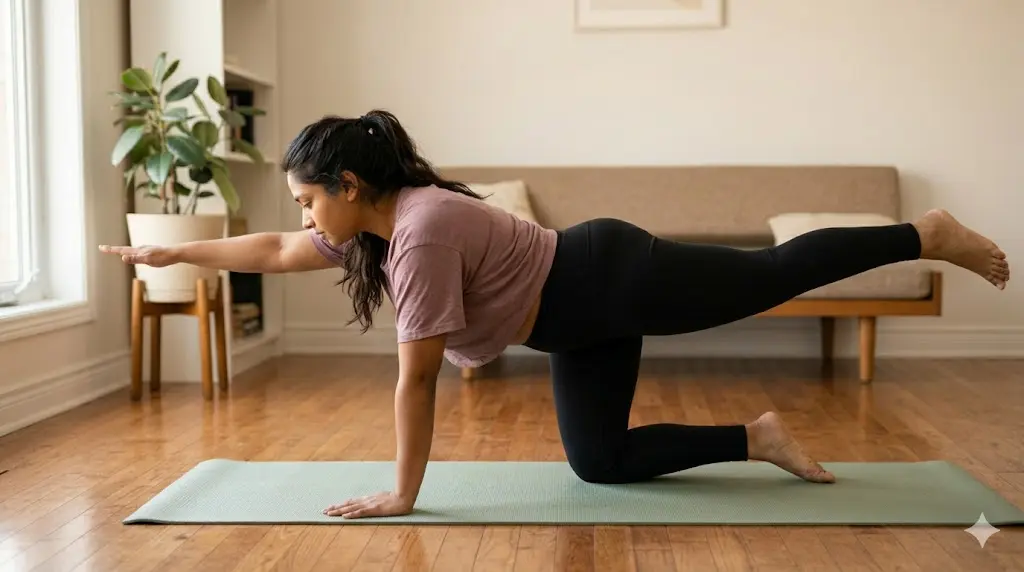
2. Bird Dog
On all fours, extend your opposite arm and leg simultaneously while keeping your spine neutral. This builds deep core stability — not just surface abs. Do 8 reps per side. Again don’t forget to breathe.
3. Modified Plank Hold
On your knees (not toes — we’re beginners, and that’s okay), hold a plank position with your core braced and back flat. Start with 20-second holds and build up. Far better than standard plank.
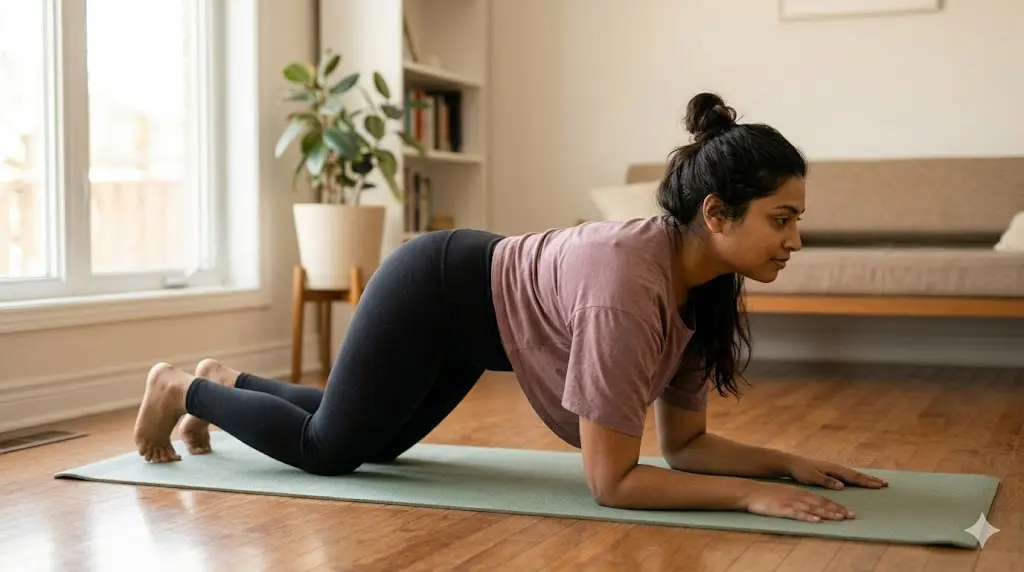
4. Single-Leg Toe Taps
Lying on your back, bring both legs to the tabletop. Slowly lower one foot to tap the floor, return, switch. This isolates your lower abs — the area most affected by PCOS bloating. This one looks harder but once you adapt, you will enjoy.
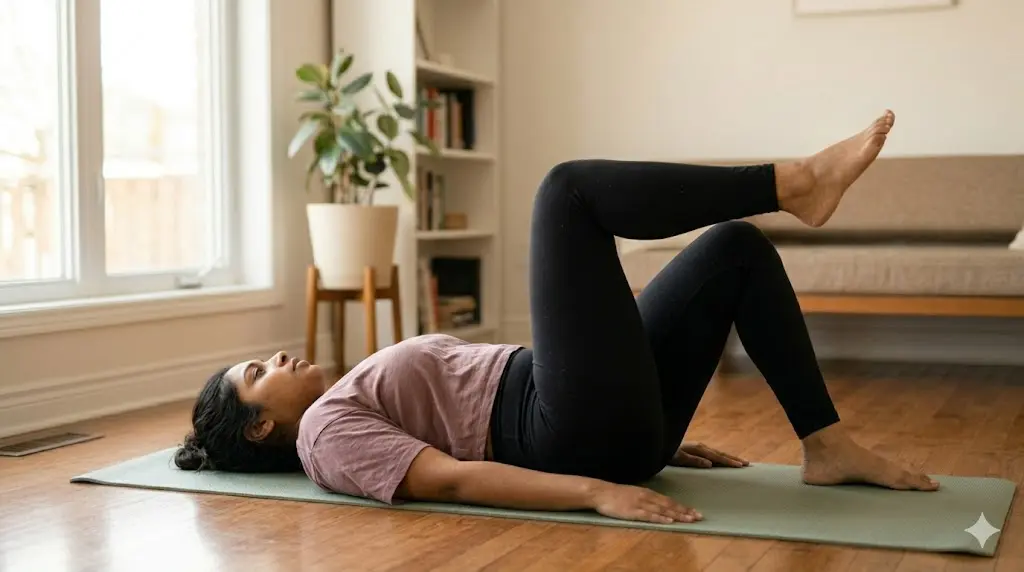
5. Sidelying Leg Press
Lying on your side, lift your top leg to hip height and slowly pulse it upward. This targets the outer hip and core stabilizers, which are often weak in women with PCOS who have been mostly sedentary. This one works well for side bags and love handles too.
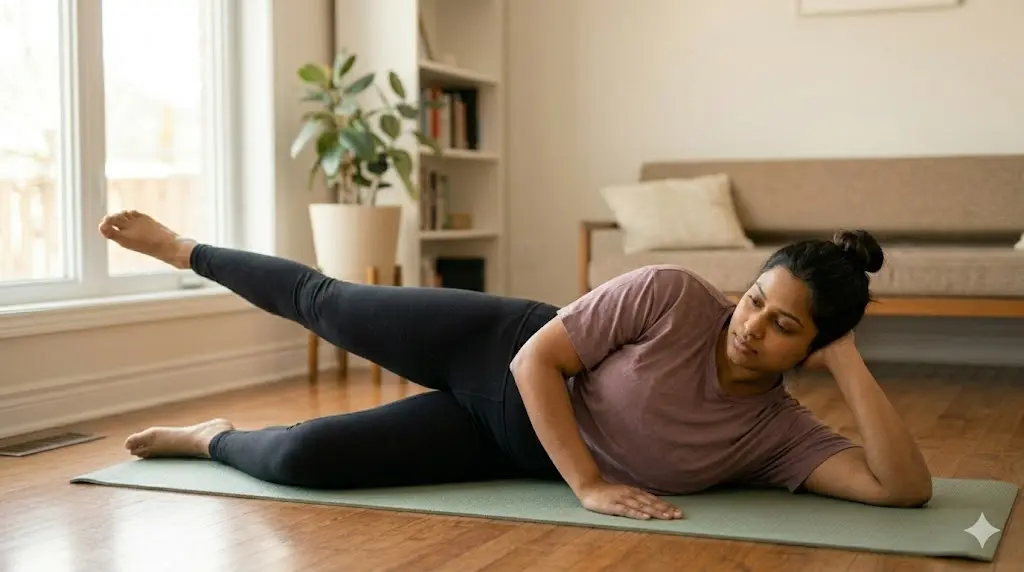
Do this routine 3–4 times a week, 15–20 minutes per session. That’s it to start. No more, no less.
YouTube Channels Worth Bookmarking (Free, No App Traps)
Since so many of you in the PCOS community specifically ask about free YouTube resources, here are channels I’d actually send a friend to:
- Move with Nicole — her Pilates videos are slow, form-focused, and beginner-friendly
- Lottie Murphy Pilates — clean explanations, great for learning the “why” behind each move
- Pilates Anytime (they have a solid free section on YouTube) — more structured programming
Progression: What to Add After 4 Weeks
Once the five moves above feel comfortable, you can layer in:
- Slow-weighted Pilates using light dumbbells (1–3 lbs). Adding mild resistance keeps muscles under tension longer, which improves blood sugar management without spiking cortisol.
- Wall Pilates for anyone who needs more support with balance. The wall provides stability so you can focus on form, not wobbling.
- Longer hold times — extend your plank from 20 to 45 seconds, your bridges from 10 to 20 reps.
Mistakes to Avoid (That I Made, So You Don’t Have To)
- Doing too much too soon. I pushed myself into daily 45-minute sessions in week one and burned out by week two. Sustainable beats heroic every time.
- Confusing soreness with effectiveness. Pilates won’t always make you sore. That doesn’t mean it isn’t working. The hormonal changes happen under the surface.
- Skipping the breathwork. I used to just ignore the breathing cues. Don’t. The breath is literally the mechanism by which Pilates lowers cortisol. Breathe out on the effort, in on the release. Every time.
- Comparing your belly to someone without PCOS. Your body is working against a hormonal backdrop that most fitness influencers don’t have. Give yourself the grace you’d give a friend.
Conclusion: This Is a Long Game — And You’re Already Playing It
Here’s what I want to leave you with: I lost 30+ kilograms, and it didn’t happen because I found the perfect workout. It happened because I stopped punishing my body and started working with it.
Pilates was a huge part of that shift for me. Not because it’s magic — but because it was something I could show up for. Consistently. Even on the hard days. Even when the belly was still there.
Your PCOS belly has been years in the making. It won’t disappear in a week. But with three sessions a week, intentional breathing, and patience — it will change. I’ve seen it in my own body, and I’ve seen it in so many women I’ve talked to along the way.
You’re not broken. You’re not lazy. You’re working with a body that needs a different approach — and now you have one.
Start with the five moves. Show up three times a week. And trust the process.
You’ve got this. I’m rooting for you. 💛
Frequently Asked Questions
Can you lose weight by doing Pilates with PCOS?
Yes. Pilates improves insulin sensitivity, which is often impaired in women with PCOS and is a primary driver of weight gain and difficulty losing fat. It also lowers cortisol, which otherwise promotes abdominal fat storage.
What type of Pilates is best for PCOS?
Mat Pilates is the most accessible and effective starting point for women with PCOS. It focuses on deep core engagement, breathwork, and controlled movement — all of which address the root hormonal drivers of PCOS belly fat.
What is better for PCOS, Pilates or the gym?
Neither is objectively “better” — the best exercise is the one you’ll actually do consistently. That said, Pilates has a specific advantage for PCOS: it’s intentionally low-cortisol. Heavy lifting and high-intensity gym sessions can spike cortisol, which worsens PCOS symptoms.
How many times a week should I do Pilates with PCOS?
Three to four sessions per week, 15–20 minutes each, is the evidence-aligned sweet spot for beginners with PCOS. This frequency is enough to improve insulin sensitivity and reduce inflammation without overloading the nervous system. Consistency over months matters far more than daily effort over weeks.
Can Pilates flatten the belly?
Pilates can visibly reduce belly size through a combination of strengthening the deep transverse abdominis (which draws the belly inward), reducing bloating via improved gut motility and lower cortisol, and supporting hormonal conditions for fat loss. It won’t produce dramatic results in two weeks — but over 8–12 weeks of consistent practice, most women notice a meaningful change in belly shape and tone.
Is Pilates good for hormonal imbalance?
Yes. Pilates supports hormonal balance through two key mechanisms: it reduces cortisol via parasympathetic activation (breathwork and slow movement), and it improves insulin sensitivity via muscle engagement. For PCOS specifically — which is fundamentally a hormonal condition — this dual action makes Pilates one of the most aligned forms of exercise available.
← Back to all posts