Best Protein Sources For Perimenopause

Key Takeaways
- Aim for 25–35g per meal, spread across the day, not one giant protein bomb at dinner.
- Most healthy women in perimenopause do well around 1.2–1.6g of protein per kilogram of body weight - for a 160-lb woman, that’s roughly 90–115g a day.
- Skip the miracle powders. Build meals around a handful of staples instead.
Girl, hear me out, the best sources of protein for perimenopause are the ones that are high-quality, easy to digest, and easy to actually eat on a table with kids and family.
I know you’re busier, more tired, sometimes bloated, and somehow still your body expects you to build muscle on top of everything else. Sounds exhausting, right?
You’ve read “eat more protein” a hundred times. You’ve tried it. And you’re still tired, still not seeing the muscle definition you want, still confused about whether that shake is helping or just making you gassy at 3pm.
It’s about picking the right proteins, in the right amounts, distributed the right way - and doing it with foods you can actually get on the table between a school pickup and a work call. That’s what this guide is for.
The Best Protein Sources for Perimenopause
These are ranked on protein density, how easy they are to digest, and how likely your family is to actually eat them without a negotiation.
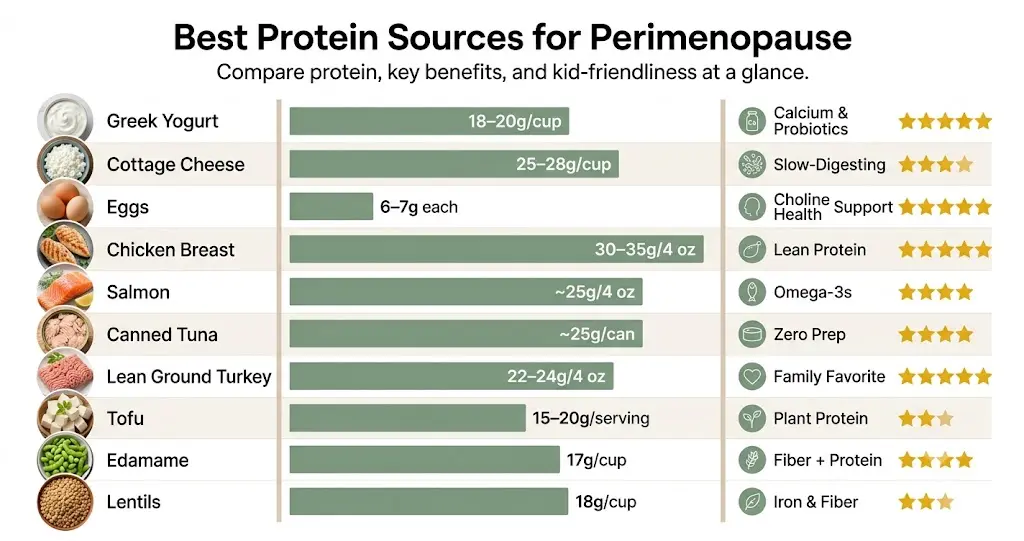
1. Greek Yogurt: The One That Makes Life Easy
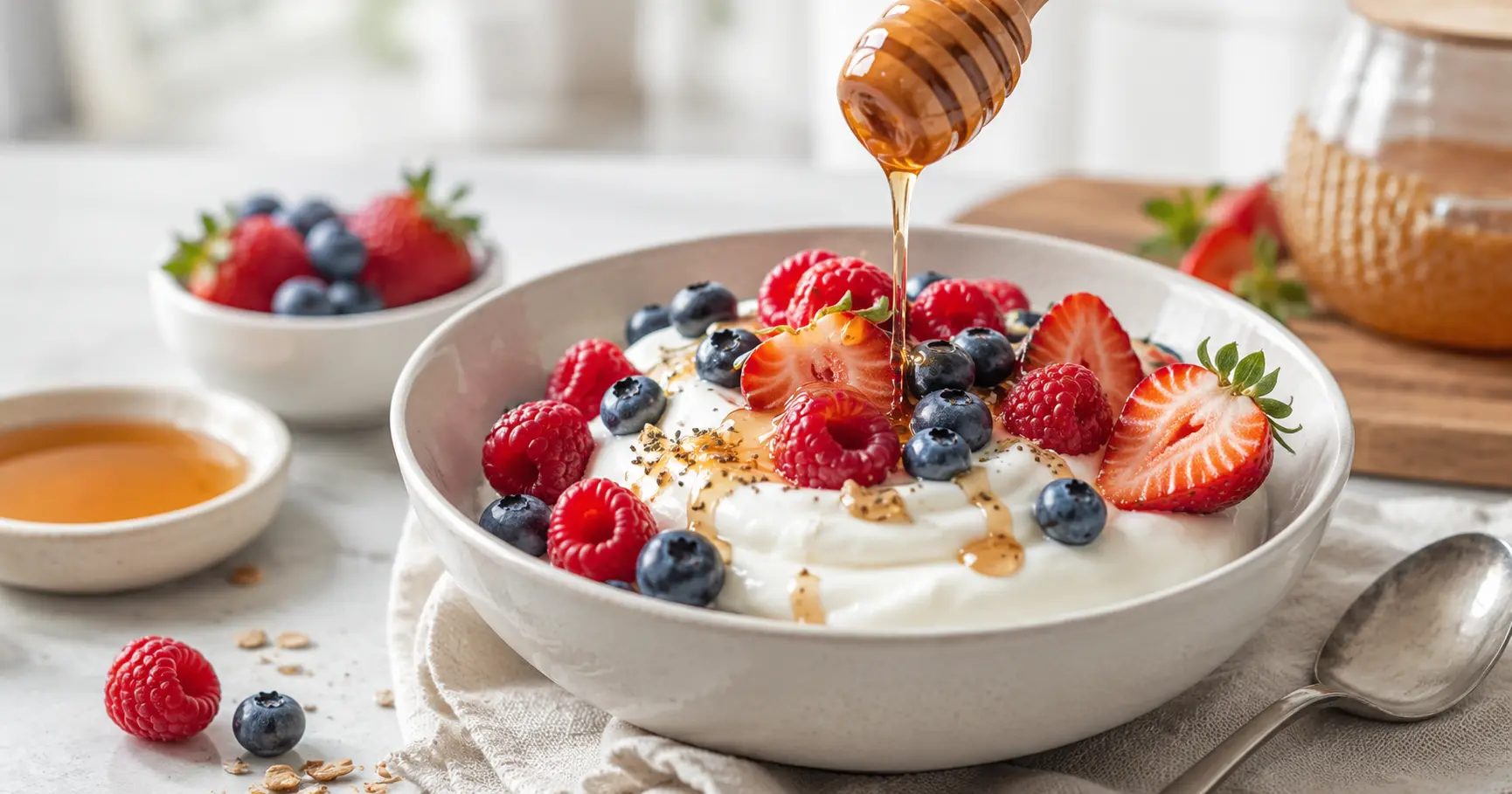
This is probably the single easiest protein source for a busy woman like you to eat consistently. One plain cup gives you roughly 20g of protein plus calcium and gut-supporting probiotics, and it works at breakfast, as a snack, or stirred into a sauce.
Kids generally take to it fine with berries or a drizzle of honey, which means you’re not making two separate breakfasts.
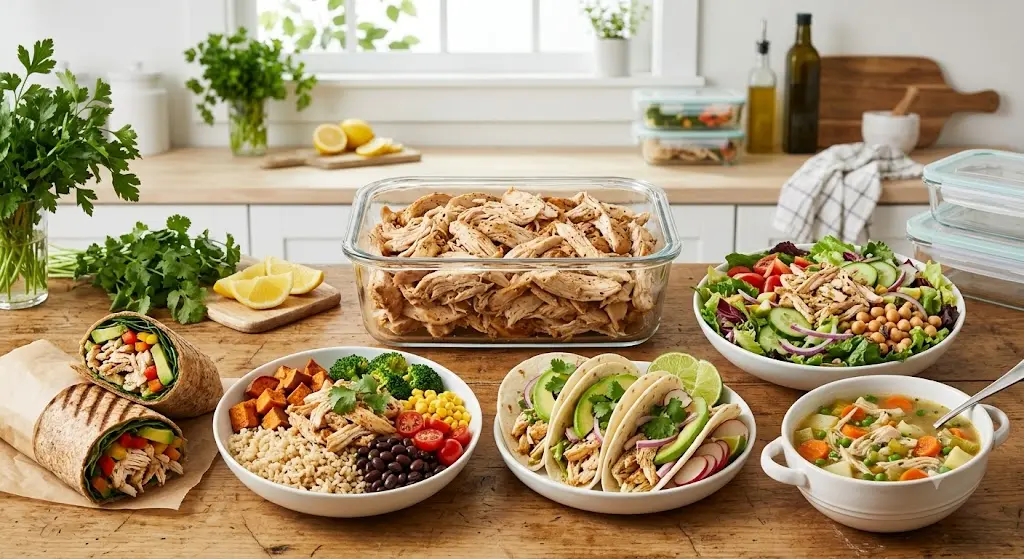
2. Chicken Breast: Boil It Once, Use It All Week
Batch-boil 3–5 pounds on a Sunday and you’ve solved several dinners: wraps, rice bowls, tacos, salads, soup.
Shredded chicken (rather than a solid chunk) tends to go over better with women who find plain chicken breast boring or dry to chew - plenty of women say the texture switch alone made it easier to actually eat their protein target. A great idea for your excuse: “I don’t have time to meal prep.”
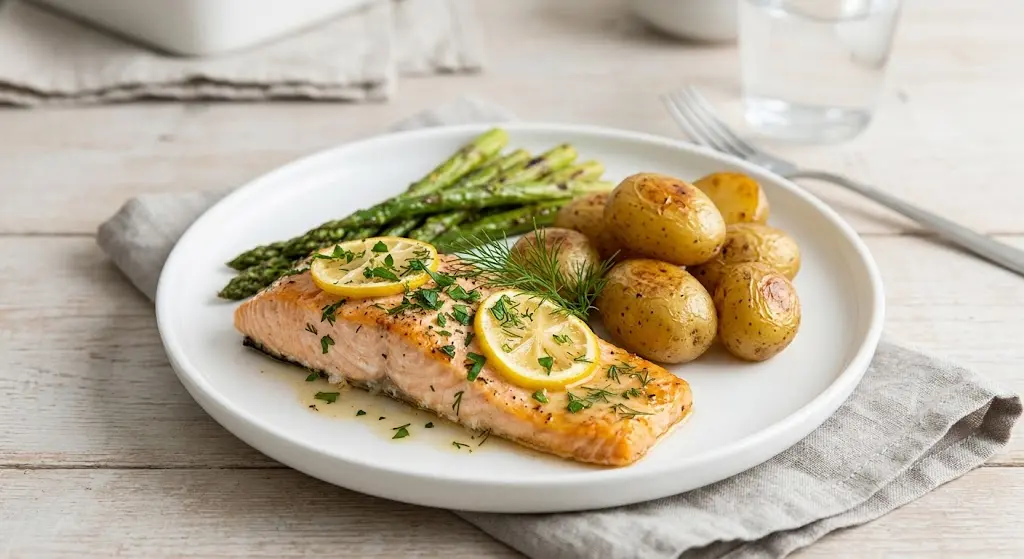
3. Salmon: The Fish Worth Making Twice a Week
Salmon delivers high-quality protein alongside omega-3 fats and vitamin D, both of which matter more during perimenopause for heart, brain, and bone health.
If the smell or texture is a hard no for your household, a simple sheet-pan version with lemon and a mild glaze tends to be the easiest entry point.
4. Eggs: The Budget MVP
Boiled, scrambled, baked into muffins, or folded into a breakfast sandwich - eggs are economical, fast, and rarely rejected by kids.
Two eggs plus a slice of whole-grain toast with peanut butter gets you close to 20g of protein before 7am.

5. Tofu and Edamame: The Plant-Based Option
Soy has a reputation problem that isn’t fully earned. A 2003 systematic review of soy trials for perimenopausal symptoms found no serious safety concerns with soy products used short term, and more recent isoflavone research suggests splitting a soy dose across the day may ease hot flash severity more than one large dose.
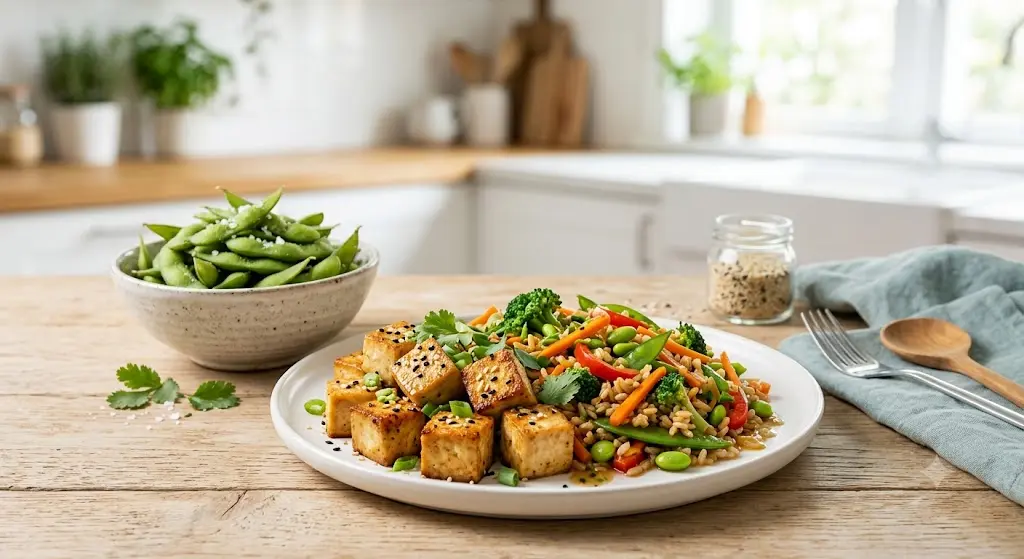
That said, the evidence on soy actually reducing hot flashes specifically is mixed - some reviews find a modest benefit, others find none.
Treat it as a solid complete-protein option with a possible bonus, not a guaranteed symptom fix.
Protein Powders Give You Gas or Bloating?
If protein shakes bloat you, the fix is usually the type of protein, not giving up on shakes entirely. Whey concentrate is the most common bloating culprit because of its lactose content.
Try these swaps if shakes have been rough on your stomach:
- Whey isolate or hydrolyzed whey — lower in lactose than concentrate
- Pea or hemp protein — good option if dairy is the issue
- Lactose-free Greek yogurt or kefir — same protein, gentler on digestion
- Smaller, more frequent servings instead of one large shake
Whole foods tend to be gentler than powders across the board. If a shake consistently causes discomfort, cottage cheese, eggs, or canned fish are worth trying as a swap before giving up on hitting your number.
Micro-action: If shakes bother you, try isolated instead of concentrated for one week before writing off powders entirely.
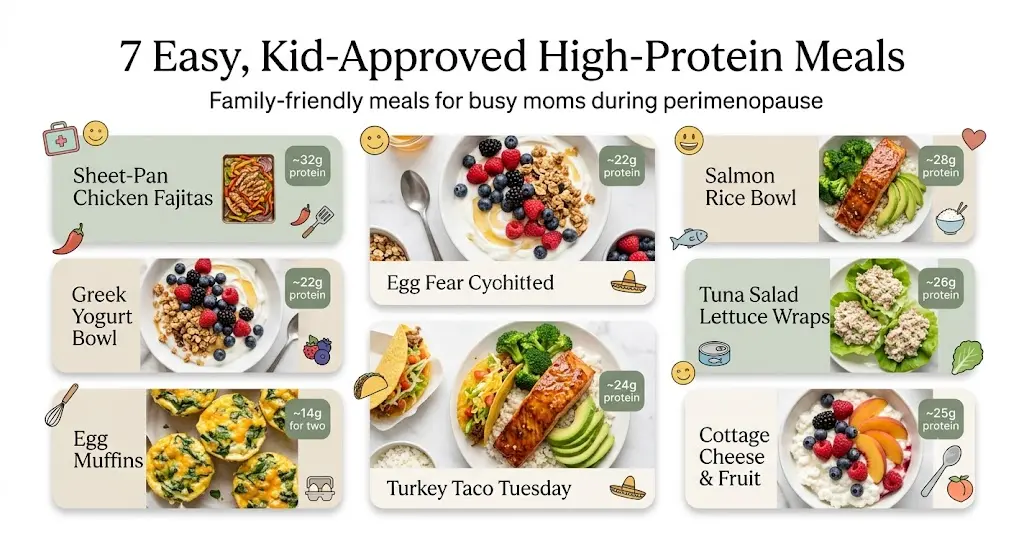
7 Easy, Kid-Approved Protein Meals
Worried that your family won’t eat high-protein meals? Try these kid-friendly meal plans:
- Sheet-pan chicken fajitas — chicken breast, peppers, onions, one pan (~32g protein/serving)
- Greek yogurt bowl — plain yogurt, berries, granola, honey drizzle (~22g)
- Egg muffins — eggs, spinach, cheese, baked in a muffin tin for grab-and-go mornings (~14g for two)
- Turkey taco Tuesday — ground turkey swapped for beef, same seasoning kids already like (~24g)
- Salmon and rice bowl — sheet-pan salmon over rice with a simple soy-ginger glaze (~28g)
- Tuna salad lettuce wraps or sandwiches — canned tuna, Greek yogurt instead of mayo (~26g)
- Cottage cheese and fruit — a five-minute snack plate that doubles as dessert (~25g)
Quick Shopping List and Prep Hacks
Keep these on rotation so you’re never starting from zero:
- Fresh/refrigerated: eggs, plain Greek yogurt, cottage cheese, chicken breast, ground turkey, milk, string cheese
- Frozen: salmon fillets, shrimp, edamame, pre-cooked chicken strips
- Pantry: canned tuna, canned salmon, lentils, black beans, chickpeas
- Convenience without shame: rotisserie chicken, pre-cooked shredded chicken packs, single-serve Greek yogurt cups
Batch-cook one protein on Sunday (usually chicken or ground turkey) and let it cover three different dinners through the week. That one hour of prep is the highest-leverage thing on this whole list.
Why Protein Works Differently in Perimenopause
Your muscles need more protein now to do the same job they used to do with less. This is called anabolic resistance - as estrogen declines, your muscle cells become less efficient at using the protein you eat to build and repair tissue.
That’s not a flaw in you. It’s biology catching up to your calendar.
A 2025 University of Exeter trial followed 72 pre-, peri-, and post-menopausal women through a 12-week resistance program and found something genuinely reassuring: your body’s ability to build muscle doesn’t switch off in perimenopause. It just needs more consistent fuel and more consistent strength work to keep responding. Amazing?
Muscle loss during this window matters beyond aesthetics, too. Less muscle means a slower metabolism, more fatigue, and — down the road — higher fracture risk. Protein plus strength training is the combination that protects against all three.
Micro-action: Next time you eat, ask yourself “where’s the protein on this plate?” before you eat a bite. That’s the whole habit to start with.
When to Eat Protein for Muscle and Energy
- Eat protein within about an hour before or after your strength sessions.
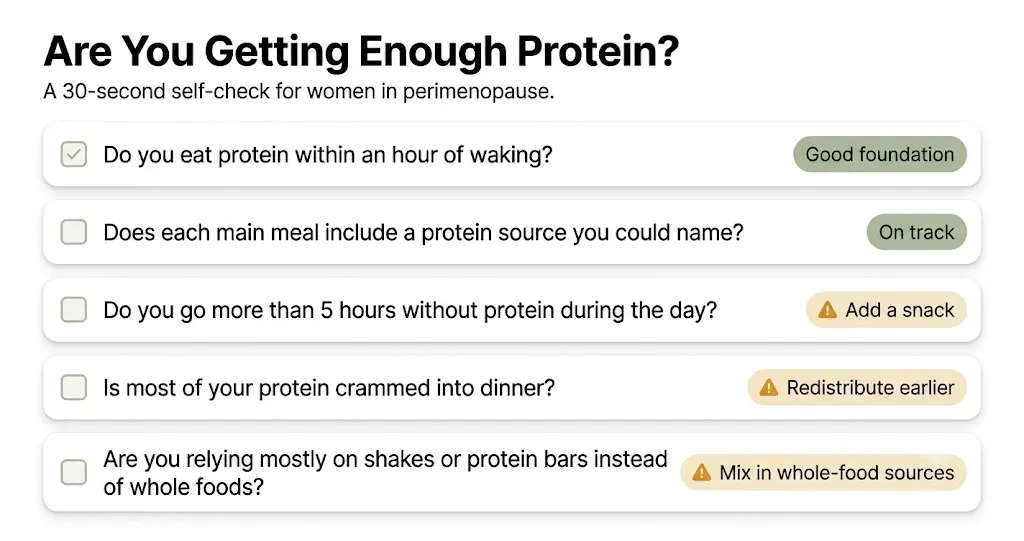
- Don’t let more than 4–5 hours pass between protein-containing meals during the day.
- That post-workout window (30–60 minutes after lifting) is when muscle is primed to use amino acids for repair.
- But timing around workouts matters far less than getting enough protein consistently across the day - so don’t stress if your schedule doesn’t allow perfect timing.
- A protein-rich breakfast that breaks your overnight fast does more heavy lifting for steady energy than a perfectly timed post-gym shake.
- This is also where the 3pm carb crash comes from. If lunch was a sandwich with barely any protein, of course you’re raiding the office snack drawer by mid-afternoon.
Protein slows digestion and blunts the blood sugar swing that drives cravings.
Micro-action: Set a recurring 2:30pm phone reminder that just says “protein snack,” not “don’t eat carbs.” Framing matters.
Conclusion
Perimenopause doesn’t take away your ability to build or keep muscle - it just raises the bar on consistency. Build most meals around a handful of easy staples: eggs, Greek yogurt, chicken, salmon, and cottage cheese. Spread your protein across the day instead of loading it all into dinner. And if a specific food or shake isn’t working for your gut, swap the source, not the goal.
None of this requires a perfect system or extra hours you don’t have. It requires picking one small swap this week - an extra egg, a batch of shredded chicken, a yogurt cup in the work bag - and repeating it until it’s just what you eat now.
FAQs
What is the best protein to build muscle during perimenopause?
There isn’t one single “best” food - chicken, eggs, Greek yogurt, salmon, and tofu are all high-quality, complete or near-complete proteins. The best one for you is whichever you’ll actually eat consistently, paired with regular resistance training.
How much protein should a woman in her 40s eat to gain muscle?
Most active women do well around 1.2–1.6g per kilogram of body weight daily, split across 3–4 meals at roughly 25–35g each. Exact needs vary with activity level, weight, and health history.
Which protein powders are good for perimenopause and don’t cause bloating?
Whey isolate or hydrolyzed whey tend to cause less bloating than whey concentrate because they contain less lactose. Pea or hemp protein are solid dairy-free alternatives if whey still bothers you.
Can too much protein hurt my kidneys in perimenopause?
For women with normal kidney function, higher protein intakes in the 1.2–1.5g/kg range have not been shown to impair kidney function in long-term research. If you have existing kidney disease, you should check with your doctor first.
What are quick high-protein breakfasts for busy mornings?
Two eggs with toast, a Greek yogurt bowl with berries and granola, or a pre-made egg muffin all deliver 20g+ of protein in under five minutes of active prep.
About the author: I’m a health and fitness content writer focused on research-backed women’s wellness. I’ve been overweight since childhood and rebuilt my body - and my confidence - through consistent strength work and better protein choices, with no pills and no crash diets. I write to make science usable for women juggling real, busy lives.
← Back to all posts