How To Lose Postpartum Belly After C Section At Home
Key Takeaways
- Your C-section pooch is not just fat — it’s a combination of swelling, scar tissue adhesion, and weakened abdominal muscles, which is why regular “lose belly fat” advice rarely works post-surgery.
- You must wait for your OB/GYN’s clearance (typically 6–8 weeks) before any structured core exercise; starting too early can reopen your incision or worsen diastasis recti.
- Nutrition, hydration, targeted breathing-based rehab exercises, and scar tissue massage are the four pillars that actually move the needle — not crash diets or intense ab workouts.
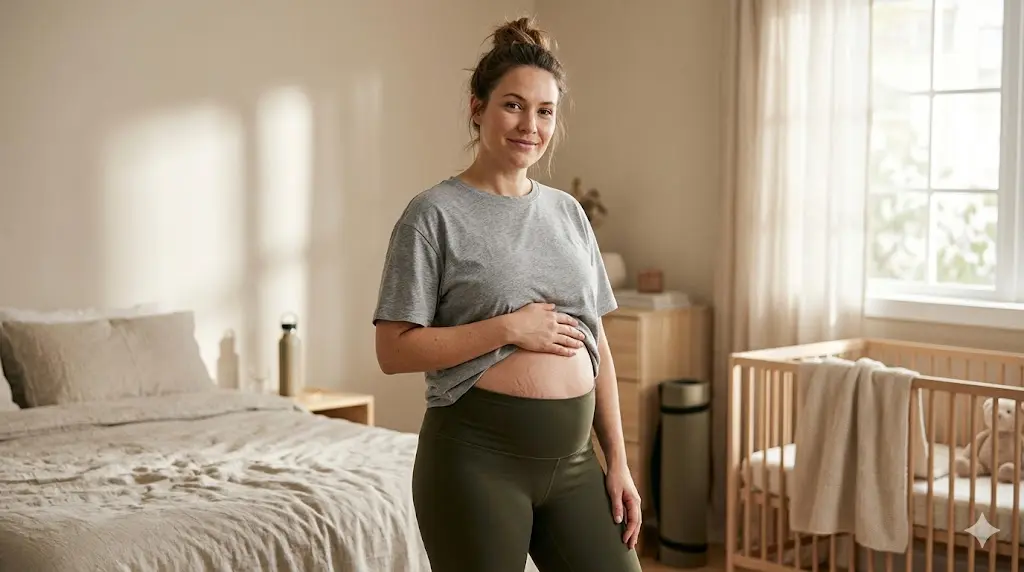
You did something extraordinary. You grew a human being, and when the moment came, your baby was brought into the world through one of the most significant surgical procedures a woman can undergo.
And now, weeks or months later, you’re standing in front of the mirror, pulling at the skin above your scar, wondering if this belly — this stubborn, soft, shelf-like pouch — is just… yours to keep now.
I want you to hear this clearly: it is not permanent, and you are not broken.
The C-section belly, a type of belly fat, is not a failure of willpower. It’s a physiological reality that comes from major abdominal surgery — cut through seven layers of tissue, to be precise.
The good news? There is a real, evidence-based path back. It’s slower than you’d like, and it requires a different approach than what influencers are selling you, but it works. Let’s go through it together, step by step.
What Is a C-Section / Postpartum Belly?
A postpartum belly after a C-section is not the same as ordinary belly fat. When surgeons perform a cesarean, they cut through the skin, fat layer, fascia (the connective tissue sheet), and the uterus itself.
During healing, scar tissue forms — and that scar tissue can bind to the fascia and muscles underneath, creating a physical tethering effect that pulls the skin inward and causes the characteristic “shelf” or “pouch” above the scar line.
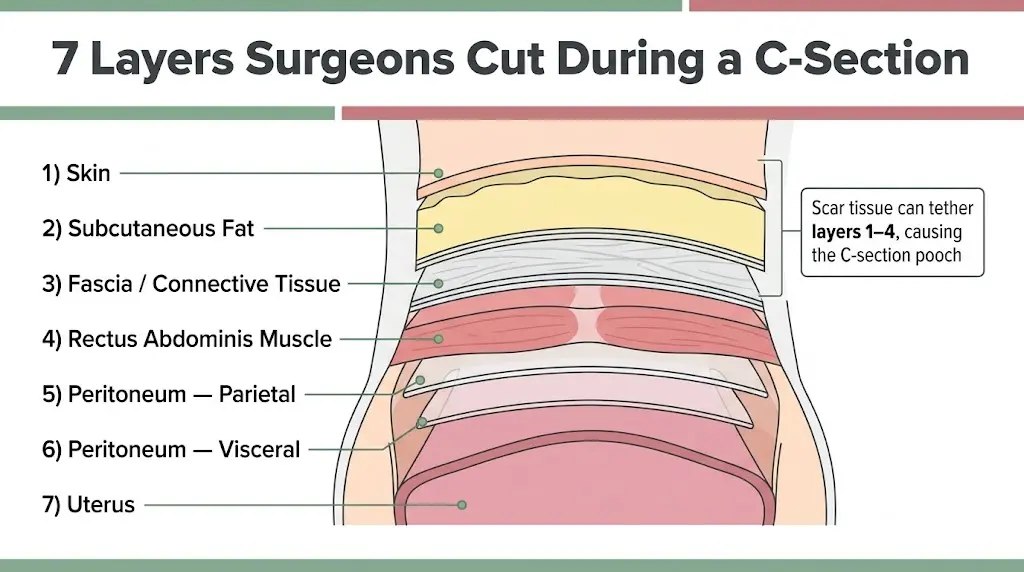
On top of that, the transverse abdominis and other deep core muscles are cut or stretched during the procedure, leaving the abdominal wall temporarily unable to function the way it used to. The uterus also takes 6–8 weeks just to shrink back to its pre-pregnancy size — a process called involution — which contributes to that still-pregnant appearance in the early weeks. (NHS, Caesarean Section Recovery)
You did a great job, the process itself sounds scary. I am not a married woman, but I can feel your pain, as I helped my mother to heal through the C-Section belly after my youngest sister.
What Does a Normal Postpartum C-Section Belly Look Like?
“Normal” has a wide range here, and that’s important to acknowledge.
In the first 1–2 weeks, expect significant swelling, bloating, and a soft, doughy abdomen that still looks several months pregnant. This is entirely normal. The uterus alone weighs about 2.5 lbs after delivery and needs weeks to shrink.
By 6–8 weeks, visible swelling usually subsides, but a soft pouch above the scar often remains. Many women describe it as a “B-shaped belly” — where the scar creates a horizontal indent that separates a lower pouch from the rest of the abdomen.
Beyond 3–6 months, the belly continues to change, especially with consistent, appropriate rehabilitation. The pouch may persist — not because of laziness — but because scar tissue adhesions can physically prevent the skin from lying flat.
We need to really admire our bodies for this.
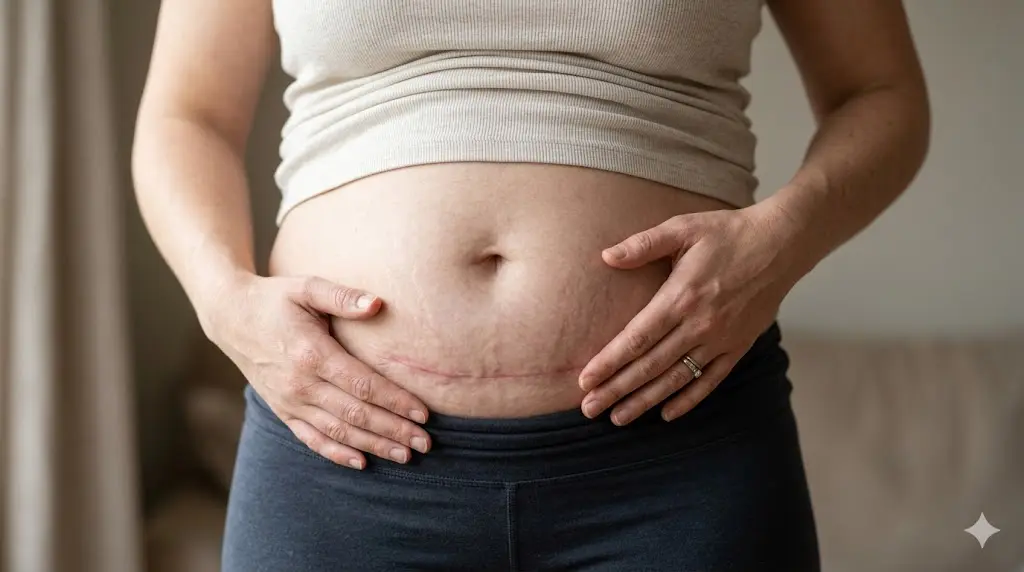
“I’m 6 months pp, back to prepregnancy weight, workout as much as possible, every other body part looks similar to before, but my belly is still like 2–3 months pregnant.”
“I’m 7 months and still 35 lbs heavier than pre-pregnancy… it’s all belly.”
This is common. This is valid. And this is addressable.
How to Lose Postpartum Belly After C-Section at Home
Wait for Clearance — Seriously
I know this is the last thing you want to hear, but jumping into exercise before your body is ready can cause more damage than the C-section itself. Your incision involves seven layers of tissue. Internally, you are healing from a uterine incision that carries real risks of dehiscence (reopening) if stressed too early.
The American College of Obstetricians and Gynecologists (ACOG) recommends waiting for your 6-week postpartum visit before resuming structured exercise. Your OB may extend this window based on how your incision is healing.
What you can do from day one: walk. Short, gentle walks — even just around the house — improve circulation, reduce the risk of blood clots, and support mental health. Start with 5–10 minutes and build slowly.
Targeted Home Exercises That Are Actually Safe
Once you’re cleared, the goal is not “abs.” It’s functional core rehab — rebuilding the deep stabilizer muscles that were disrupted during surgery. Here’s what actually works:
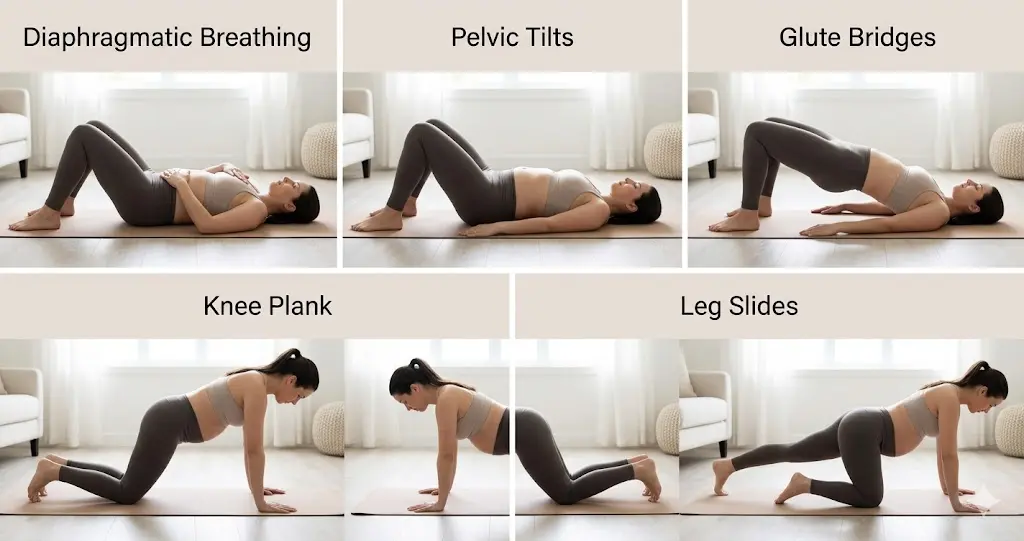
360 Diaphragmatic Breathing (Start Week 1–2)
Lie on your back with knees bent. Inhale deeply through your nose, letting your ribcage expand in all directions. As you exhale slowly through your mouth, gently draw your navel inward. Follow Michelle Kenway and thank me later.
This activates the transverse abdominis — the deepest abdominal muscle — without any pressure on your scar. Research published in the Journal of Physical Therapy Science shows diaphragmatic breathing exercises significantly improve core muscle activation postpartum.
Pelvic Tilts (Week 2–4)
Lying on your back, knees bent, feet flat. Gently flatten your lower back against the floor by tilting your pelvis upward. Hold 5 seconds, release. This recruits the core without any incision strain. Follow Rehab My Patient for exact movements. I always add one or two reps in my workout as they are wonderful for lower back pain.
Glute Bridges (After 6-Week Clearance)
Lie on your back, knees bent. Push through your heels to lift your hips toward the ceiling. This targets glutes and core simultaneously, building the posterior chain that supports abdominal function. Hinge Health is so underrated for this one. I do these when working on my lower core and lower back.
Modified Planks on Knees (6–8 Weeks, When Cleared)
Progress to a standard knee plank only when you can do so without doming (coning) in the abdomen — which is a sign of intra-abdominal pressure exceeding your current capacity. Follow Wellen for exact movements.
Leg Slides (Week 3–4)
Lying flat, slide one heel along the floor away from your body, keeping your core lightly engaged. Alternate legs. Low-impact, scar-safe, and highly effective for engaging the lower abdominals. Watch Pilates Encyclopedia for exact movements.
⚠️ Skip these until fully healed: crunches, sit-ups, leg raises, any exercise that causes “coning” or doming at the midline. These increase intra-abdominal pressure and can worsen diastasis recti.
Nutrition for Recovery + Hydration
This is where I see women go wrong most often — either doing nothing or swinging to crash dieting. Both backfire, especially postpartum.
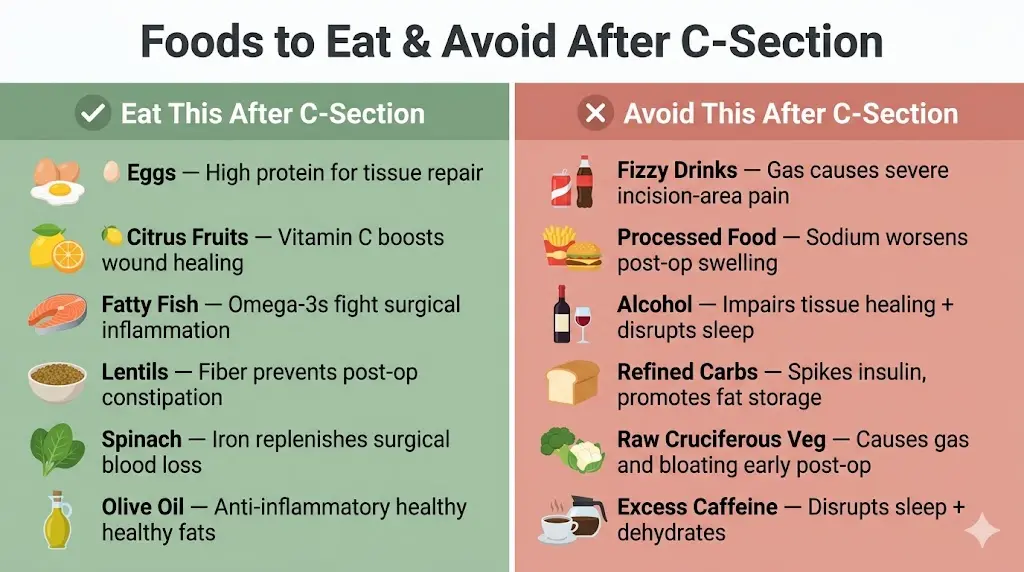
Which fruit is good after a C-section?
Papaya (ripe), kiwi, berries, and citrus fruits are particularly beneficial. Ripe papaya contains papain, an enzyme with anti-inflammatory properties. Kiwi and citrus are vitamin C powerhouses. Berries are loaded with antioxidants that combat surgical oxidative stress.
Why drink apple juice after a C-section?
You’ve probably heard this in hospital — it’s not a myth. Apple juice is sometimes given in the immediate post-op period to stimulate bowel function and relieve gas. It’s easily digestible and provides quick energy without burdening a recently operated digestive system. However, this is a short-term hospital protocol, not a long-term strategy for belly reduction.
Homemade Drinks to Reduce Belly Fat After C-Section
These aren’t magic potions, but they do support metabolism, reduce inflammation, and aid digestion — which matters for postpartum recovery.
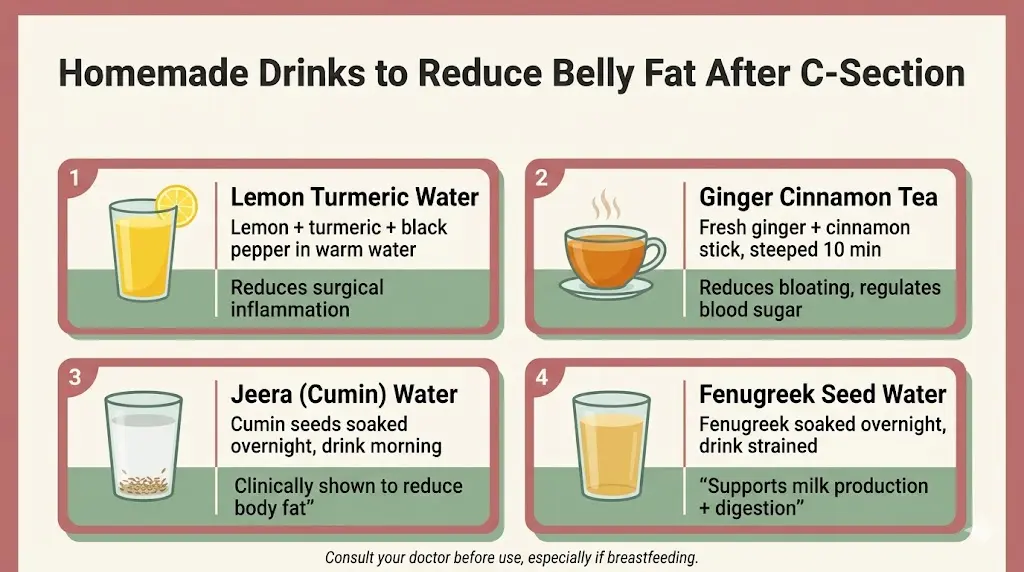
1. Warm Lemon + Turmeric Water Juice of half a lemon, ½ tsp turmeric, pinch of black pepper (enhances curcumin absorption) in warm water. Drink first thing in the morning. Curcumin — the active compound in turmeric — has documented anti-inflammatory effects. (NCBI: Curcumin Review)
2. Ginger + Cinnamon Tea Steep 1 inch fresh ginger and a cinnamon stick in hot water for 10 minutes. Ginger reduces bloating and promotes gastric motility. Cinnamon helps regulate blood sugar, which in turn reduces fat storage signals from insulin.
3. Jeera (Cumin) Water Soak 1 tsp of cumin seeds in water overnight. Strain and drink in the morning. Widely used in Ayurvedic postpartum care, cumin water has been shown to reduce body fat in clinical trials.
4. Fenugreek Seed Water Soak 1 tsp fenugreek seeds overnight, drink the water in the morning. Supports milk production and aids digestion. Avoid if you have a clotting disorder or are on blood thinners.
Note: Always check with your doctor before introducing new supplements or herbal drinks, especially while breastfeeding.
Is It Possible to Prevent a C-Section Pouch?
Honestly? Not entirely — and that’s okay to admit. When a surgeon makes an incision through seven layers of abdominal tissue, some degree of scar formation and tissue tethering is almost inevitable.
But “not entirely preventable” is very different from “nothing you can do.” Several things, done early and consistently, can significantly minimize how pronounced the pouch becomes.
Before surgery (if it’s planned): Building core strength and overall fitness before a scheduled C-section gives your abdominal muscles a stronger baseline to return to. Women who enter surgery with better core function tend to recover faster.
Immediately post-op: Gentle walking within 24 hours (once cleared) reduces internal adhesion formation. Movement is one of the best natural anti-adhesion tools available — the body forms less scar tissue when it isn’t completely sedentary.
Nutrition during recovery: An anti-inflammatory diet reduces the inflammatory cascade that drives excessive scar tissue formation. Vitamin C, zinc, and adequate protein all support organized, less-fibrotic wound healing. (NCBI: Micronutrients and Wound Healing)
Belly Binding / Postpartum Wraps: A postpartum belly binder or compression wrap can reduce swelling, support your abdominal muscles, and improve posture as your core rebuilds. Studies suggest abdominal binders after cesarean delivery reduce pain and improve early mobility. Start with 4–6 hours per day and don’t wear while sleeping. Choose one specifically designed for post-C-section recovery, not generic shapewear. Try Belly Bandit for postpartum wraps.
Scar Massage: At around 6–8 weeks post-op (once the scar is closed and non-tender), gentle scar massage can break down adhesions that cause the C-section shelf. Use two fingers to gently move the scar tissue horizontally, vertically, and in circles. This is one of the most underutilized tools for reducing the C-section pooch, and a pelvic floor physiotherapist can teach you exactly how. Follow NAYDAYA for exact movements.
Pelvic Floor Physical Therapy: A pelvic floor physio is not a luxury, it’s a tool. They assess diastasis recti, scar adhesion, and core dysfunction in ways no online article can. Many insurance plans cover this. If yours does, book an appointment before you start any home exercise program. Make sure to watch this interesting video before going for a checkup.
Breastfeeding (If Applicable): Breastfeeding burns an additional 300–500 calories per day and stimulates oxytocin release, which helps the uterus contract back to its pre-pregnancy size faster. It’s not a weight loss strategy on its own, but it’s a meaningful contributor.
What Is the Timeline for Losing a Postpartum Belly?
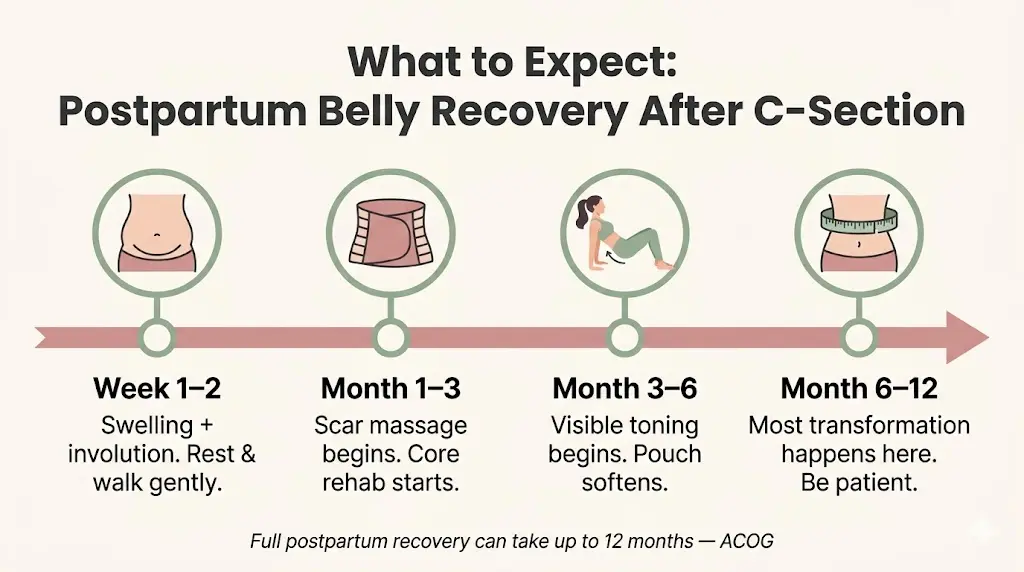
| Timeframe | What’s Happening | Focus |
|---|---|---|
| Week 1–2 | Uterus contracting; lose 8–12 lbs from baby, placenta, amniotic fluid. Belly still looks pregnant. | Rest, hydration, gentle walks, incision care |
| Weeks 3–6 | Swelling reduces. B-shaped belly becomes more apparent. | Pelvic tilts, diaphragmatic breathing, nutrition |
| Weeks 6–12 | OB clearance to exercise. Core rehab begins. Scar massage starts at Week 6–8. | Progressive core rehab, scar massage, structured nutrition |
| Months 3–6 | Consistent effort starts to show results. Many women near pre-pregnancy weight by Month 6. | Increase exercise intensity, introduce resistance training |
| Months 6–12 | Most visible transformation window. Full recovery can take up to 12 months (ACOG). | Manage expectations — 6–12 months is a healthy, normal timeline |
| Beyond 1 Year | Lingering pouch is almost always untreated scar adhesions or uncorrected diastasis recti. | Pelvic floor physiotherapist assessment is essential |
I love watching GrowWithJo — she is amazing!
What Causes a C-Section Pooch?
The C-section pooch — that shelf or overhang just above the scar — is caused by a specific combination of factors:
- Scar tissue adhesions: Internal scar tissue binds the skin to deeper structures, creating a “tethered” appearance that prevents the skin from lying flat
- Weakened lower abdominal muscles: The muscles below the incision are cut and need rehabilitation to regain tone
- Excess skin: Skin that was stretched over pregnancy may not fully retract, particularly after multiple pregnancies or significant weight gain
- Residual fat: Subcutaneous fat accumulates in the lower abdomen and can sit differently after surgery
The pooch is anatomically distinct from standard belly fat — which is why crunches, which target the rectus abdominis, do almost nothing for it. The work has to begin deeper and lower.
Diastasis Recti vs. C-Section Pooch — What’s the Difference?
These two conditions often coexist but are not the same thing, and confusing them leads to wrong treatment.
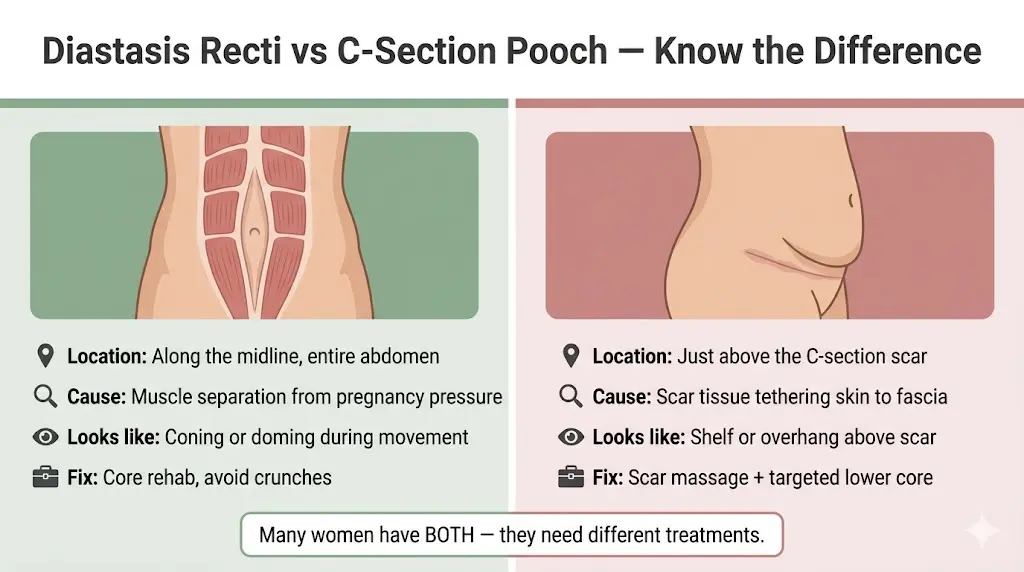
Diastasis Recti is the separation of the two bands of the rectus abdominis (the “six-pack” muscles) along the midline. It occurs in up to 60% of women postpartum. You can check for it yourself: lie on your back, lift your head slightly, and feel along your midline — a gap wider than 2 fingers indicates diastasis recti. It causes a “coning” or “doming” of the belly during core movements. It can also happen after sudden and rapid weight loss.
C-Section Pooch is the specific shelf or overhang above the scar line, caused by scar tissue adhesion and fat distribution changes. It is not a muscle separation issue — it’s a scar and skin issue.
Many women have both. If you do, healing requires addressing them as separate conditions — diastasis with specific core rehab, the pooch with scar massage and targeted lower core work.
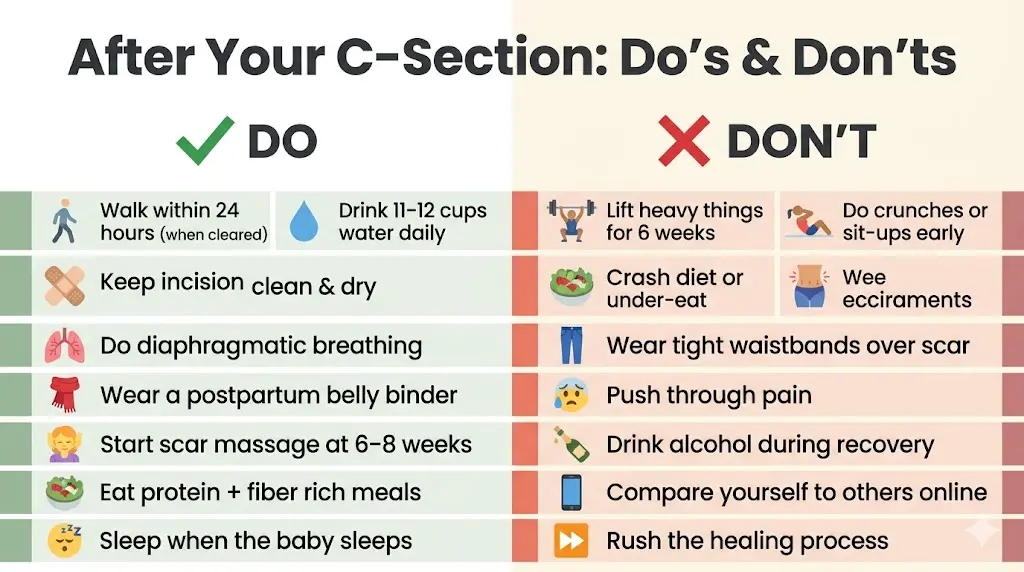
Do’s and Don’ts After C-Section Delivery
Conclusion
Your C-section belly is not a life sentence. It is a very specific, very real physiological consequence of major surgery — and it responds to very specific, targeted action. Walking early. Breathing with intention. Massaging your scar. Eating to heal, not to punish. Being patient with a body that quite literally grew and delivered a human being through surgery.
The women who see the most progress are not the ones who push hardest the fastest. They’re the ones who understand what they’re dealing with, respect the healing process, and stay consistent with the right interventions over time.
You have everything you need to start. Begin where you are. Trust the process. And if something doesn’t feel right — physically or emotionally — talk to your doctor. That’s not weakness. That’s wisdom.
If this article helped you, share it with a fellow mama who needs it. And if you’re ready to take the next step, book a consultation with a pelvic floor physiotherapist in your area — it may be the single best thing you do for your postpartum recovery.
Frequently Asked Questions
How to lose 20 pounds after a C-section?
Losing 20 lbs after a C-section is absolutely achievable, but it takes longer than you want it to. Here’s what works: start with a moderate caloric deficit of 300–500 calories below your TDEE (total daily energy expenditure) once breastfeeding is established and you’re past the 6-week mark. Combine this with low-impact cardio (walking, swimming), progressive core rehab, and resistance training once fully cleared. Most women safely lose 1–1.5 lbs per week at this rate. Rapid loss slows milk production and impairs healing.
Will a C-section pooch ever go away?
For most women, yes — significantly. The timeline varies depending on how much scar tissue formed, whether adhesions are addressed (through massage and physio), your genetics, and whether diastasis recti is also present. Women who do scar tissue massage consistently from 8 weeks onward and who complete a proper core rehab program see the most dramatic improvement. For some women, particularly after multiple C-sections, a small pouch may persist — and at that point, cosmetic options like abdominoplasty exist if it causes significant distress.
Do C-section moms have a harder time losing weight?
In some ways, yes. The surgery affects the core muscles responsible for generating the metabolic “engine” of movement. A weakened core means less effective overall movement, lower baseline muscle tone, and potentially a reduced caloric burn. Add the fact that C-section recovery limits exercise for 6–8 weeks, disrupted sleep is universal, and cortisol from stress and sleep deprivation promotes fat storage — and yes, the deck is slightly stacked. But it’s not impossible. It just requires a smarter, more patient approach.
How to reduce belly after C-section without exercise?
Nutrition is the primary lever. Focus on anti-inflammatory eating, eliminate processed food and sugar, prioritize protein (1g per pound of body weight), and stay aggressively hydrated. Scar massage alone can improve the appearance of the pouch significantly by releasing adhesions. Wearing a postpartum binder supports the abdomen and improves posture, which changes how the belly looks and sits. Sleep is genuinely metabolic — prioritize it.
How to reduce belly after C-section after 2 years?
Two years post-C-section, you are not in the postpartum healing window anymore — but you’re also not without options. The approach shifts to: releasing any remaining scar adhesions (a pelvic physio can assess this), rebuilding deep core function with targeted exercise, and addressing any remaining diastasis recti. Standard fat loss strategies (caloric deficit + resistance training) become more applicable at this stage. Many women don’t begin serious C-section rehabilitation until 1–2 years postpartum and still see meaningful improvement.
How to reduce belly after C-section after 10 years?
Ten years out, any remaining “pooch” is likely a combination of residual scar adhesion, lower abdominal fat distribution, and possible ongoing diastasis recti. The good news: scar tissue remains somewhat responsive to massage and manual therapy at any point. A pelvic floor physiotherapist can assess and treat adhesions even years later. Core rehabilitation works regardless of how long it’s been. For stubborn cases where scar tissue is the primary cause, a minor procedure called scar revision, or a consultation about abdominoplasty (tummy tuck), may be appropriate conversations to have with a plastic surgeon.
This article is written for informational purposes only. Always consult your OB/GYN or healthcare provider before starting any exercise or nutrition protocol after a C-section.
← Back to all posts