This Belly Fat Quiz Reveals What’s Really Going On
Key Takeaways
- Not everything that looks like belly fat is belly fat - bloating, water retention, posture, and postpartum changes can all mimic fat, and no amount of “eating cleaner” fixes what was never a fat problem to begin with.
- The soft, pinchable layer most of us have is not the dangerous kind - visceral fat (the type linked to real health risk) sits deeper, feels firm, and shows up as a waist over 35 inches, not as the lower belly pooch you can grab.
- If you’re doing everything right and nothing is changing, the protocol might be the problem - stress, hormonal conditions, and diastasis recti can physically change how your belly looks, and pushing harder into the wrong approach can make it worse before it ever gets better.
🔍 Which belly type are you?
Answer 7 quick questions to find out what’s actually going on with your belly — because not all of it is fat, and the fix depends entirely on the type.
01 / 07
The bulge you have on your stomach may or may not need your attention. Sometimes it’s bloating. Sometimes it’s water weight from your cycle. Sometimes it’s posture, or what’s left over from pregnancy. Sometimes it’s hormonal or due to stress. Sometimes it’s dangerous or maybe it’s just normal fat you need to bear your beautiful child.
If you’ve spent months doing everything “right” - tracking food, walking, cutting carbs - and your stomach still looks the same (or honestly, worse some days), I want you to know you’re not imagining it and you’re not broken. There are several types of belly fat in women, and most advice out there treats all of them like the same problem with the same fix.
So let’s actually go through them together - what each one looks like, what’s really going on underneath, and how you can start telling yours apart.
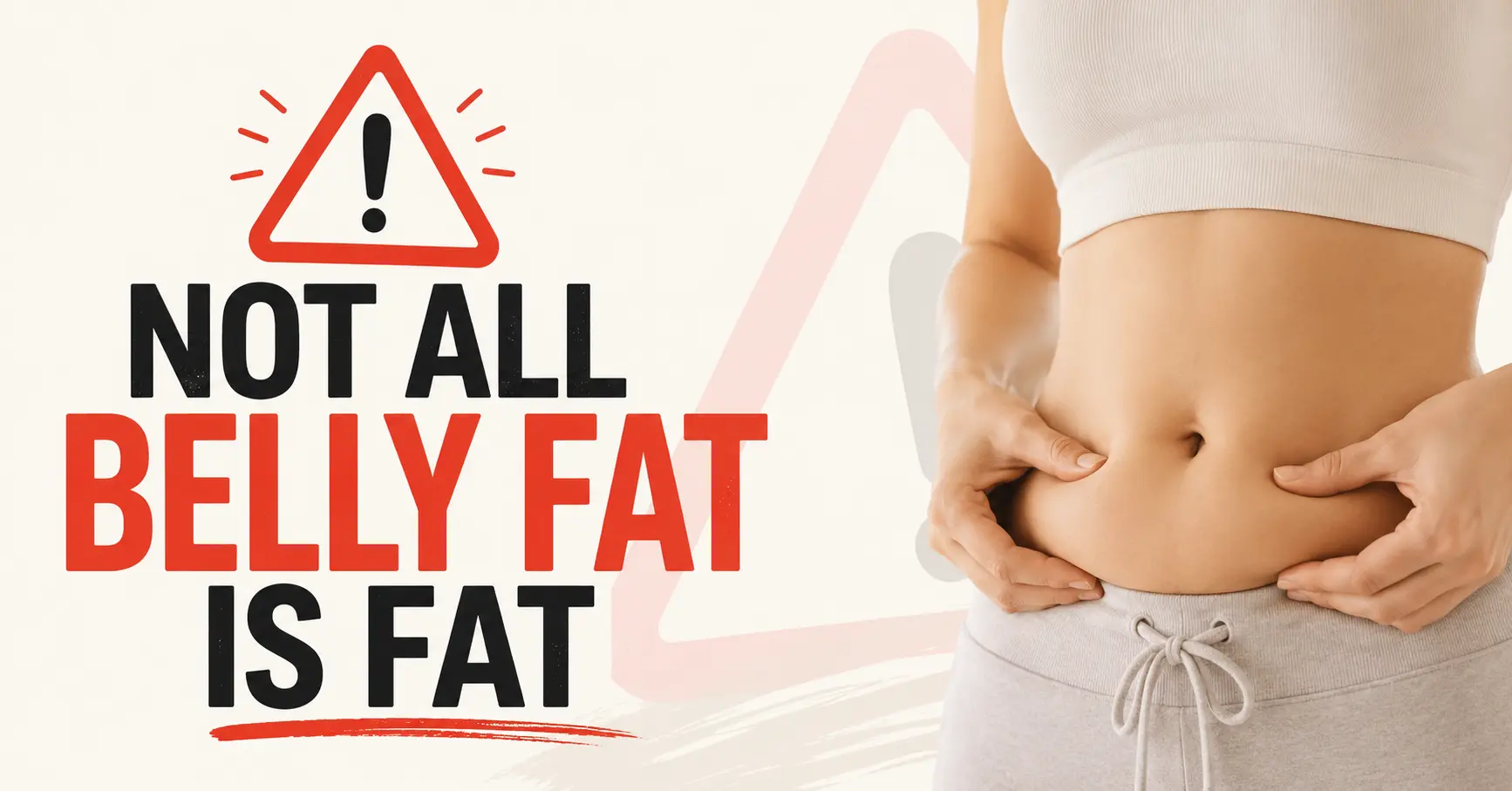
What We Usually Mean When We Say “Belly Fat”
Honestly? When we say “belly fat,” we could be talking about at least eight different things.
You might call yours a:
- “Lower belly pooch”
- “Mom pooch” or “apron belly”
- “FUPA”
- “Hormonal belly” or “stress belly”
- “Bloat belly” or “puffy belly”
- “Firm belly” or “soft belly”
Let’s break down which type you have!
Why is your lower belly “soft” and “pinchable”?
If you can pinch your lower belly and feel a soft, even layer between your fingers, and stay the same throughout, that’s subcutaneous fat.
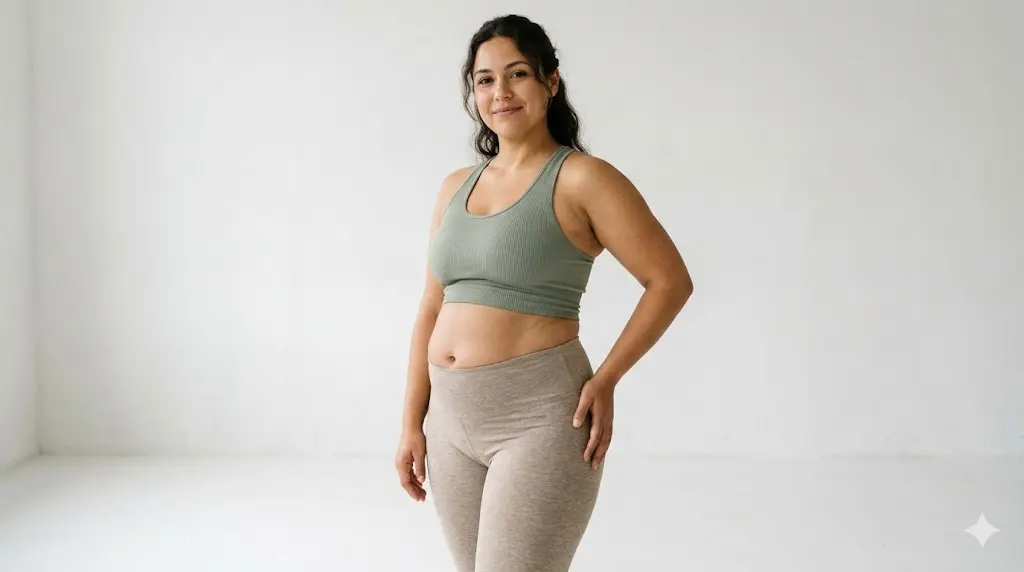
If your fingers feel together while pinching, then it is a combination of loose skin and subcutaneous fat. This type occurs after a lot of weight loss.
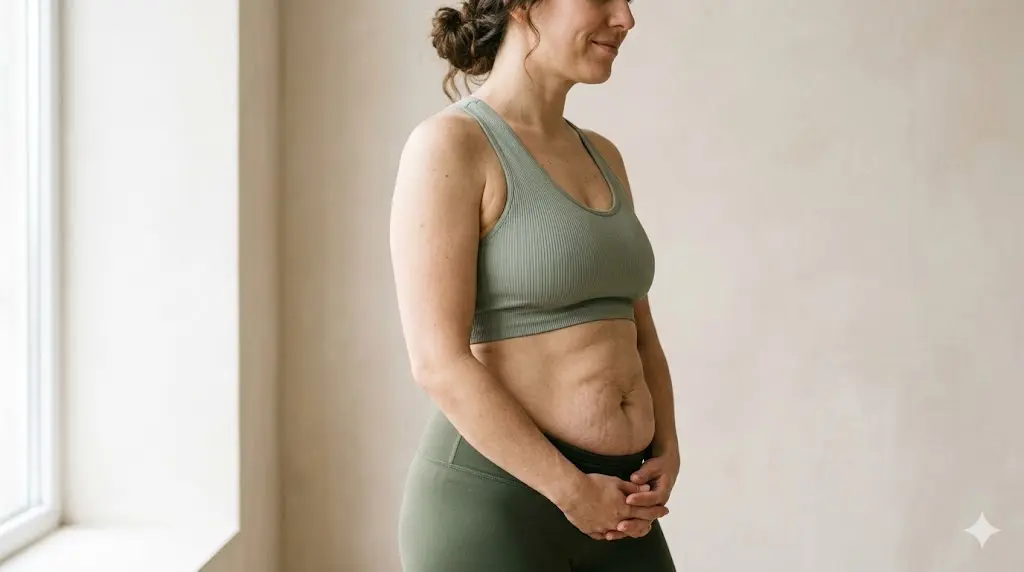
Here’s something I wish someone had told me years ago: during our childbearing years, our bodies are designed to store more fat in the hips, thighs, and lower belly. It’s driven by estrogen and reproductive biology, not by anything we did wrong.
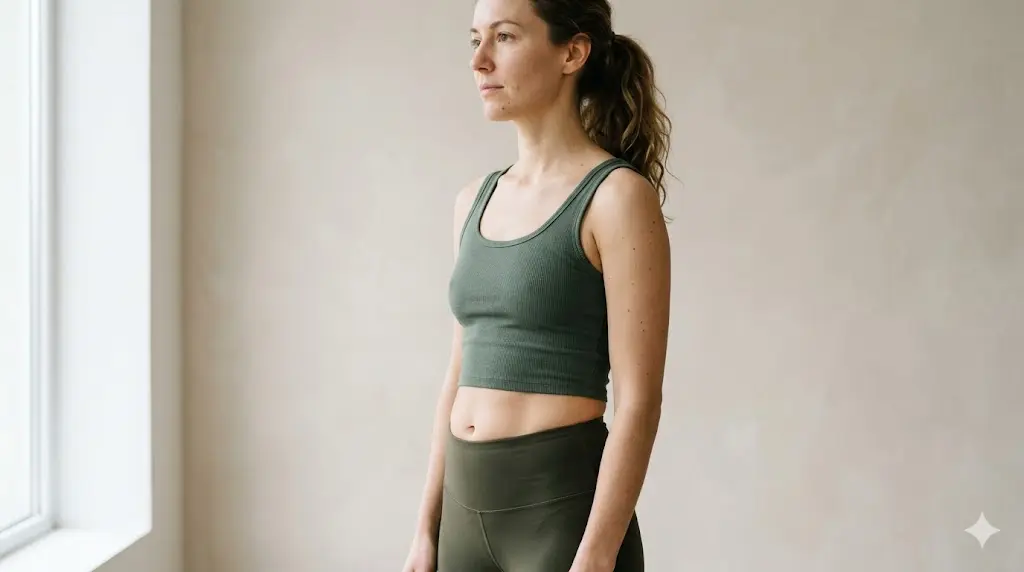
Stats show that only 1-2% of women in the US have abs without lower belly or pooch, and those fall under the category of elite athletes, professional dancers, fitness influencers, and dedicated amateurs. Or some just have got divine genes.
Why does your stomach feel “hard” even though you are not overweight?
If your belly feels firmer, doesn’t pinch much, and you are not overweight, then you have High Visceral fat greater than 10% - TOFI (Thin on the Outside, Fat on the Inside) - appears as “potbelly”. It does not change its shape throughout. This is generally referred to as “cortisol belly” or “stress belly.”
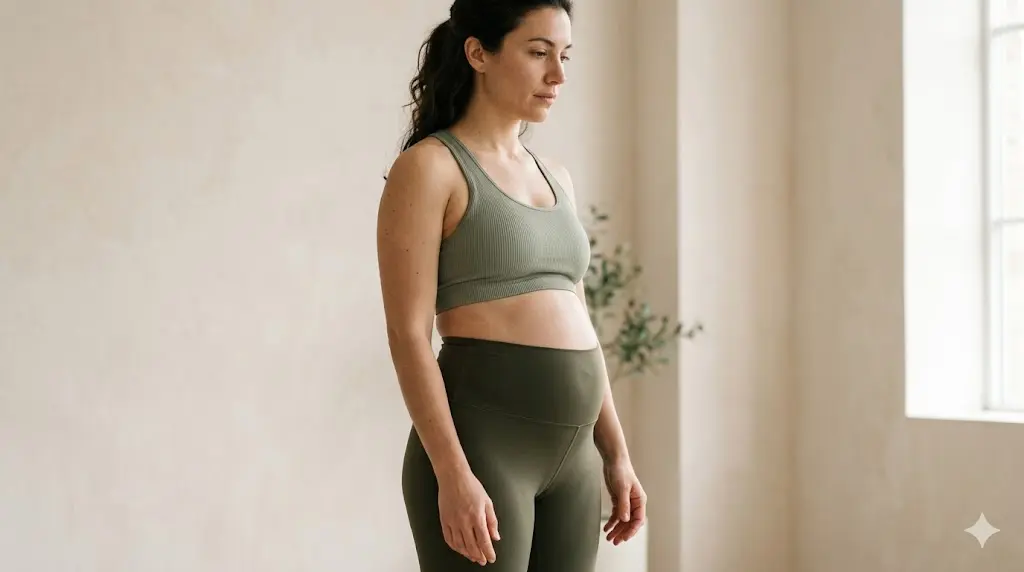
Here’s the tricky part: you can’t always tell visceral fat just by looking in the mirror. That’s why doctors use waist circumference as a screening tool instead of going by appearance alone (JAMA). Waist over 35 inches even when you are not overweight is a sign of high visceral fat. And if you’re in perimenopause or menopause, you may notice your shape changing even if the number on the scale hasn’t (Mayo Clinic).
Even women with smaller waist can develop abdominal obesity (high visceral fat), especially if the belly looks like an early pregnancy bump or more like a firm basketball.
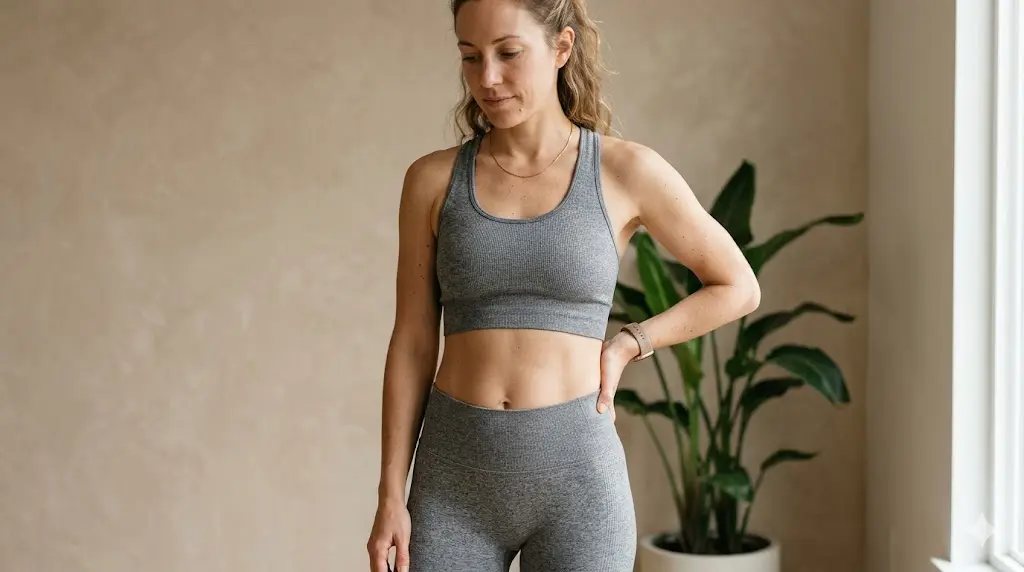
Why does your belly look “bigger at night”?
We’ve all had this moment: flat stomach in the morning, and by 7pm you look five months pregnant. That’s bloating, and it has nothing to do with fat.
This type is usually not fat, but looks like a balloon expanding outward evenly - inflated or puffy belly.
If you’ve ever dealt with IBS, you already know how connected bloating is to gas, abdominal pain, and your menstrual cycle - hormone shifts alone can cause your belly to puff up temporarily (PubMed).
Think about your day:
- a Trader Joe’s frozen meal that’s sneakily high in sodium
- a Whole Foods salad drowning in dressing
- a Chipotle bowl with extra rice.
None of that is “bad,” but it can absolutely leave you puffier by evening. If your belly deflates again by morning, it was never fat to begin with - it was just a long day.
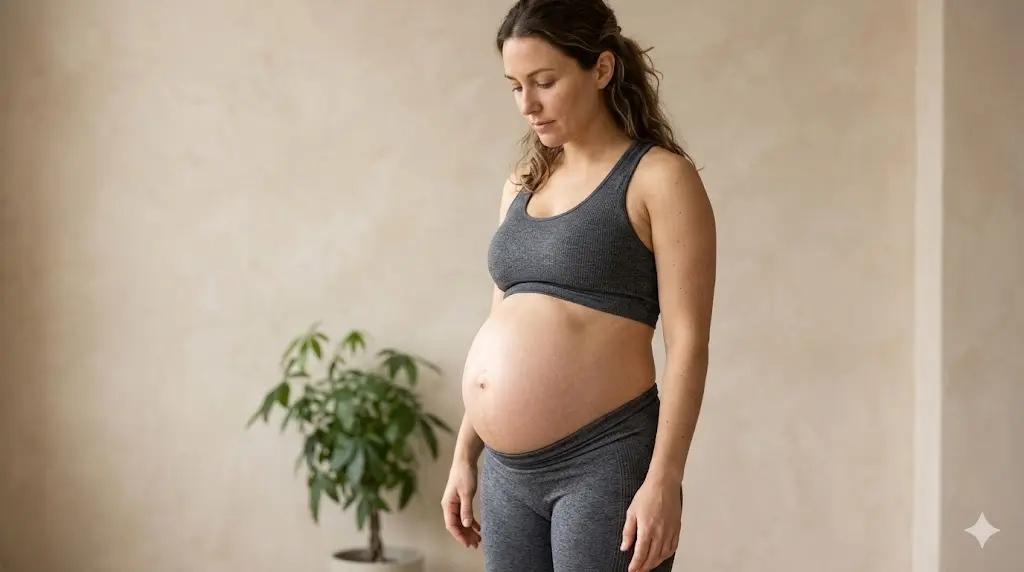
Why does your lower belly stick out before your period?
If your stomach feels noticeably bigger the week before your period and then calms down after, that’s hormonal water retention - not fat gain.
It looks softer and smoother, less tight than bloating - lower belly fullness.
This is backed by actual data: studies show women gain roughly half a kilogram during the menstrual cycle, mostly from fluid retention, and it tends to peak right around your period (PMC).
If you’ve ever felt like your jeans fit differently depending on the week - you weren’t wrong, and you weren’t “failing” at anything.
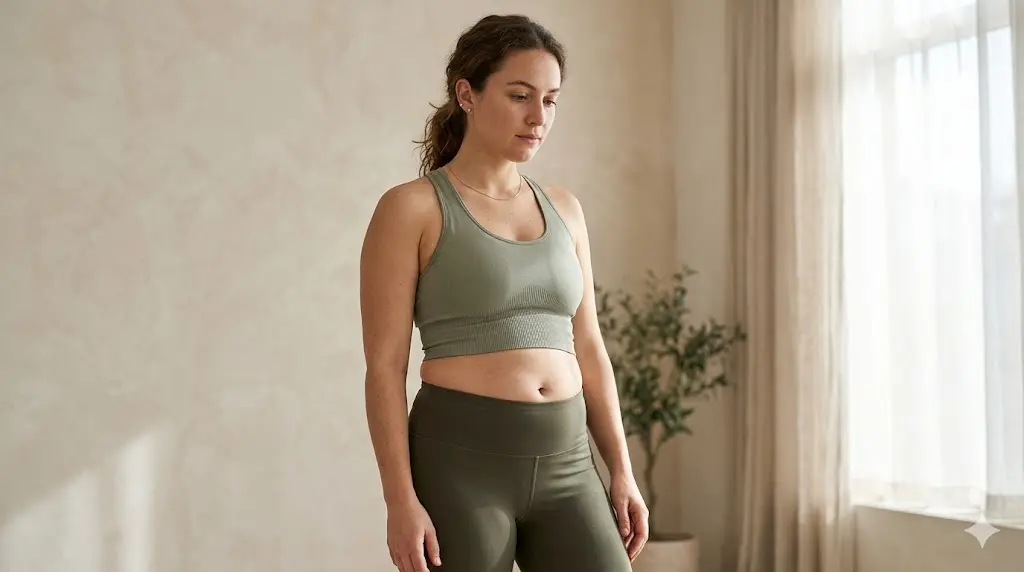
Why does your tummy look bigger after a long work day?
Try this right now: stand up, roll your shoulders back, gently brace your core, and tuck your tailbone slightly under. If your belly visibly flattens, posture is doing a lot more of the talking than you thought.
This one surprised me too: the way you’re standing or sitting right now might be doing more to your belly’s appearance than your diet ever could.
When your pelvis tilts forward and your core relaxes - which happens to a lot of us after hours at a desk - it pushes your stomach outward, even if nothing about your body fat has changed (Brigham and Women’s Hospital; Cleveland Clinic).
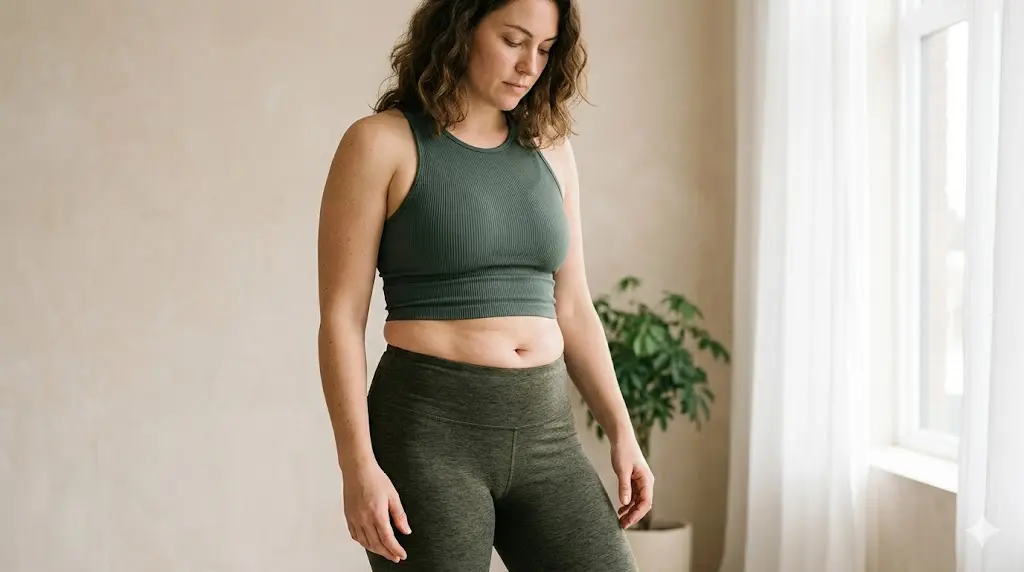
Why does your belly look like you’re still pregnant?
Here’s a simple way to check: lie on your back, knees bent, lift your head and shoulders slightly, and feel along the midline above and below your belly button. If you feel a gap of two or more finger-widths, or a “doming” ridge pushing up - that’s worth knowing about postpartum belly.
If you’ve had a baby and your lower belly still pooches out no matter how many planks you do, this might be why - and it’s not a willpower issue.
Diastasis recti is when the abdominal muscles separate along the midline during pregnancy. It’s a structural change, not a fat problem - your muscles have literally shifted position, which can create a persistent bulge (PMC).
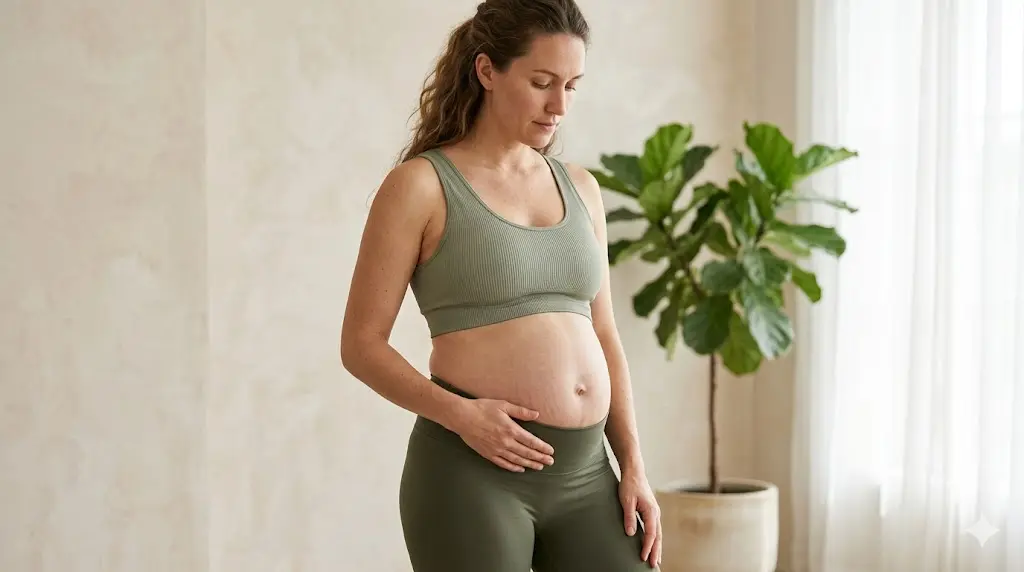
Why does your belly hurt and your period is irregular?
If your belly changes came with pain, irregular periods, or happened pretty suddenly - please don’t just assume it’s “fat” and try to diet it away - please make that a doctor conversation, not another fitness plan.
It often hangs slightly in the lower stomach.
Sometimes a change in your belly is your body trying to tell you something else entirely.
Conditions like PCOS, endometriosis, fibroids, ovarian cysts, constipation, and other hormonal or endocrine issues can all change how your belly looks or feels - through bloating, swelling, or actual abdominal distension (PMC; JAMA).

When “Doing Everything Right” Still Doesn’t Fix the Belly
I want to tell you about a pattern I’ve seen come up again and again - in research, in other women’s stories, and honestly, in my own past too.
Picture a 34-year-old woman who wants to lose 15 pounds off her lower belly. Her routine looks “perfect” on paper: a 1,200-calorie diet, five days of HIIT and spin a week, and five hours of sleep because her job doesn’t leave room for more.
Three months later? She’s gained 7 pounds, she’s exhausted, and she’s nursing an injury from overtraining.
Her belly was never a calorie problem. It matched something closer to a stress belly - and here’s the wild part: the fat cells in our abdomen actually carry more cortisol receptors than fat anywhere else on our bodies (Yale). So when you stack intense workouts on top of under-eating and under-sleeping, your body doesn’t read that as “discipline” - it reads it as a threat, and it holds on tighter.
Once she swapped daily HIIT for resistance training and walking, ate at maintenance with more protein, and actually protected her sleep - things started to shift. Not because she pushed harder, but because she finally matched her approach to what was actually going on.
I’ve lived a version of this myself - overweight since I was a kid, trying every “perfect” plan, feeling more defeated every time. What actually changed things for me wasn’t doing more. It was figuring out what was actually happening first.
A Quick Self-Check: What’s Your Belly Telling You?
| What you notice about your belly | What’s likely going on | Likely type |
|---|---|---|
| Soft, pinchable, even all over | Normal fat storage | Subcutaneous fat |
| Firm, doesn’t pinch much, waist over or under 35” | Fat around your organs | Visceral fat |
| Flat in the morning, bigger by night, gassy | Digestive buildup | Bloating |
| Bigger the week before your period | Fluid retention | Hormonal water retention |
| Sticks out when you slouch, flattens when you brace | Postural shift | Posture-related protrusion |
| Doming or a gap along the midline (often after pregnancy) | Muscle separation | Diastasis recti |
| Pain, irregular periods, sudden swelling | Possible underlying condition | PCOS |
Conclusion
Here’s what I really want you to take from this: not every belly is a fat-loss problem, and that’s actually good news. It means you haven’t been failing - you’ve just been solving the wrong puzzle.
A few things worth holding onto: not all belly protrusion is fat, bloating and water retention can change your belly within hours, posture and postpartum changes can mimic fat, and some patterns deserve a doctor’s input, not another workout.
Once you’ve got a clearer read on your own pattern - soft or firm, morning or evening, cycle-related or not - you can stop guessing and start with the type that actually matches what’s going on with you. Start with the one that sounds most like you and go from there.
First time here? Know more about me.
FAQs
What are the different types of belly fat in women?
There’s subcutaneous fat (the soft layer), visceral fat (deeper, around your organs), bloating, hormonal water retention, posture-related protrusion, diastasis recti, normal anatomy, and a few medical conditions that can look similar. Most of us are dealing with a mix, not just one.
How do you know if your belly is fat or bloating?
Bloating tends to be flat in the morning and bigger by evening, especially after certain foods. Fat doesn’t really shift within a single day - if your belly “deflates” overnight, that’s bloating, not fat, every time.
Why do we hold fat in the lower belly?
A lot of it comes down to estrogen and reproductive biology - our bodies are built to store fat in the hips, thighs, and lower belly during our childbearing years. It’s not a flaw, it’s just how we’re designed.
Can posture make your stomach stick out?
Yes, more than you’d think. A forward pelvic tilt and a relaxed core can push your stomach out even when nothing about your body fat has changed. Try standing tall and bracing gently - you’ll often see the difference instantly.
What is diastasis recti?
It’s a separation of your abdominal muscles along the midline, really common after pregnancy. It can cause a persistent pooch that core exercises alone won’t fix until the separation itself is addressed.
Is a lower belly normal for us?
For a lot of women, yes - a slight lower-belly curve is just part of normal female anatomy, not a problem. If it’s been there at every weight you’ve ever been, it’s probably just your shape.
When should belly swelling be checked by a doctor?
If it comes with pain, irregular periods, sudden or rapid swelling, or ongoing digestive issues, please get it checked. Those are signs of something medical, not something dietary.
Written by Amna - a health and fitness content writer who’s been exactly where you are. I lost weight through home workouts and changes to my diet alone, no pills, no gym, no fitness fads, and now I write to make this kind of information easier for us to actually understand and use.
← Back to all posts