Supplements For Pcos Hormone Balance
Key Takeaways
- You don’t need every supplement.
- Start with the basics: myo-inositol, magnesium, vitamin D, and omega-3.
- Build your routine slowly.
PCOS affects an estimated 4% to 18% of women of reproductive age, which means you are nowhere near alone in this. And when perimenopause layers on top, symptoms that felt manageable in your 20s and 30s — irregular cycles, stubborn weight, mood swings, sleep that won’t cooperate — can feel like they’ve doubled overnight.
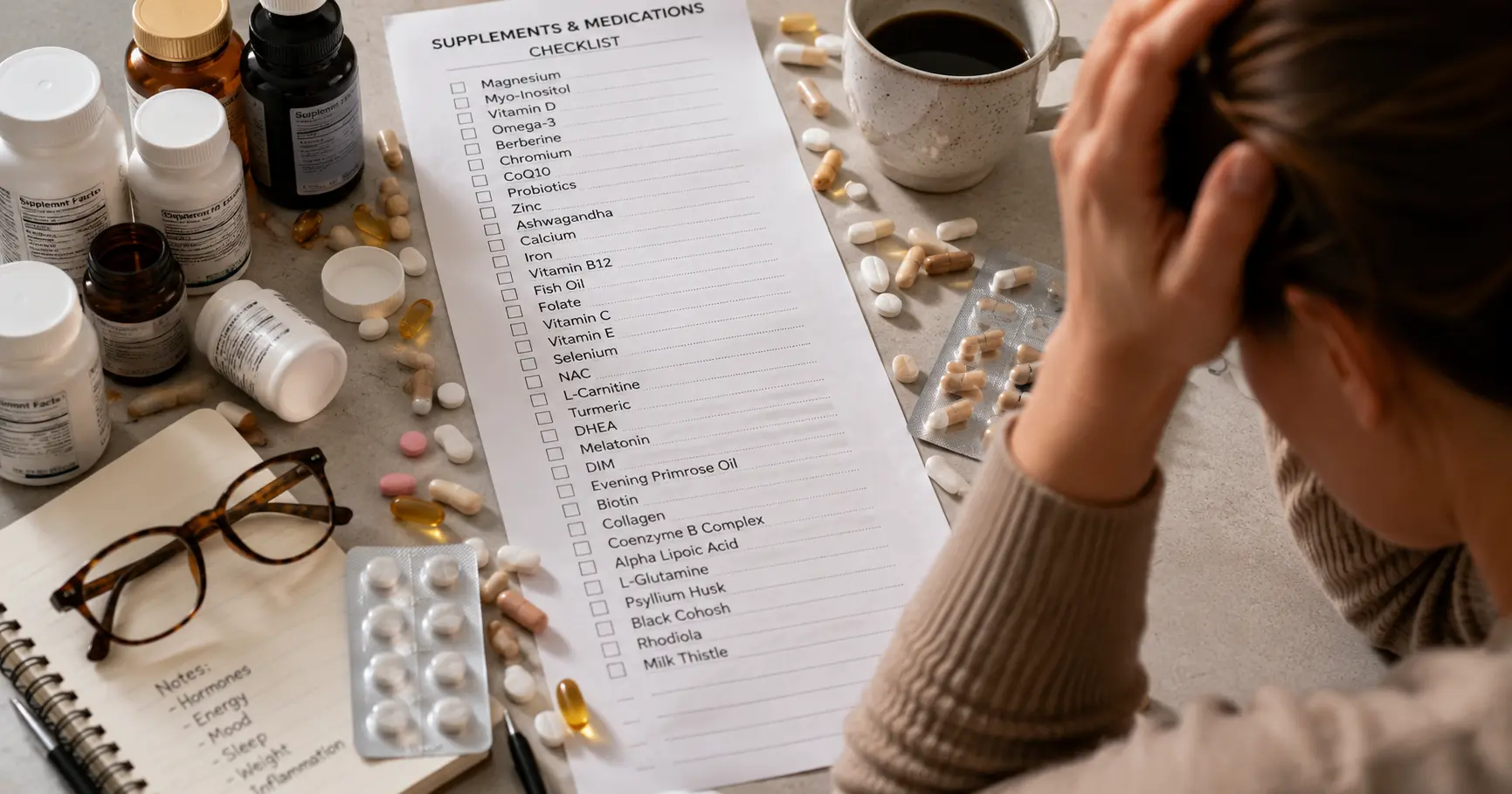
If you have been standing in the supplement aisle at Target, or forty tabs deep into Amazon reviews at 11pm, wondering whether you need inositol and magnesium and vitamin D and berberine and omega-3 — then this article is for you.
You’re just dealing with two overlapping hormone shifts at once, and most articles on this topic were written for one or the other, never both.
Do You Really Need All These Supplements?
No — most women with PCOS and perimenopause do not need a ten-bottle supplement stack, and the research backs that up.
Different supplements help different PCOS symptoms, so it’s smarter to choose one based on your biggest concern than choosing Pinterest aesthetics.
Supplements can make modest improvements in hormones and insulin markers, but they’re a helpful addition — not a replacement for medical treatment.
I bring this up because I see the same pattern over and over in women’s health forums — women in their 40s posting things like:
“42 with PCOS and probably peri. I feel pretty alone with this”
in PCOS communities, or asking whether their symptoms are PCOS, perimenopause, or both, and getting five conflicting answers.
The answer is: it’s often both, the mechanisms overlap, and you do not need to solve it with volume.
What Supplements Are Actually Worth Considering First
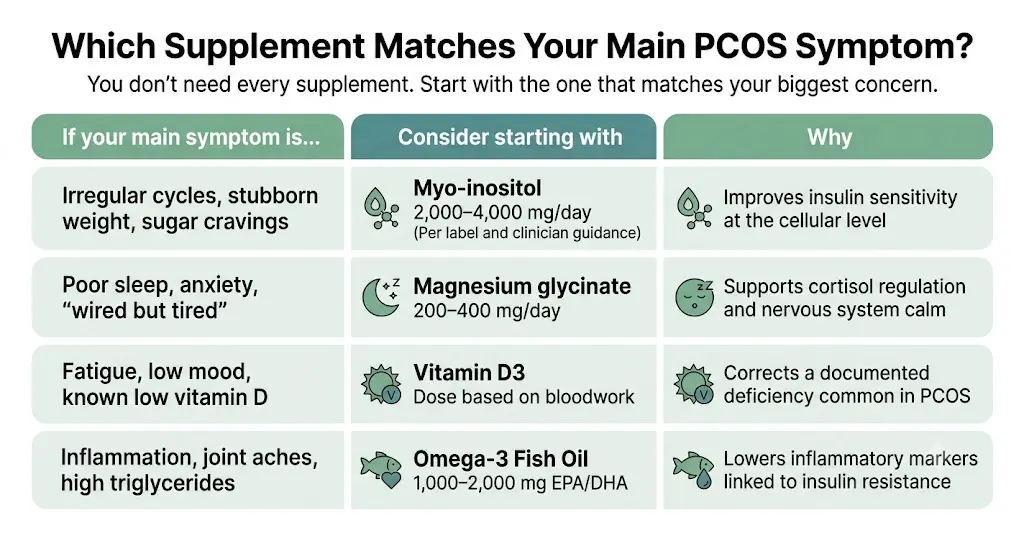
The supplements with the most consistent research behind them for PCOS are myo-inositol, magnesium, vitamin D, and omega-3 — and which one to prioritize depends on your main symptom, not on a generic “top 5” list.
Here’s why each one works, mechanistically, so you’re not just taking something because an influencer said to:
Myo-inositol
Myo-inositol works best alongside everyday habits that improve insulin sensitivity, especially a high-protein diet for PCOS that helps stabilize blood sugar and reduce cravings. Since insulin resistance is a major driver of PCOS symptoms like irregular periods, weight gain, acne, and excess hair growth, improving insulin sensitivity can help reduce these symptoms over time.
Many supplements combine myo-inositol with D-chiro-inositol in a 40:1 ratio, which closely matches the balance found naturally in healthy ovaries.
Magnesium
Magnesium supports hundreds of processes in your body, including stress regulation, muscle function, and sleep. During perimenopause, changing estrogen levels can make magnesium levels drop, which may contribute to poor sleep, anxiety, and feeling tired but unable to relax. If sleep and stress are your biggest struggles, magnesium may be a good place to start.
Vitamin D
Vitamin D acts more like a hormone than a typical vitamin and plays an important role in hormone balance. Many women with PCOS are low in vitamin D, and low levels have been linked to increased insulin resistance and more irregular periods.
If your bloodwork shows multiple nutrient deficiencies—not just vitamin D—you may benefit from learning when a multivitamin for perimenopause makes sense instead of buying several separate supplements.
Omega-3 Fatty Acids
Omega-3s help reduce inflammation, which is common in both PCOS and perimenopause. Research also suggests they can improve blood sugar control, making them a good option if inflammation or insulin resistance is one of your main concerns.
What to Skip Until You Know More
You can skip berberine, chromium, and CoQ10 for now unless a specific lab result or clinician recommendation points you toward them.
“These aren’t ‘bad’ supplements”
While chromium may help some women improve insulin levels, it’s also more likely to cause stomach issues, interact with certain medications, or overlap with what myo-inositol and magnesium already do.
Berberine in particular affects blood sugar strongly enough that stacking it with metformin without medical guidance isn’t a small decision — it’s how women end up with symptoms of low blood sugar and no idea why.
The rule I’d give a friend: add one thing, give it 8–12 weeks, track how you actually feel (not just what the bottle promises), and only then consider adding a second.
How to Choose Safely If You Take Medications
If you take metformin, thyroid medicine, antidepressants, or birth control, check with your doctor or pharmacist before adding any supplement. The combination matters more than the supplement itself.
- Metformin and myo-inositol both help your body manage insulin. They can often be taken together, but your healthcare provider may want to adjust the dose or monitor how you’re responding.
- Magnesium and calcium can stop your thyroid medicine from working properly if you take them at the same time. It’s usually recommended to leave at least 4 hours between your thyroid medication and these supplements, but follow the advice of your doctor or pharmacist.
- St. John’s Wort and some herbal supplement blends can reduce the effectiveness of birth control and interact with antidepressants. Always read the label and ask a healthcare professional before taking them.
A quick chat with your pharmacist can help you avoid unwanted interactions and make sure your supplements are safe to take with your medications.
When to Ask a Clinician for Help
Talk to a doctor before starting supplements if your symptoms are new, worsening, or if you can’t tell whether you’re dealing with PCOS, perimenopause, or both.
If you’re also on medication for blood sugar, thyroid, mood, or contraception, loop your prescriber in before adding anything — not because supplements are risky by default, but because your specific combination is the only thing that matters here.
Conclusion
You do not need a cabinet full of supplements to start supporting your hormones through PCOS and perimenopause. The research points to a handful of options — myo-inositol, magnesium, vitamin D, omega-3 — each tied to a specific symptom, not a blanket promise.
- Pick the one that matches what’s loudest in your body right now.
- Give it two to three months.
- Track how you actually feel, not just what the label promises.
And if you’re on any medication, make that one phone call to your pharmacist before you start — it takes less time than reading the ingredient label on your third bottle.
If insulin resistance is driving your PCOS symptoms, pairing the right supplement with strength training for perimenopause can improve insulin sensitivity more effectively than relying on supplements alone—the two work together, not separately.
Frequently Asked Questions
What is the best supplement for PCOS hormone balance?
There isn’t one universal “best” — myo-inositol has the most consistent research for insulin-driven PCOS symptoms like irregular cycles and cravings, but magnesium or vitamin D may matter more if your main issues are sleep and fatigue instead.
Can supplements help PCOS and perimenopause at the same time?
Some can, because insulin resistance and inflammation show up in both conditions — magnesium, vitamin D, and omega-3 are reasonable dual-purpose starting points rather than needing separate stacks for each.
Which PCOS supplements are worth taking first?
Start with whichever one matches your loudest symptom: myo-inositol for cycle and insulin issues, magnesium for sleep and stress, vitamin D if bloodwork shows a deficiency.
Are supplements safe if you take metformin or thyroid medicine?
Often yes, but timing and dosing matter — myo-inositol is generally considered compatible with metformin, while minerals like magnesium may need spacing from thyroid medication. Confirm with your pharmacist or prescriber.
Do you need magnesium, inositol, omega-3, and vitamin D all at once?
No. Most women do better starting with one, giving it 8–12 weeks, and adding a second only if needed — not layering four new things into your routine simultaneously.
How long do supplements take to work for PCOS?
Most studies measuring insulin, LH, and SHBG changes ran 8–24 weeks, so give any single supplement at least two to three months before deciding if it’s working.
Amna Shahid is a research-driven health and fitness content writer focused on women’s wellness, hormone support, and practical routines that fit busy lives. She writes from personal experience navigating hormonal weight changes without supplements, extreme diets, or gym memberships — and now researches the science behind what actually helps.
← Back to all posts