High Protein Diet For Pcos
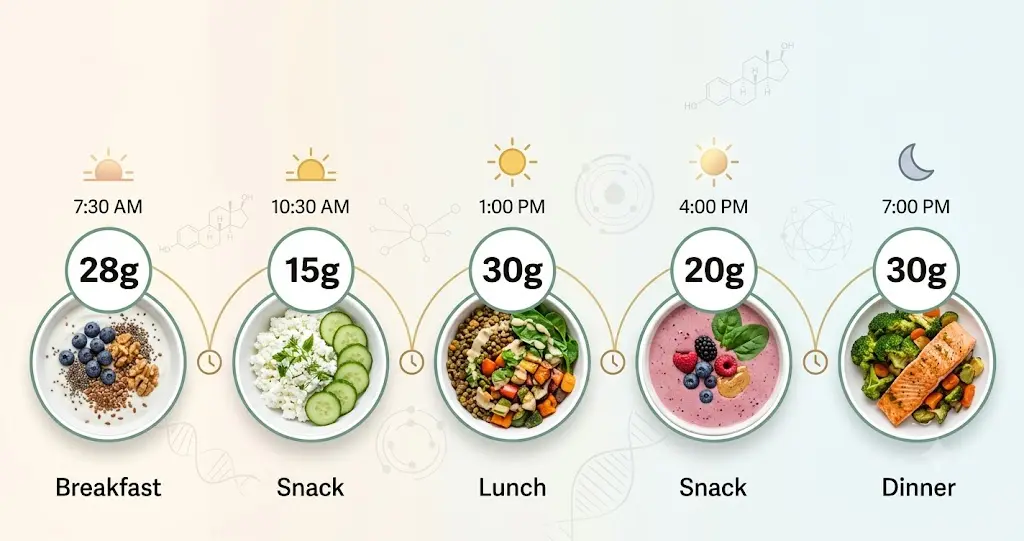
Key Takeaways
- Protein timing matters as much as total intake.
- You don’t need to rely on chicken or eggs only.
- Pair protein with fiber for the biggest PCOS benefits.
You skipped breakfast, or grabbed a coffee fast. By 3pm your energy’s gone and you’re shouting at your kids. By dinner you’re telling yourself you’ll “be good” tomorrow….
If you’re 40 or past it, there’s a second layer nobody mentions: perimenopause is changing how your body handles food at the same time PCOS already was. That’s not a personal failure. It’s two hormonal systems shifting at once, and it means the “just eat less” advice that barely worked in your 30s does even less now.
Protein Sources That Aren’t Chicken or Eggs
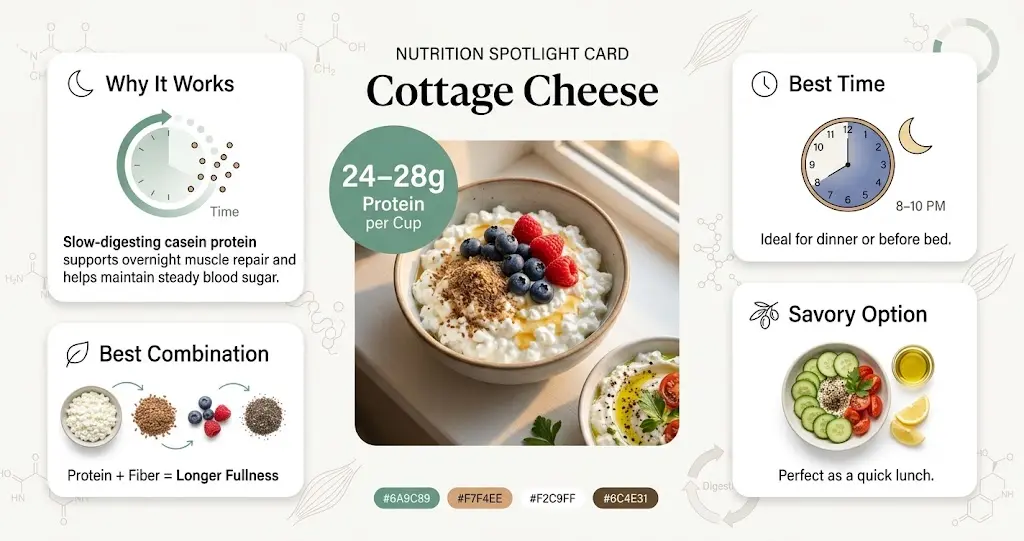
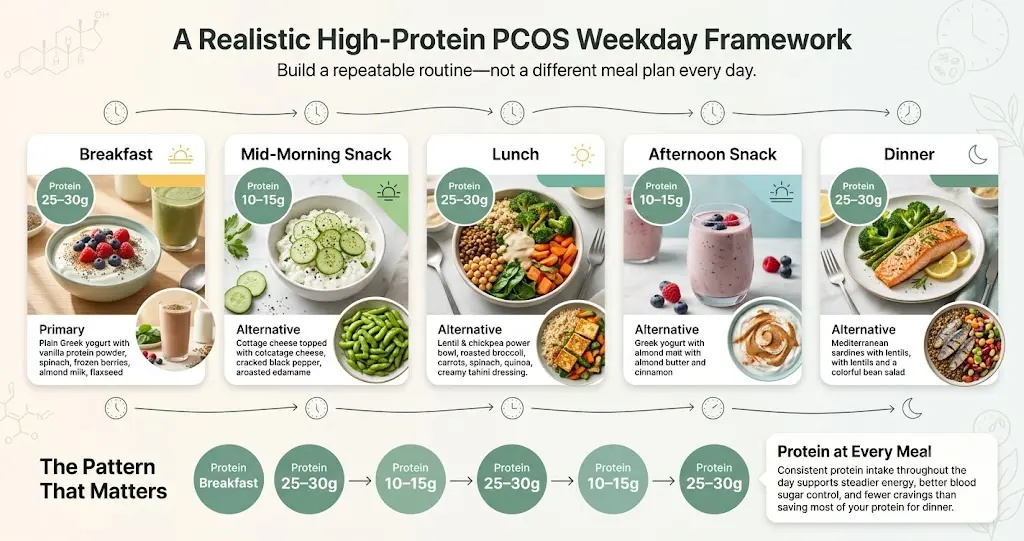
Cottage Cheese — about 24–28g per cup
This is casein-dominant protein, which digests slowly and keeps amino acids trickling into your bloodstream for hours — which is exactly why it’s one of the better evening proteins. A cup before bed or at dinner supports overnight muscle repair without the blood-sugar spike a carb-heavy dessert would cause.
- How to eat it: Plain, with black pepper and olive oil (savory) or with berries and a drizzle of honey (sweet) — both work, so pick whichever keeps you eating it consistently.
- Combinations: Cottage cheese + flaxseed + berries turns a 24g-protein snack into a full protein-plus-fiber mini-meal in under two minutes.
- Best time: Evening or before bed, because of the slow-digesting casein; also works as a savory lunch base mixed with cucumber, tomato, and lemon.
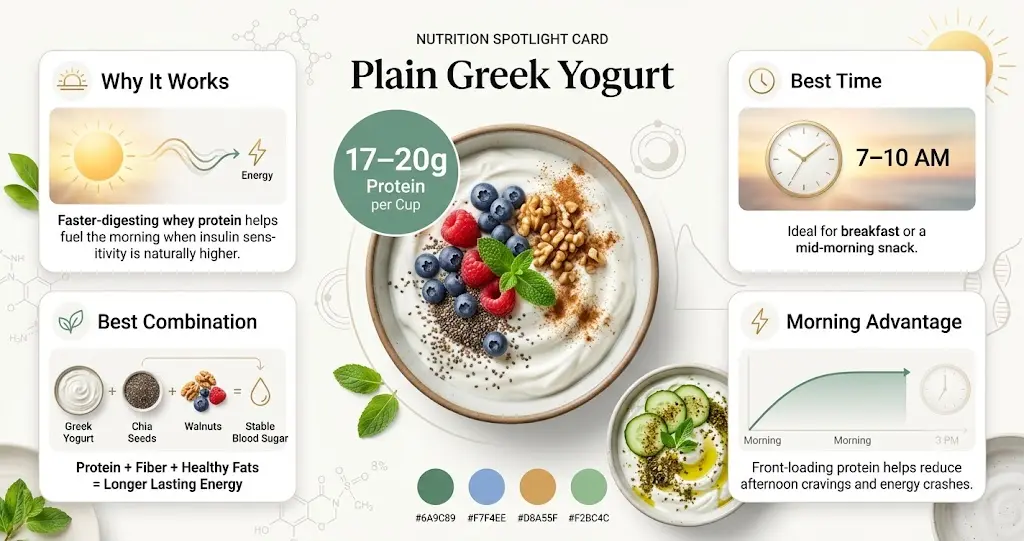
Greek Yogurt (plain) — roughly 17–20g per cup
Unlike cottage cheese, Greek yogurt has a faster-digesting whey-to-casein ratio, which makes it a better morning protein — it works with your body’s naturally higher morning insulin sensitivity rather than needing to slowly trickle in overnight.
- How to eat it: Straight with a spoon and cinnamon, blended into a smoothie, or as the base of a savory “yogurt bowl” with cucumber and za’atar if you don’t want another sweet breakfast.
- Combinations: Greek yogurt + chia seeds + a small handful of walnuts adds fiber and healthy fat, which further slows the glucose response from anything else on your plate that meal.
- Best time: Breakfast or the mid-morning snack slot — this is one of the easiest ways to front-load protein before the 3pm crash even has a chance to start.
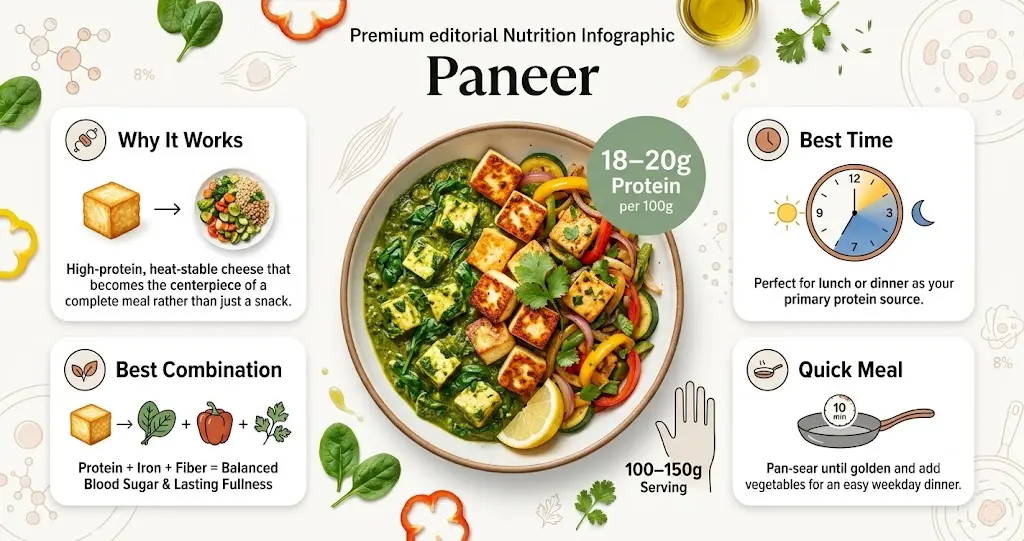
Paneer — around 18–20g per 100g
Paneer is a genuinely underused PCOS-friendly protein in Western content, and it holds its shape under heat far better than most fresh cheeses, which makes it easy to build a real meal around rather than eating it as a snack.
- How to eat it: Pan-seared in a little oil until golden, then added to a vegetable sabzi or a simple stir-fry — this is functionally a 10-minute cook.
- Combinations: Paneer + spinach (saag paneer style) pairs protein with iron and fiber in one pan; paneer + bell peppers + onions keeps it quick on a weeknight.
- Best time: Lunch or dinner, as a main component rather than a garnish — aim for a palm-sized portion (roughly 100–150g) to hit the 25–30g target on its own.
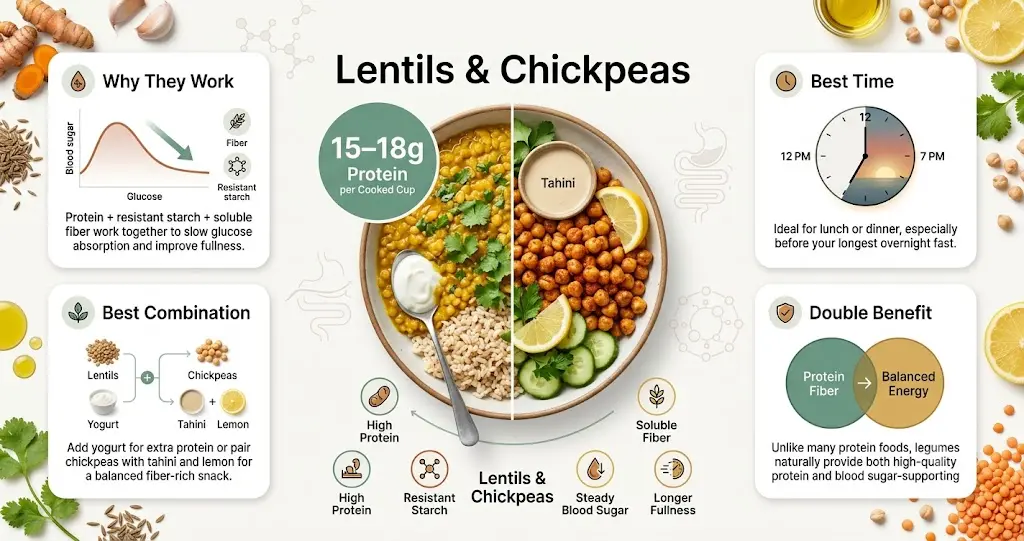
Lentils and Chickpeas — 15–18g per cooked cup
These carry a double benefit most PCOS content skips: alongside the protein, they contain resistant starch and soluble fiber, which independently slow glucose absorption. That means a lentil-based meal blunts your blood sugar response more than an equivalent amount of protein from meat or dairy alone would.
- How to eat it: A simple dal (lentils simmered with turmeric, cumin, and garlic) over a modest portion of rice; or chickpeas roasted with olive oil and paprika as a crunchy snack.
- Combinations: Lentils + a splash of yogurt on top adds a second protein source and a cooling contrast; chickpeas + tahini + lemon (essentially deconstructed hummus) works as a fiber-and-protein snack that travels well.
- Best time: Lunch or dinner — the fiber content makes this a strong choice for the meal before your longest stretch without food (usually dinner, since it carries you through the overnight fast).
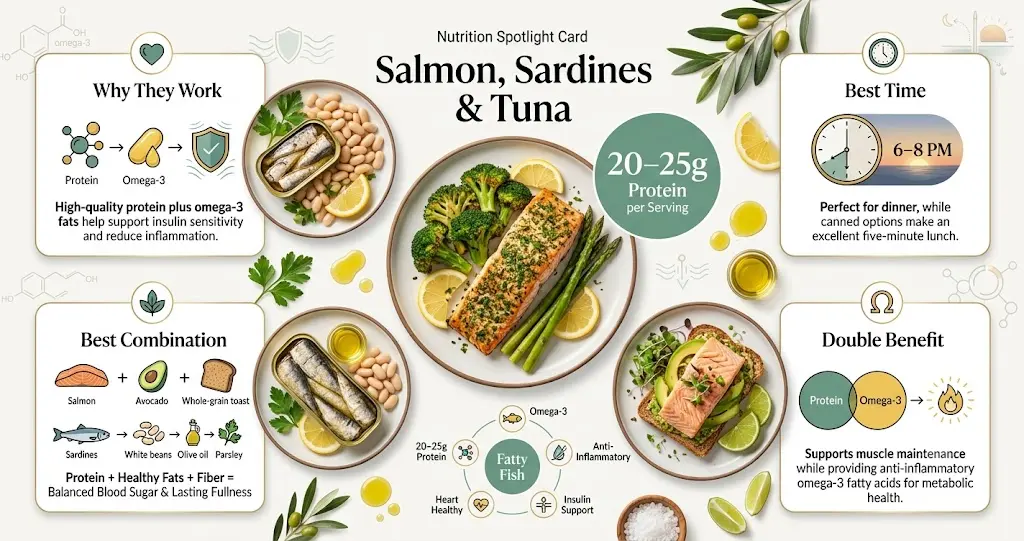
Salmon, Sardines, Canned Tuna — 20–25g per typical serving
Beyond the protein, the omega-3 content here has its own relevance to PCOS: omega-3s have anti-inflammatory effects that are independently linked to improved insulin sensitivity, so this category is doing double duty, not just filling a protein slot.
- How to eat it: Canned sardines or tuna mixed with olive oil, lemon, and mustard over greens takes five minutes with zero cooking; baked salmon with a simple herb crust is a 15-minute oven meal.
- Combinations: Canned salmon + avocado + a squeeze of lime on whole-grain toast covers protein, healthy fat, and fiber in one plate; sardines + white beans + olive oil is a Mediterranean-style combination that layers two of your fiber-and-protein categories at once.
- Best time: Dinner is the most natural fit given prep time, but canned versions (tuna, sardines) work equally well as a fast lunch.
Vegetarian and Fully Plant-Based Version: Full Swap List
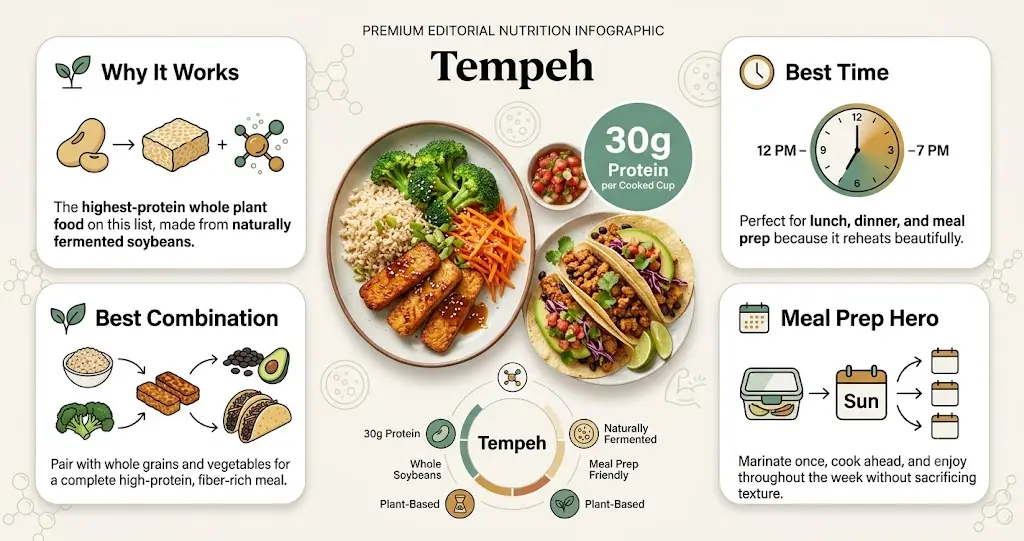
Tempeh — around 30g of protein per cup, cooked
This is the single highest-protein plant food on this list, and it’s a genuinely good one to build a full meal around rather than treating as a side. It holds up well to marinating and roasting, so it doesn’t need to be disguised.
- How to eat it: Slice, marinate for 15–20 minutes in soy sauce, garlic, and a little maple syrup, then pan-fry or bake until the edges crisp.
- Combinations: Tempeh + brown rice + steamed broccoli is a complete meal at roughly 35–40g total protein; tempeh crumbled into a taco filling with black beans doubles the protein sources in one dish.
- Best time: Lunch or dinner — it reheats well, so it’s one of the better make-ahead options for a weekday lunch you prep on Sunday.
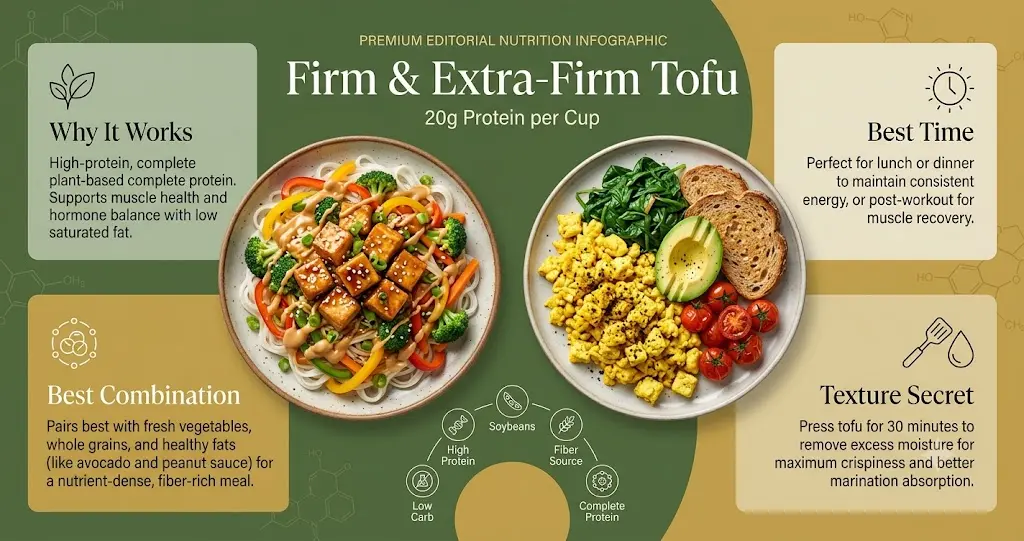
Tofu (firm or extra-firm) — roughly 20g per cup
Pressing tofu before cooking (10–15 minutes under a weight, or a tofu press) removes excess water and dramatically improves both texture and how well it takes on marinade — this single step is the difference between “rubbery tofu” and something people actually enjoy eating.
- How to eat it: Cube, press, marinate, then either pan-fry until golden or bake at 400°F for 25–30 minutes; scrambled tofu with turmeric and black salt is a strong egg-free breakfast option that mimics scrambled eggs in texture and color.
- Combinations: Tofu + peanut sauce + rice noodles + vegetables; scrambled tofu + spinach + whole-grain toast for breakfast.
- Best time: Any meal — scrambled tofu specifically slots into the breakfast position well if you’re missing that “egg-style” texture without using eggs.
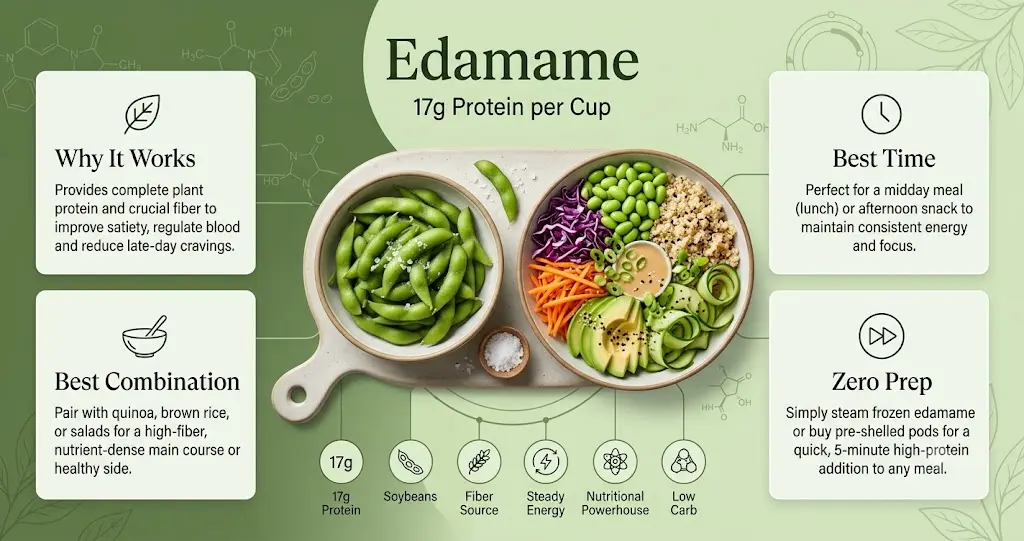
Edamame — about 17g per cup, shelled
One of the few plant proteins that’s genuinely a complete protein on its own (it’s a soybean, same family as tofu and tempeh), and one of the easiest to eat with zero preparation.
- How to eat it: Steamed and lightly salted straight from the pod as a snack; shelled and tossed into grain bowls, salads, or stir-fries.
- Combinations: Edamame + quinoa + sesame dressing + shredded cabbage makes a cold lunch bowl that holds up well made ahead.
- Best time: Snack slot (whole pods) or lunch (shelled, mixed into a bowl) — it’s genuinely one of the lowest-effort options on this list.
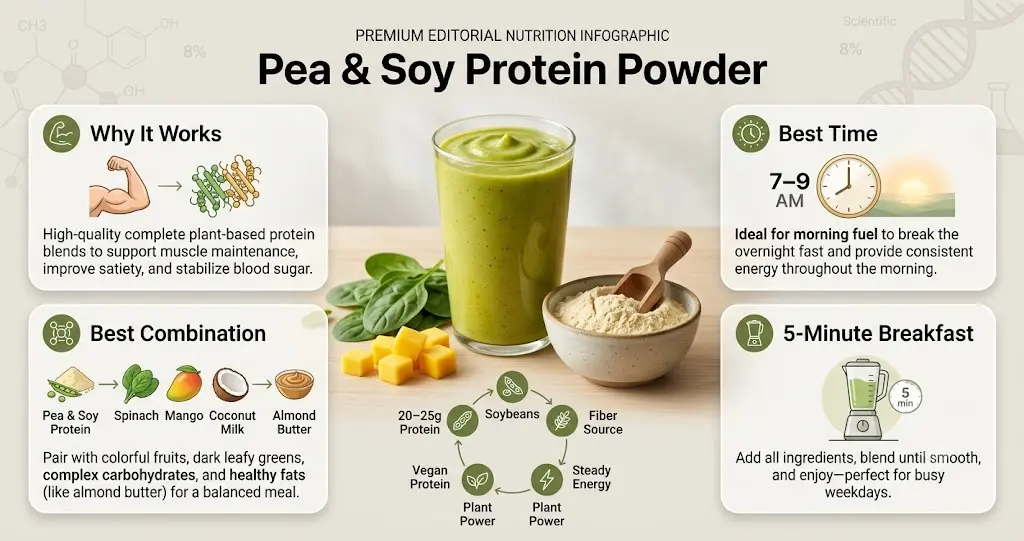
Pea or Soy-Based Protein Powder — one scoop typically 20–25g
Pea protein in particular is one of the more complete plant powders on the market and blends smoothly, though it can have a slightly chalky texture on its own — blending with frozen banana or a nut butter smooths this out.
- How to eat it: Blended into a smoothie with frozen fruit, spinach, and a plant milk; stirred into oatmeal after cooking.
- Combinations: Pea protein + frozen mango + coconut milk + a handful of spinach (the flavor masks the green completely) is a genuinely five-minute vegan breakfast at full protein target.
- Best time: Whenever convenience matters most — typically breakfast, given how fast it comes together compared to cooking a full meal.
Don’t Skip the Fiber
Let me be upfront about something: only eating protein while in a calorie deficit would leave you constipated and bloated.
Protein alone isn’t the full picture — pairing it with fiber is what actually stabilizes blood sugar and manages the digestive side of insulin resistance (fullness, constipation, glucose variability).
- Chia seeds
- Lentils
- Beans
- Broccoli
- Berries
- Flaxseed
These are the easiest additions, and most of the meals above already include one.
What If You Don’t Have Time to Cook?
Build the week around 6–8 rotating items, not 20 different ingredients — a single weekly shopping trip, not fresh cooking every night. Cottage cheese, Greek yogurt, canned fish, frozen edamame, dried or canned lentils, and a protein powder are all shelf-stable or long-fridge-life, and none require daily prep. If you already keep Greek yogurt or cottage cheese in your fridge, you’re probably closer to this framework than you think.
Grocery List You Can Screenshot
- Plain Greek yogurt
- Cottage cheese
- Paneer or firm tofu
- Canned salmon, sardines, or tuna
- Dried or canned lentils and chickpeas
- Frozen edamame
- Tempeh
- Chia seeds and ground flaxseed
- A protein powder you actually like the taste of
- A bag of frozen mixed berries and a bag of frozen vegetables (for the “no fresh prep” days)
One Small Note on What Success Looks Like
If you try this and the scale doesn’t move much in the first few weeks, that’s not necessarily a sign it isn’t working. Body recomposition — losing fat while maintaining or building muscle — often shows up in how your clothes fit and how your energy feels before it shows up on a scale, especially when strength training is part of the picture. Worth sitting with before you judge the framework a failure at week three.
FAQs
Will you have to eat chicken every meal on a high-protein PCOS diet? No. Cottage cheese, lentils, tofu, fish, and yogurt are all real alternatives, since so much existing PCOS content defaults to chicken and eggs without offering them.
What if you’re vegetarian — can you still do a protein-rich PCOS diet? Yes. Lentils, chickpeas, tofu, tempeh, paneer, and Greek yogurt can hit the same 25–30g-per-meal targets as any animal-protein plan.
How much protein per day should a woman with PCOS eat? Most research in this space centers around 25–30g per meal across three to four meals, which lands most women somewhere in the 90–140g daily range depending on meal frequency and body size — but per-meal distribution matters more than the daily total alone.
Is a high-protein diet safe for PCOS after 40? Yes — protein needs increase with age due to natural muscle loss through perimenopause, so this isn’t a young-woman’s diet awkwardly applied to you; if anything, it’s better matched to what your body needs right now. As with any dietary change, it’s worth mentioning to your doctor, especially if you’re on insulin-sensitizing medication.
Do you need a protein supplement, or can you get enough from food? Food first. A protein powder is a convenience option for busy mornings, not a requirement — every target above is achievable from whole food alone.
What’s the difference between a Mediterranean diet and a high-protein diet for PCOS? Both are currently being studied head-to-head in women with PCOS, and neither has been shown to definitively outperform the other — the honest answer right now is that both are evidence-supported approaches, and consistency with either matters more than picking the “perfect” one.
Can protein help with PCOS belly fat specifically? Indirectly, yes — through better insulin regulation and muscle preservation, both of which are linked to reduced abdominal fat accumulation in the research above. It’s worth noting that many women see changes in how clothes fit and how their body feels before the number on the scale moves — a recomposition pattern, not a failure of the approach.
This guide reflects patterns seen across client and reader conversations around PCOS and midlife body changes, cross-checked against the current research above. It’s not a replacement for a conversation with your doctor, especially if you’re managing PCOS with medication.
← Back to all posts