Yoga For Pcos Belly Fat And Weightloss For Beginners
Key Takeaways
- Yoga reduces cortisol, the stress hormone that directly drives belly fat accumulation in PCOS — making it uniquely effective where intense cardio often backfires.
- Specific poses like Butterfly (Baddha Konasana), Boat (Naukasana), and Bridge (Setu Bandhasana) are clinically linked to improved insulin sensitivity and pelvic blood flow — not just flexibility.
- Consistency over intensity: 20–30 minutes of yoga, 3–5 times a week, produces measurable hormonal and metabolic shifts within 12 weeks for most women with PCOS.

I Was Doing Everything “Right” — And Still Getting Worse
In PCOS, your nervous system is stuck in a state of chronic overdrive — the HPA axis keeps pumping out cortisol, insulin climbs in response, and your body parks fat exactly where you least want it: your belly.
Most workouts make this worse, not better. Yoga is one of the few forms of movement that directly interrupts this cycle by activating the parasympathetic nervous system — shifting your body out of fight-or-flight and into the hormonal environment where fat loss, cycle regulation, and real recovery can actually happen. If every intense workout has left you more inflamed, exhausted, and stuck, your body wasn’t failing you — it was asking for something different.
Who Should Do Yoga for PCOS — And Who Needs to Be Careful
Let me be honest with you: yoga is broadly safe and genuinely beneficial for most women with PCOS. But it’s not one-size-fits-all.
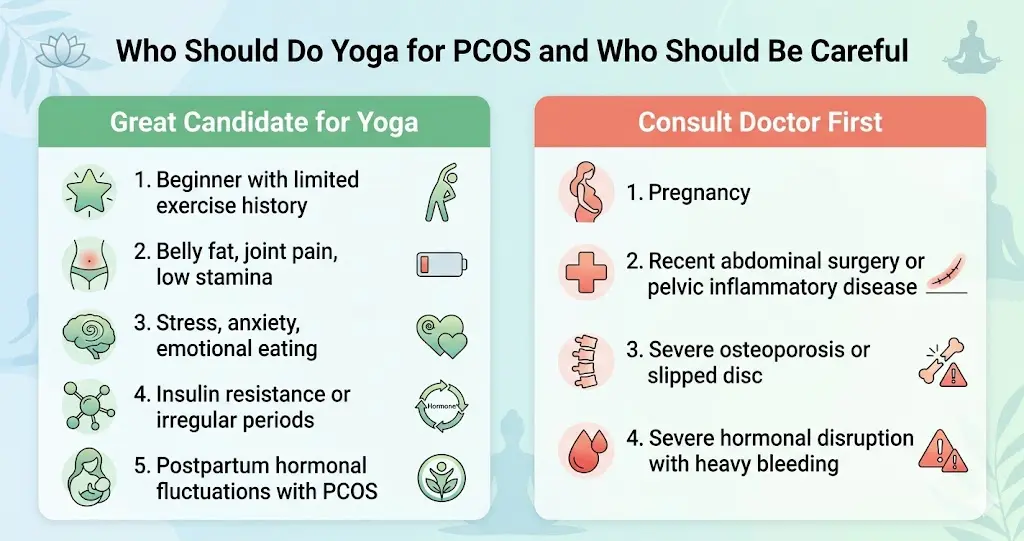
A 2024 systematic review published in the Journal of Complementary and Integrative Medicine confirmed that yoga is safe and beneficial for women with PCOS across age groups, specifically noting improvements in BMI, anxiety, and menstrual regularity.
The Science Behind Why Yoga Works for PCOS Belly Fat
Before we get into the poses, you deserve to understand why this works — because when you understand it, you’ll actually stick with it.
PCOS creates a vicious hormonal loop: elevated androgens → insulin resistance → weight gain (especially belly fat) → more androgen production. Stress makes it worse.
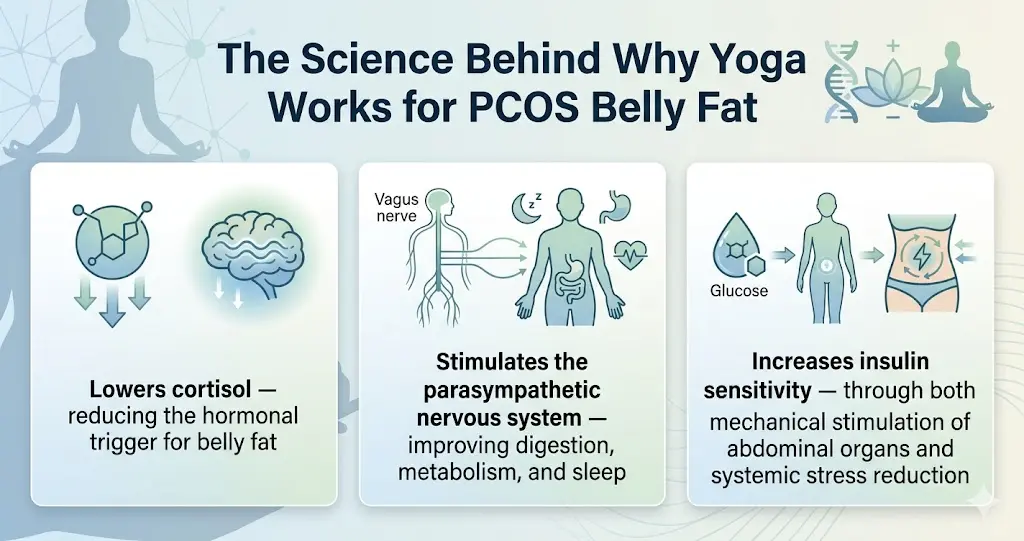
Here’s where yoga gets interesting. A 2021 randomized controlled trial in the Journal of Alternative and Complementary Medicine found that 12 weeks of yoga significantly reduced fasting insulin, testosterone, LH/FSH ratio, and BMI in women with PCOS compared to a control group.
Now let’s talk about the actual poses.
The Best Yoga Poses for PCOS Belly Fat and Weight Loss
I’ve organized these the same way my own practice evolved — starting with what feels accessible and building toward what’s transformative.
1. Core & Belly Fat Reduction
Boat Pose (Naukasana)
Lie flat on your back, arms beside you. On an inhale, lift your chest, head, and legs simultaneously to about 30–45 degrees. Hold for 15–30 seconds. Breathe. Release slowly.
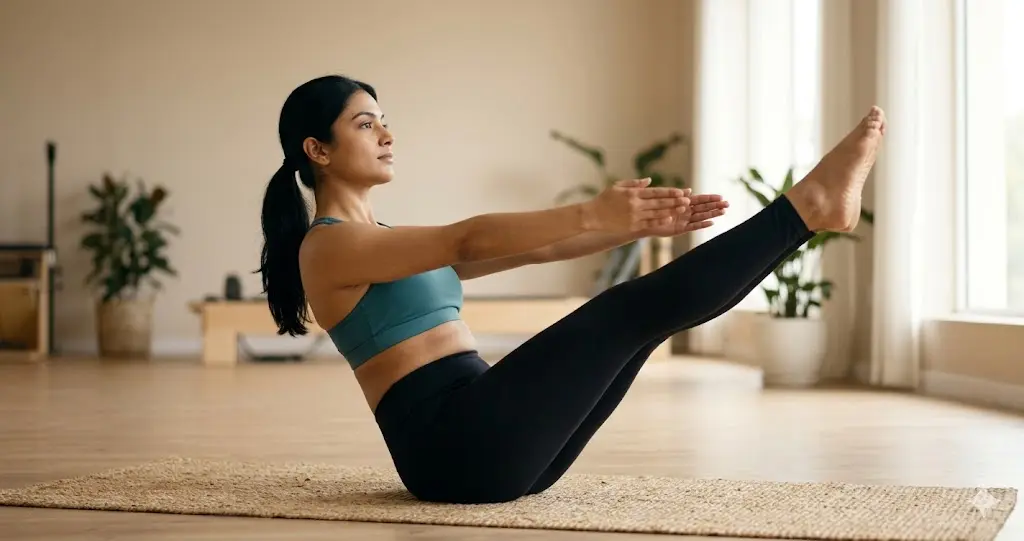
Why it works: This pose directly engages the rectus abdominis and deep transverse abdominals — the muscles underneath PCOS belly fat. It also stimulates the digestive organs, improving gut motility, which matters a lot when you have PCOS-related bloating.
Beginner tip: If your lower back strains, bend your knees slightly. The goal is engagement, not perfection. Follow Atman Yoga for correct movements. I had some difficulty holding this pose for more than 10 seconds, but now I can do this for ages. I am proud of myself. You should too. Do it anyway even if it’s for 3 seconds.
Cobra Pose (Bhujangasana)
Lie face down, palms flat under your shoulders. Inhale and slowly lift your chest off the floor, keeping your elbows slightly bent and pelvis grounded. Hold 20–30 seconds. Exhale and lower down.
Why it works: Cobra gently compresses and then decompresses the abdominal organs, stimulating the adrenal glands (which are hyperactive in PCOS). It also opens the chest — which, after hours of stress-hunching, genuinely feels like relief.
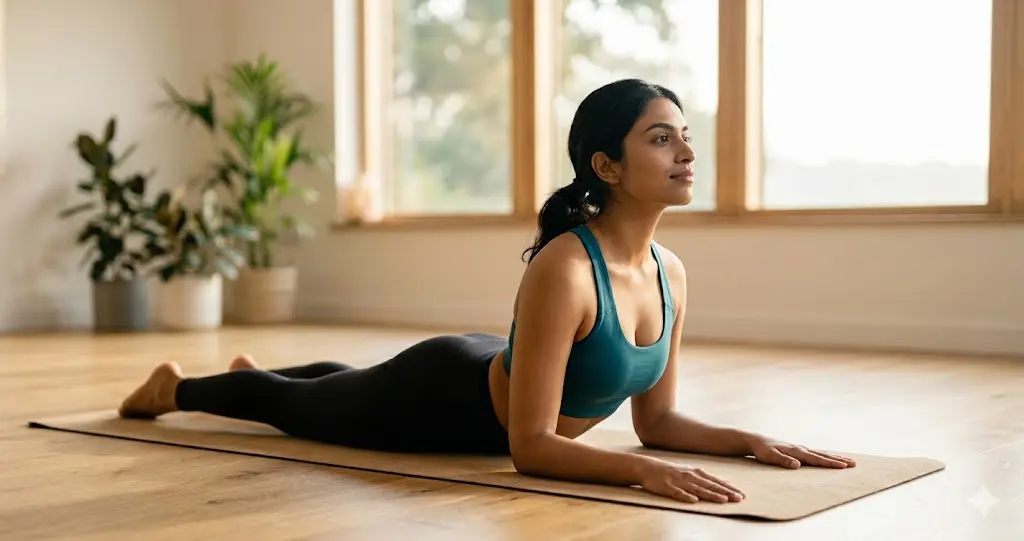
Follow vodyogaverse — she also covers what not to do. I really liked this one from the beginning. I was doing it for minutes. It’s easy. Trust me.
Consider yourself a snake and you are going to hiss at your enemy. Kidding!
Research from a 2022 study on yoga and hormonal health noted bhujangasana as one of the top poses for adrenal regulation and thyroid stimulation.
Bow Pose (Dhanurasana)
Lie face down. Bend your knees and reach back to hold your ankles. Inhale and lift your chest and thighs off the floor simultaneously, rocking gently on your abdomen. Hold 20–30 seconds.
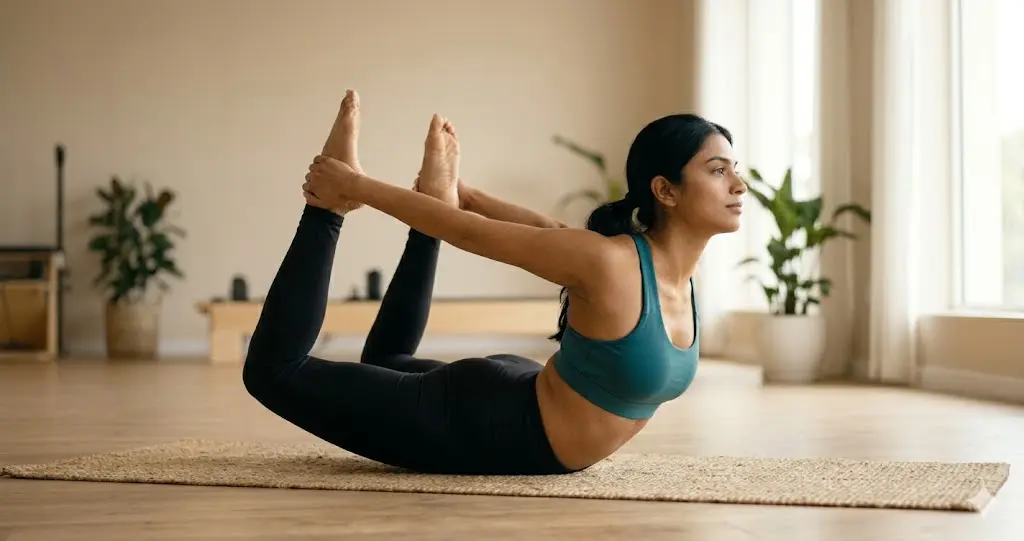
Why it works: This is one of my personal favorites for PCOS belly. The rocking motion on your abdomen literally massages the digestive organs and stimulates the thyroid and adrenal glands. For women with PCOS who have sluggish thyroid function (common comorbidity), this is gold.
Watch this video for exact movements: apyogaindia
Caution: Skip this one if you have a back injury or are pregnant.
Plank Pose (Kumbhakasana)
From a push-up position, hold your body in a straight line — wrists under shoulders, core engaged, hips level. Start with 20–30 second holds and build up.
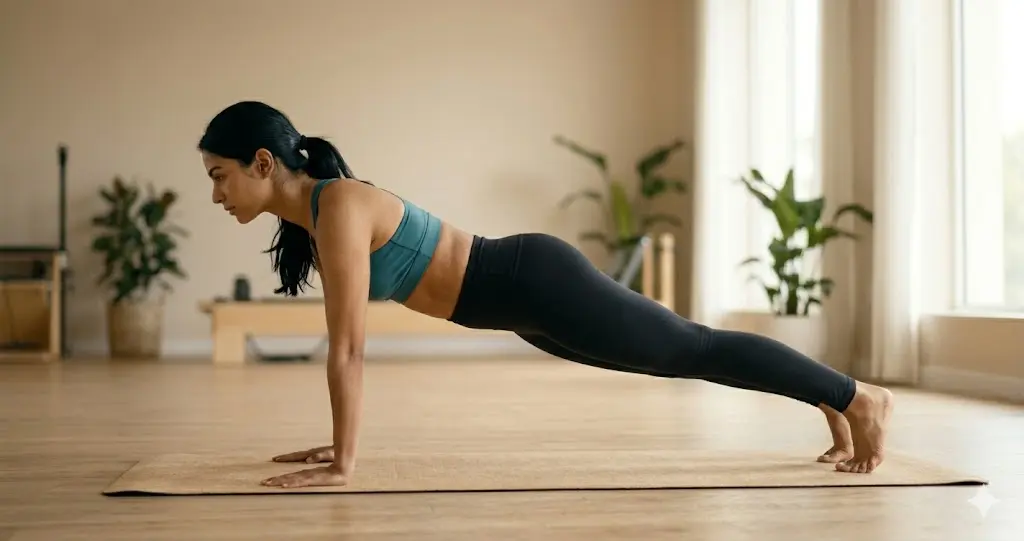
Why it works: Plank is the most metabolically demanding pose on this list. It recruits your entire core, back, arms, and glutes. For women with PCOS who have lower muscle mass (another side effect of hormonal imbalance), building core strength directly improves insulin sensitivity. (American Diabetes Association — Muscle Mass and Insulin Sensitivity)
This one is a gem. If you can’t hold a regular plank, I still do this as a replacement for regular plank exercise.
2. Hormonal Balance & Pelvic Health
Butterfly Pose (Baddha Konasana)
Sit tall. Bring the soles of your feet together and let your knees fall open. Hold your feet, gently flutter your knees like butterfly wings, then hold still and breathe deeply for 1–3 minutes.
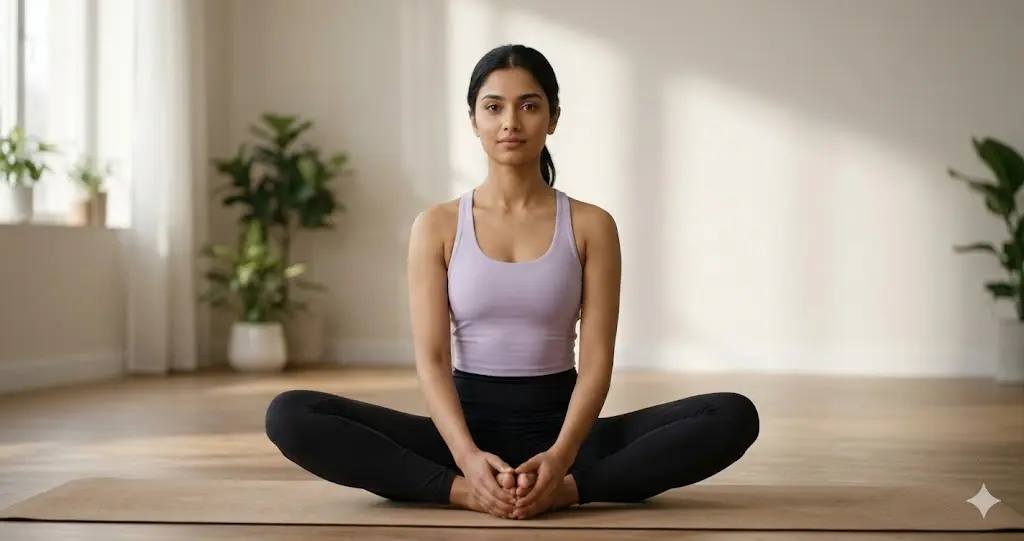
Why it works: This is probably the single most important yoga pose for PCOS. It directly increases blood circulation to the ovaries, uterus, and pelvic floor. A 2020 clinical study found that baddha konasana significantly improved menstrual regularity in women with PCOS after 8 weeks of practice.
I do this one every single day. Even on rest days. As a post-workout stretch too.
Bridge Pose (Setu Bandhasana)
Lie on your back, knees bent, feet flat on the floor hip-width apart. Press your feet into the ground and lift your hips toward the ceiling. Clasp your hands underneath you. Hold 30–60 seconds.
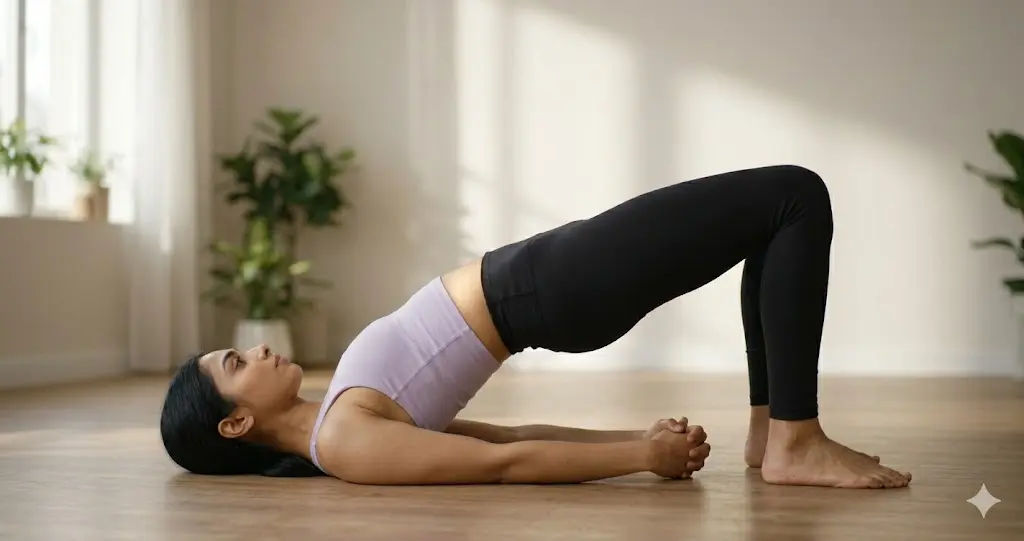
Why it works: Bridge strengthens the pelvic floor, activates the glutes (often weak in sedentary PCOS women), and puts gentle pressure on the thyroid gland — which helps regulate metabolism. It also calms the nervous system, reducing that persistent low-grade anxiety that many of us with PCOS carry around without even noticing.
I do this for constipation relief. I suffer from constipation a lot due to slow metabolism.
Garland Pose (Malasana / Deep Squat)
Stand with feet slightly wider than hip-width, toes turned out. Slowly lower into a deep squat. Bring your palms together at your chest and use your elbows to gently press your knees outward. Hold 30–60 seconds.
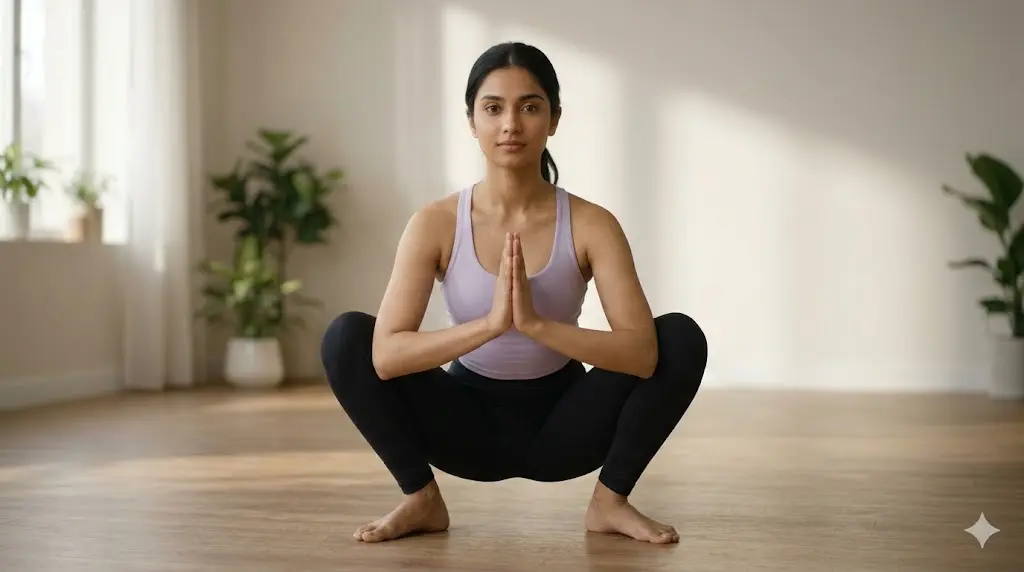
Why it works: Malasana opens the hips, stretches the groin and inner thighs, and stimulates the pelvic organs. For women who sit at a desk all day (hello, most of us), this counteracts the compression and poor blood flow that worsens PCOS symptoms.
I usually perform this after every two hours. As a desk lady, I have to — or else I will have a hunched bumpy back.
3. Stress Reduction & Metabolism
Cat-Cow Pose (Chakravakasana)
Start on all fours, wrists under shoulders, knees under hips. Inhale and drop your belly down, lift your chest and tailbone (Cow). Exhale and round your spine toward the ceiling, tuck your chin (Cat). Flow between them for 1–3 minutes.
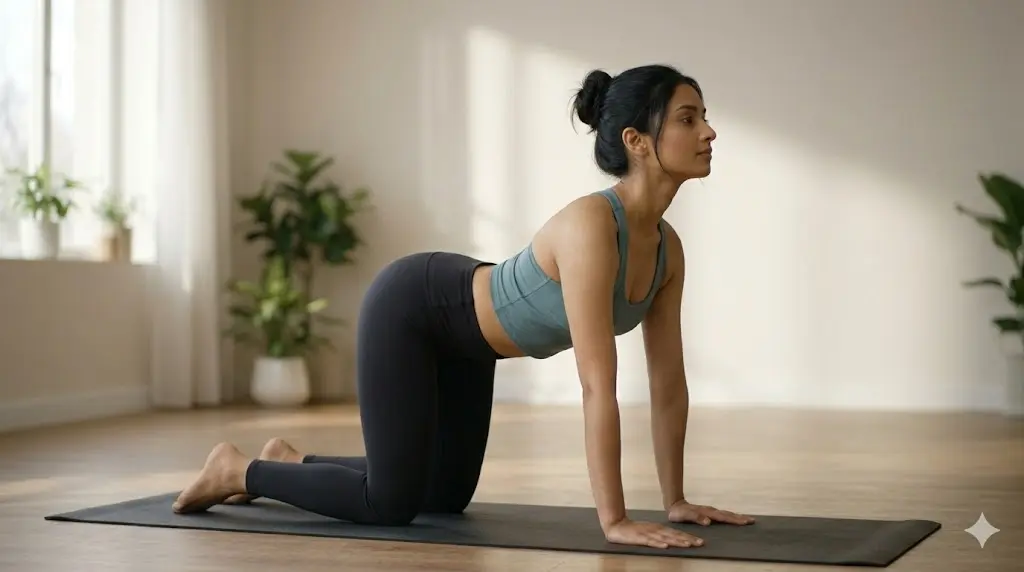
Why it works: Cat-Cow is a nervous system regulator. The rhythmic movement synced with breathing activates the vagus nerve — your body’s “rest and digest” pathway. For PCOS, where the sympathetic nervous system (fight-or-flight) is chronically overactivated, this is genuinely therapeutic. (Frontiers in Neuroscience — Vagus Nerve and Stress)
This move is part of my exercise plan. Doing this feels like I am seducing my apartment. Yoga with Shvasa is teaching correct movements.
Child’s Pose (Balasana)
Kneel, bring your big toes together, knees wide. Sit back on your heels and extend your arms forward, forehead resting on the mat. Stay here for 1–5 minutes.
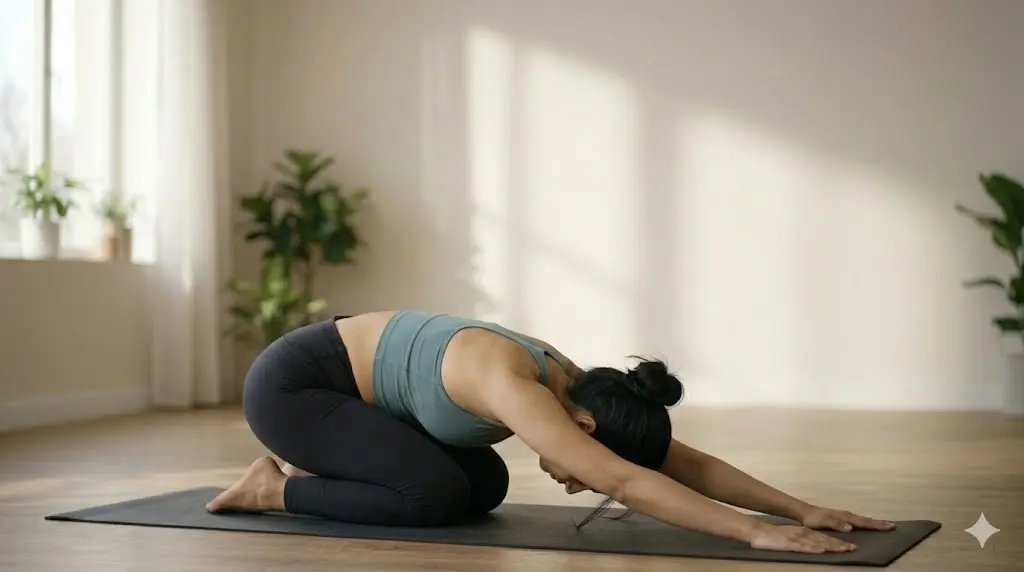
Why it works: Child’s pose does something that most of us with PCOS desperately need — it gives your nervous system permission to stop. It lowers heart rate, eases tension in the lower back (often inflamed with PCOS-related bloating), and reduces cortisol. I end every single yoga session here. Sometimes I stay for 5 minutes.
PS. This one was really heavy on my lower abdomen in the beginning, due to a large belly.
Sun Salutations (Surya Namaskar)
A flowing sequence of 12 poses done in rhythm with the breath. Start with 2–3 rounds and build to 8–12.
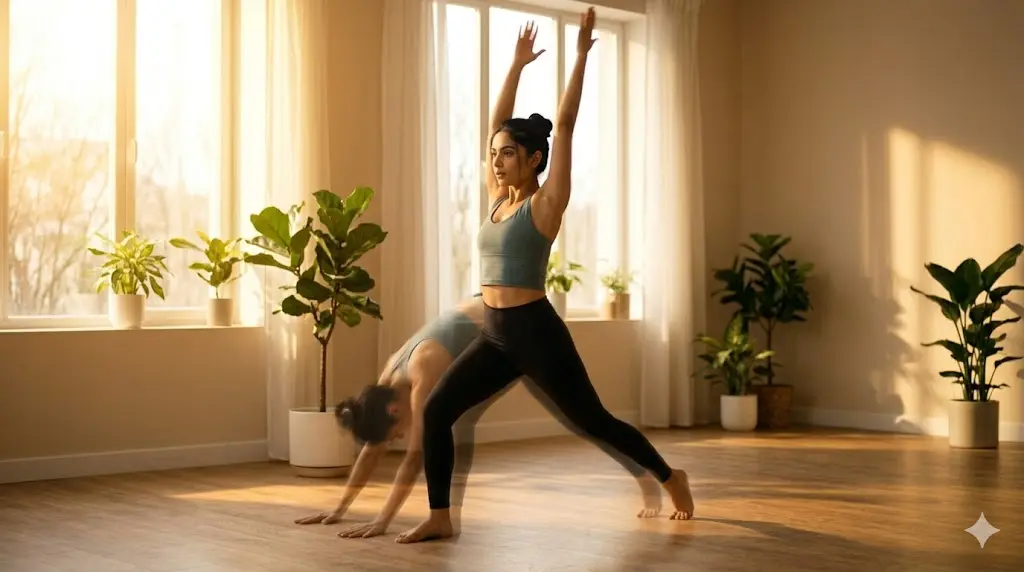
Why it works: Sun salutations are the closest yoga gets to cardio — without the cortisol spike. A 2019 study found that 24 weeks of Surya Namaskar practice significantly reduced body weight, BMI, and waist-to-hip ratio in overweight women.
If you do nothing else from this list, do Sun Salutations. They hit every muscle group, build heat, boost metabolism, and are genuinely meditative once you find your rhythm.
Watch Mind Body Soul for correct movements.
Beginner Tips That Actually Matter
1. 20–30 minutes is enough — seriously.
2. Breath is the practice. Coordinating movement with deep diaphragmatic breathing is what activates the parasympathetic response. Don’t rush. Don’t hold your breath during holds. This is what separates yoga from stretching.
3. Add yoga nidra or meditation. Women with PCOS who added 20 minutes of guided meditation showed significantly greater reductions in anxiety and cortisol levels compared to yoga alone. Yoga nidra specifically — a guided body-scan relaxation — has been shown to improve insulin sensitivity. (PubMed — Yoga Nidra and Insulin)
4. Combine with diet — but don’t restrict obsessively. Yoga works best when paired with a low-glycemic, anti-inflammatory diet. But the restrict-binge cycle I mentioned earlier is real. Yoga helps regulate appetite hormones (ghrelin and leptin), so let it work with your body rather than against it.
5. Be patient with the timeline. Most women see changes in menstrual regularity and bloating within 4–8 weeks, metabolic changes within 12 weeks, and body composition changes within 3–6 months. It’s slow. It’s real.
What Style of Yoga Works Best for PCOS?
- Hatha yoga — Best for beginners. Slow, held poses. Perfect for stress reduction and hormonal balance.
- Vinyasa / Power yoga — Good once you have some base. More metabolically demanding, but can raise cortisol if overdone.
- Yin yoga — Long-held poses (3–5 minutes). Excellent for nervous system regulation and deep connective tissue work. Underrated for PCOS.
- Restorative yoga — Deeply parasympathetic. Best paired with another style for fat loss goals.
- Ashtanga — Intense, disciplined, effective — but genuinely tough for beginners and can be counterproductive if you’re already stressed.
My recommendation: start with Hatha, add Yin once a week, and slowly introduce Vinyasa as your stamina builds.
Download Your Free Yoga for PCOS Beginner Guide
I’ve put together a complete beginner guide with all 10 poses, a 4-week schedule, habit tracker and FAQs — everything in one printable PDF so you don’t have to hold it all in your head.
Conclusion: Your Body Is Not Broken
PCOS made me feel like my body was working against me for years. Like it was broken, stubborn, unfair.
Yoga didn’t just help me lose 30 kilos. It helped me stop fighting my body and start listening to it. The weight loss was a side effect of finally giving my hormones what they needed: less stress, more movement, consistent care.
You don’t need to do everything perfectly. You don’t need a 90-minute power yoga session every morning. You need a mat, 20 minutes, and the willingness to show up — imperfectly, consistently.
Start with the Butterfly Pose today. Just that. See how it feels.
Your body has been trying to communicate with you. Yoga is how you start listening.
Frequently Asked Questions
Which yoga is best for PCOS weight loss?
Hatha yoga is best for beginners, while a combination of Hatha and Vinyasa works well for progressive weight loss. Sun Salutations (Surya Namaskar) and poses like Boat, Bow, and Bridge specifically target belly fat and insulin resistance. Research supports practicing 3–5 times per week for measurable results within 12 weeks.
Which is better for PCOD — gym or yoga?
Both have their place, but for many women with PCOS, yoga outperforms the gym — especially in the beginning. High-intensity gym workouts can spike cortisol, which worsens insulin resistance and abdominal fat in PCOS. Yoga lowers cortisol, balances hormones, and improves metabolic function without the inflammatory stress response.
Can PCOD be cured permanently by yoga?
PCOD cannot be “cured” in the pharmaceutical sense — it’s a lifelong condition. But it can be managed so effectively that symptoms become minimal or even disappear. Several women achieve regular cycles, healthy weight, and successful pregnancies through lifestyle intervention alone — yoga being a central part of that.
| *Written by Amna | This article is for informational purposes. Please consult your healthcare provider before beginning any new exercise program, especially if you have underlying health conditions or are pregnant. This article is not for commercial purposes. Any link added here is after personal experience, not for affiliate purposes.* |
← Back to all posts