How To Get Rid Of Stress Belly Fat Female
Key Takeaways
- Cortisol is the real culprit. Chronic stress floods your body with cortisol, which directly tells fat cells to settle around your midsection — not your thighs, not your arms. Your belly.
- You can’t out-exercise a stressed nervous system. Overtraining raises cortisol further. The fix is a combination of stress management, strategic movement, sleep, and targeted nutrition.
- Supplements can help, but they’re supporting players. Ashwagandha, magnesium, and Vitamin C have solid evidence behind them — but they work best once your lifestyle foundations are in place.
I want to start by saying: I’ve been there. That stubborn pouch sitting low on your belly, the one that shows up precisely when life gets overwhelming — a brutal work season, a rocky relationship, months of broken sleep. You start eating salads and logging miles on the treadmill, and it does absolutely nothing. It just… sits there.
What most women don’t know is that stress belly fat is a hormonal problem, not a calorie problem. The moment you understand that, everything changes. So let me walk you through what’s actually happening inside your body — and exactly what you can do about it, backed by real research.
What Is Stress (Cortisol) Belly?
When you’re chronically stressed, your adrenal glands release a hormone called cortisol. In short bursts, cortisol is useful — it’s your body’s alarm system. But when stress never switches off, cortisol stays elevated. And here’s the problem: cortisol directly stimulates fat storage in visceral adipose tissue — the deep belly fat that wraps around your organs.
Visceral fat is metabolically active in a way subcutaneous fat (the squishy kind just under the skin) isn’t. It pumps out inflammatory molecules, messes with insulin, and raises your risk for cardiovascular disease. Understanding which type of belly fat you’re dealing with is the first step to tackling it the right way.
“Cortisol doesn’t just promote fat storage — it specifically redistributes fat toward the abdominal region by activating glucocorticoid receptors that are denser in visceral fat cells than anywhere else in the body.” — Björntorp P., International Journal of Obesity, 2001
Alongside fat storage, cortisol also drives stress eating — that late-night urge to reach for chips or chocolate. It amps up ghrelin (the hunger hormone) and dulls your body’s satiety signals, creating a vicious loop of cravings, overeating, and more fat deposition. (Epel et al., Psychosomatic Medicine, 2001)
What Does a Cortisol Belly Look Like?
A cortisol belly is distinct from other types of belly fat. Unlike the bloating you get after a salty meal or the soft overhang from subcutaneous fat, stress belly tends to be:
- Hard and protuberant — it sits forward, not soft or droopy
- Located in the upper and mid-abdomen, sometimes described as a “pot belly” shape
- Present even when the rest of your body looks relatively lean
- Often accompanied by bloating, water retention, and chronic fatigue
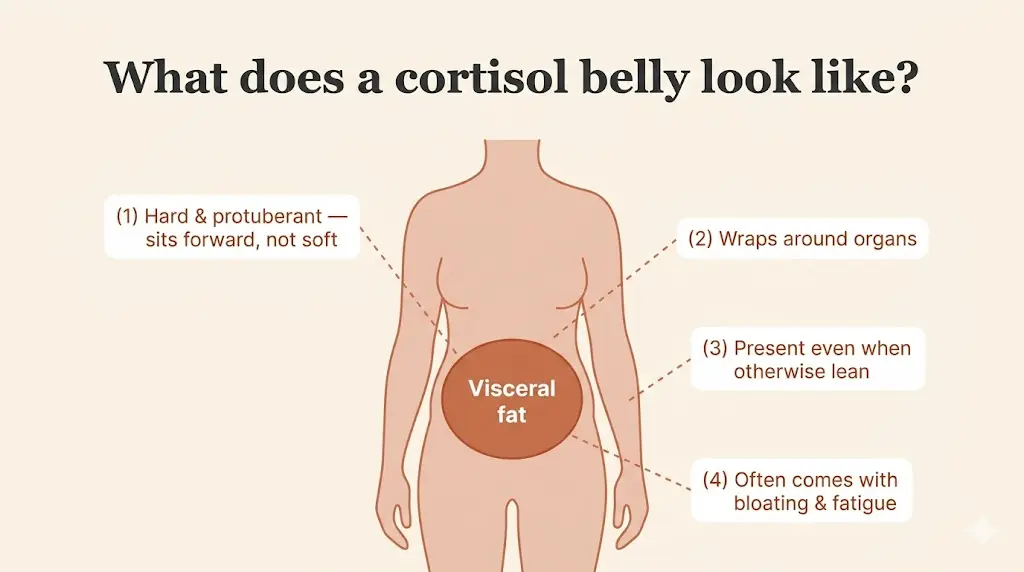
If yours is the visceral type, you’ll want to approach it very differently from soft subcutaneous fat — the strategies aren’t interchangeable.
How to Check Cortisol Levels at Home?
You don’t need to rush to a lab to get a sense of where your cortisol stands. There are a few accessible options:
| 🧪 At-Home Saliva Test | 💧 Urine Cortisol Test |
|---|---|
| Brands like Everlywell offer cortisol saliva tests collected at 4 points throughout the day — showing your daily cortisol rhythm. Most accurate for functional assessment. | A 24-hour urine collection measures total cortisol output. Often used to rule out Cushing’s syndrome. Can be ordered online or through your GP. |
| 🩸 Blood Test (Lab) | 📋 Symptom Checklist |
| Serum cortisol drawn between 8–9 AM (peak time). Gold standard. Ask your doctor for a morning cortisol + DHEA-S panel for a fuller hormonal picture. | Track your symptoms: poor sleep, waist weight gain, mood swings, afternoon energy crashes, and sugar cravings are all signs of dysregulated cortisol. |
Note: Home tests are useful for tracking patterns but always confirm with a physician if you suspect adrenal dysfunction.
How to Reduce Cortisol Belly: 5 Evidence-Based Strategies
Let me be direct with you — there is no single hack here. But there is a clear, research-backed framework. Let’s go through each one honestly.
Manage Stress — Because Yes, Stress Can Cause Weight Gain
The short answer to “Can stress cause weight gain?” is an unambiguous yes. A landmark study published in Obesity found that women who experienced major life stress had significantly higher visceral fat accumulation over an 18-month period, independent of caloric intake. (Kuo et al., Obesity, 2009)
Cortisol doesn’t just store fat — it also breaks down muscle (gluconeogenesis) and raises blood glucose, spiking insulin. Insulin, as you may know, is a powerful fat-storage hormone. So you get a double punch: more fat being deposited AND less muscle to burn it.
What actually works for stress reduction:
-
Mindfulness-Based Stress Reduction (MBSR): An 8-week MBSR program reduced cortisol by 15–20% in clinical trials. (Turakitwanakan et al., J Med Assoc Thai, 2013)
-
Diaphragmatic breathing (4-7-8 method): Activates the parasympathetic nervous system and blunts the cortisol spike within minutes. Even 5 minutes daily makes a measurable difference. I really admire Michelle Kenway for making it easy.
-
Nature exposure: A 20-minute walk in green space reduces salivary cortisol by 21%. (Hunter et al., Frontiers in Psychology, 2019) I usually go outside for 6k steps daily — that’s how I get myself involved in nature.
-
Sleep optimization: Cortisol follows a diurnal rhythm — it’s meant to peak at 7 AM and bottom out by midnight. Disrupting sleep even by 2 hours throws the entire curve off. Aim for 7–9 hours with a consistent bedtime. I would suggest you sleep before 11pm. Trust me, it works.
Balanced Nutrition: What to Eat, What to Ditch
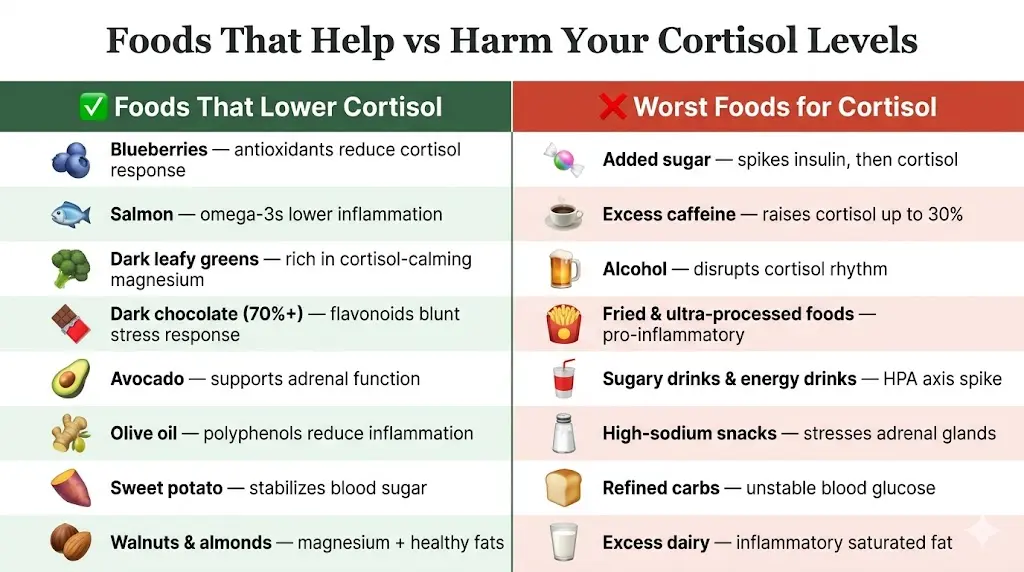
Diet for a cortisol belly isn’t about eating less — it’s about eating smart. Certain foods reduce cortisol; others actively raise it.
Vitamins That Help Cortisol Belly
Several micronutrients play a direct role in keeping cortisol in check. Here’s what the research shows:
-
Vitamin C: One of the most studied anti-cortisol nutrients. Adrenal glands have the highest concentration of Vitamin C in the body. I eat guavas to ensure my vitamin C needs.
-
Magnesium: Deficiency is directly linked to HPA axis hyperactivity. Studies show up to 68% of adults are magnesium-deficient. (Rosanoff et al., Nutrients, 2018) Magnesium glycinate at 300–400mg before bed is the form I recommend. I eat two almonds and two cashews daily to intake my magnesium.
-
Vitamin D: Low Vitamin D is associated with elevated cortisol and increased visceral fat in women specifically. (Jackson et al., Nutrients, 2019) Never ignore your omelette at breakfast — best source of Vitamin D.
-
B Vitamins (especially B5 & B12): B5 (pantothenic acid) is essential for adrenal hormone synthesis. B12 deficiency causes elevated homocysteine and oxidative stress, which indirectly drives up cortisol. (Kennedy, Nutrients, 2016) I drink a cup of milk and a bowl of yoghurt daily as a source of Vitamin B.
What Is a Cortisol Detox Diet?
The “cortisol detox diet” is a functional eating framework that reduces cortisol-spiking foods while flooding the body with nutrients that support adrenal health. Think of it as an anti-inflammatory, blood-sugar-stable, nutrient-dense approach. In practice:
- Eating protein with every meal to stabilize blood glucose (chicken breasts, egg, greek yoghurt)
- Prioritizing omega-3 fatty acids from fish or algae oil
- Cutting caffeine to one cup before noon
- Going 80% whole foods for 3–4 weeks (legumes, leafy greens, cruciferous veggies)
- Avoiding 3-hour gaps between meals (blood sugar drops = cortisol spike) — try light snacks such as two almonds
What to Drink to Reduce Cortisol?
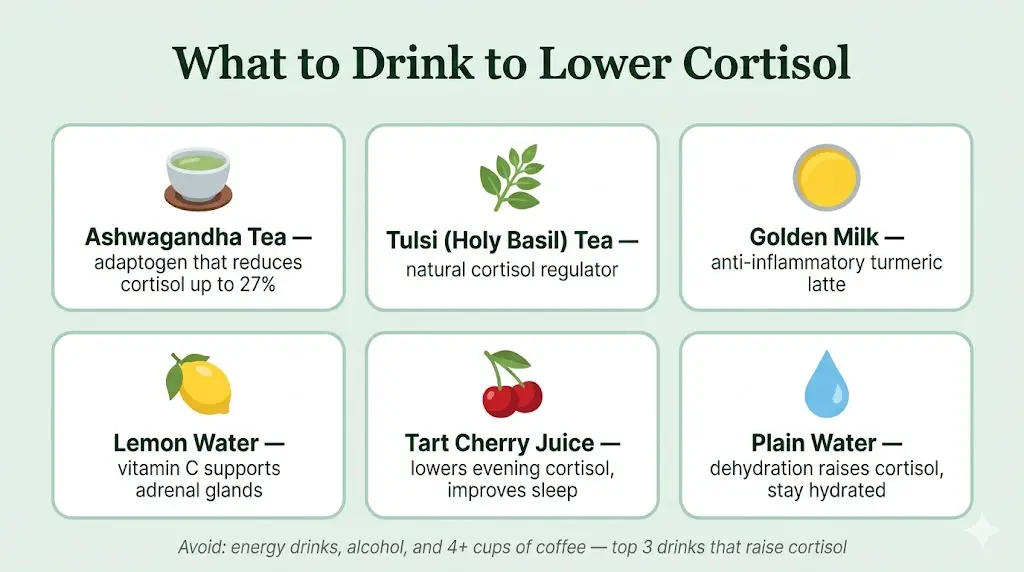
And a quick note on what not to drink: energy drinks, alcohol, and 4+ cups of coffee per day are the top three drinks that raise cortisol quickly. If you want drinks that actively target belly fat, there are a few research-backed options worth adding to your daily routine.
Exercise: The Right Kind Lowers Cortisol. The Wrong Kind Raises It.
This is where most women go wrong. You’re already stressed, so you punish yourself with daily intense HIIT or 2-hour cardio sessions.
Here’s the research reality: high-intensity exercise for 60+ minutes raises cortisol significantly and keeps it elevated for hours afterward. (Hill et al., JSCR, 2011 — journals.lww.com)
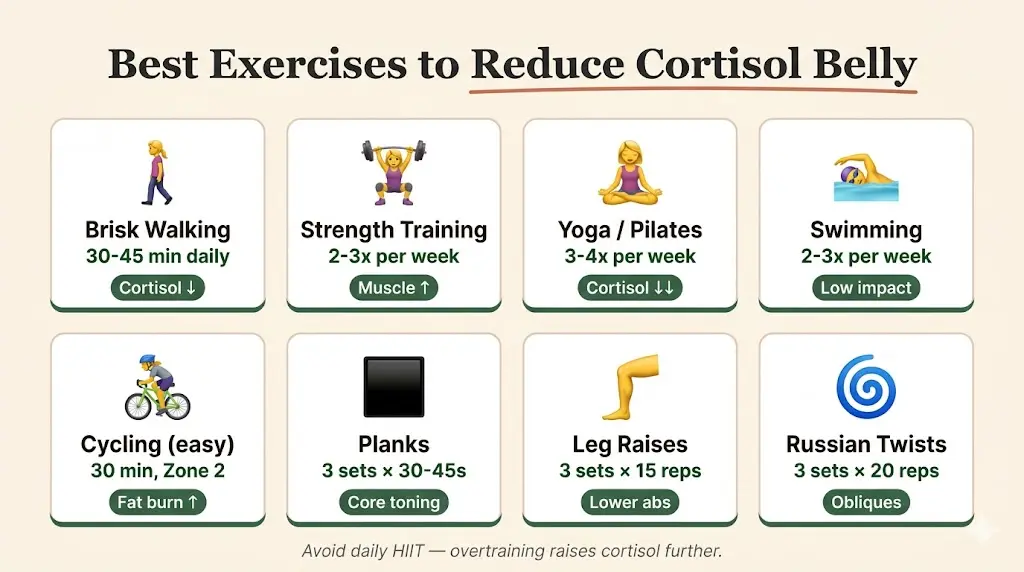
What you want is moderate-intensity exercise that activates fat burning without triggering a cortisol surge. Strength training 2–3x per week builds muscle (which increases resting metabolic rate) without spiking cortisol the way chronic cardio does.
If you’ve been deep in the hormonal belly fat cycle, switching from HIIT-heavy routines to this kind of strategic, lower-intensity approach can produce visible changes within 4–6 weeks — not because you’re burning more calories, but because you’re lowering the hormonal environment that was causing storage in the first place.
My favs!
- 🧘 For pilates: Lily Sabri
- 🧘 For yoga: MadFit
- 💪 For strength training: Rebecca Louise
I hit strength training on Friday, yoga and pilates on Saturday, and rest on Sunday.
Sleep: Your Most Underrated Cortisol Tool
A single night of poor sleep raises morning cortisol by up to 37%. (Leproult et al., Sleep, 1997 — academic.oup.com/sleep)
Chronic sleep deprivation essentially puts your HPA axis in a permanent stress state. Priority actions: consistent bedtime, no screens 60 minutes before sleep, blackout curtains, and bedroom temperature under 67°F (19°C).
If you’re getting 7 hours but poor-quality sleep, look into magnesium glycinate and a proper wind-down routine.
Supplements: What Actually Has Evidence?
Let me be honest: supplements work best as a support layer, not a solution. I don’t take supplements and never took one. This data is backed by research. I would suggest consulting a doctor before, or if possible, avoid supplements.
| Supplement | What It Does | Dosage | Evidence Level |
|---|---|---|---|
| Ashwagandha (KSM-66) | Reduces serum cortisol by up to 27.9% in 8 weeks (adaptogen) | 300–600mg daily | ⭐⭐⭐⭐⭐ Strong RCT evidence |
| Magnesium Glycinate | Calms HPA axis; improves sleep quality and cortisol rhythm | 300–400mg before bed | ⭐⭐⭐⭐ Good evidence |
| Phosphatidylserine | Blunts exercise-induced cortisol spike | 400–800mg/day | ⭐⭐⭐⭐ Moderate-strong |
| Vitamin C | Adrenal support; reduces cortisol response to stress | 500–1,000mg daily | ⭐⭐⭐⭐ Good evidence |
| Rhodiola Rosea | Adaptogen that modulates cortisol under physical/mental stress | 200–400mg daily | ⭐⭐⭐ Emerging evidence |
| L-Theanine | Reduces cortisol and anxiety by promoting alpha brain waves | 100–200mg daily | ⭐⭐⭐ Moderate evidence |
A quick blood panel (cortisol + magnesium + Vitamin D) will tell you exactly where you’re deficient before you spend money on supplements you don’t need.
10 Warning Signs of High Cortisol
Before we move on, it’s worth flagging when you might be dealing with clinically elevated cortisol — not just regular life-stress levels. Here are the ten signs to watch for:
- Unexplained abdominal weight gain — especially a round, firm belly that wasn’t there before
- Thin arms and legs with a larger midsection — fat redistribution pattern classic to hypercortisolism
- Purple or pink stretch marks (striae) on the abdomen, breasts, or thighs
- Persistent fatigue despite adequate sleep — adrenal fatigue depletes energy reserves
- High blood pressure — cortisol constricts blood vessels and retains sodium
- Increased sugar and carb cravings — cortisol-driven blood glucose dysregulation
- Brain fog and poor concentration — chronic cortisol shrinks the hippocampus over time
- Low libido and irregular periods — cortisol suppresses reproductive hormones
- Frequent infections or slow wound healing — cortisol suppresses immune function
- Anxiety, irritability, or depression — cortisol dysregulates serotonin and dopamine pathways
If you’re ticking 5 or more of these, please get your cortisol formally tested. Conditions like Cushing’s syndrome (chronic pathological hypercortisolism) require medical management, not lifestyle tweaks alone. (National Institute of Diabetes — Cushing’s Syndrome)
Conclusion
Stress belly fat isn’t a character flaw, a willpower problem, or a sign that you need to try harder. It’s your body doing exactly what it’s designed to do — protecting you from a threat. The problem is that modern life keeps the threat alarm on permanently.
The framework is clear: lower cortisol through stress management and better sleep, feed your adrenals with the right nutrients, exercise without overtaxing your nervous system, and use supplements strategically. None of these are instant fixes. But together, they’re profoundly effective — and the research is solidly behind them.
You didn’t gain a stress belly overnight, and you won’t lose it overnight. But give this approach 8–12 weeks, and the shift is real.
Frequently Asked Questions
How to lower cortisol for weight loss?
The most effective cortisol-lowering strategy for weight loss is a combination approach: prioritize 7–9 hours of quality sleep (this alone can reduce morning cortisol by 15–30%), practice daily stress reduction (5–10 minutes of deep breathing or MBSR), limit caffeine after noon, eat balanced meals with protein at each sitting to prevent blood sugar crashes, and incorporate moderate exercise like walking and strength training.
What vitamin deficiency causes high cortisol?
The most directly linked deficiencies are magnesium (deficiency hyperactivates the HPA axis, raising cortisol), Vitamin C (adrenal glands require high concentrations to regulate cortisol synthesis), and Vitamin D (low levels correlate with elevated cortisol and greater visceral fat in women). B5 (pantothenic acid) deficiency can also impair adrenal function. A full blood panel including serum magnesium, 25-OH Vitamin D, and RBC Vitamin C levels is your most useful diagnostic tool.
What reduces cortisol quickly?
For rapid cortisol reduction (within minutes to hours): diaphragmatic breathing (4-7-8 technique for 5 minutes) activates the parasympathetic nervous system and measurably drops cortisol almost immediately. Music — specifically slow, calming music — has been shown to reduce cortisol in hospital studies within 20 minutes. For slightly longer-term rapid effects (24–72 hours): reduce caffeine intake, get extra sleep, avoid intense exercise, and eat a high-protein meal with complex carbs.
Disclaimer: This article is for informational purposes only and does not constitute medical advice. Always consult a qualified healthcare provider before making changes to your diet, supplement regimen, or exercise routine.
← Back to all posts